
Reviewed · DAY TRIPS FROM TBILISI
Armenia – Tbilisi 3 days, 2 nights from Yerevan
Lake Sevan gives this trip its first big moment: a black-stone monastery high above one of Armenia’s most famous lakes, followed by forested Dilijan, medieval churches, and a night in Tbilisi. You then cross back toward northern Armenia for two UNESCO-listed monasteries and a botanical garden.
I like the private vehicle and the freedom it gives you to travel with only your own group, up to three people. I also like the route itself, which joins Armenia and Georgia through places that feel very different from one another. The main drawback is the pace: three days cover a lot of ground, and hotel rooms, meals, drinks, and the Stepanavan Dendropark ticket cost extra.
Key points at a glance
- Lake Sevan and Sevanavank: Begin beside Armenia’s great high-altitude lake and visit a ninth-century monastery built from dark volcanic stone.
- Dilijan’s forest monasteries: Haghartsin and Goshavank bring quiet medieval architecture to the first day.
- Tbilisi and Mtskheta: See Georgia’s capital and its former religious center, including UNESCO-listed Christian monuments.
- Haghpat and Sanahin: Visit two major Armenian monastery complexes on the return route, both protected as UNESCO World Heritage sites.
- A private trip for up to three: The price is $827 per group, not per person, with pickup and air-conditioned transport included.
- A demanding three-day route: The schedule is efficient, but you should be ready for long road hours and should arrange your own accommodation.
A cross-border route built around monasteries
This is not a slow city break. It is a compact road journey through northern Armenia and Georgia, with the road itself linking lakes, wooded hills, border country, old towns, and medieval religious sites.
The route begins in Yerevan and reaches Georgia on the first day. Day two focuses on Mtskheta and Tbilisi before returning to Armenia for the night in Alaverdi. Day three heads south through northern Armenia, ending with Haghpat, Sanahin, Stepanavan, and the Armenian Alphabet Monument.
That plan works well if you have only a few days and want to see more than one country from Yerevan. I would not choose it if you prefer long meals, unhurried museum visits, or several nights in one hotel. The listed stop times are usually one hour or less, while the overnight blocks indicate that much of each day is spent moving between destinations.
Because this is a private experience, you are not tied to a large group. The booking covers up to three people, so a full group brings the per-person cost down to about $276. For one person, the same $827 price is much harder to justify unless private transport and a fixed cross-border route are especially important to you.
More Armenia day trips from Tbilisi:
- Transfer from Yerevan to Tbilisi with 2 sightseeing stops
★ 5.0 · 110 reviews - Yerevan to Tbilisi Private car transfer 3 Scenic stops
★ 5.0 · 25 reviews - Transfer Tbilisi to Yerevan with 2 sightseeing stops
★ 5.0 · 23 reviews
Day one: Lake Sevan, Dilijan, and a Tbilisi arrival
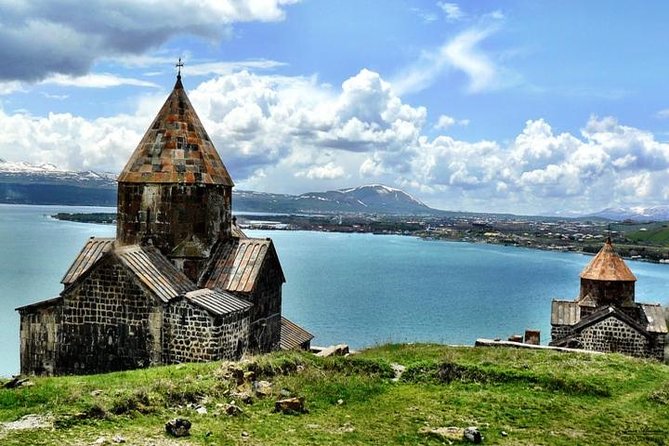
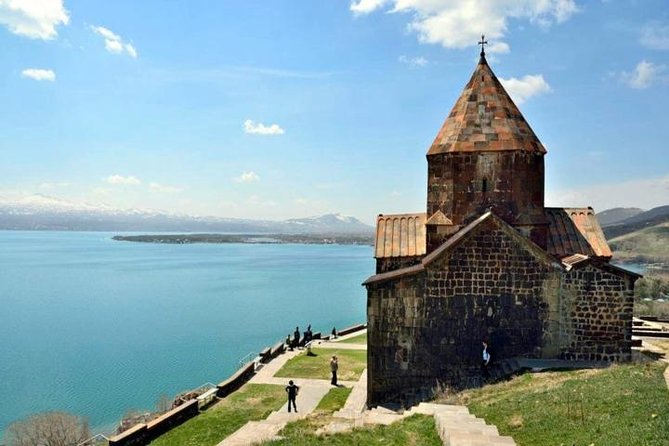
The first stop is Sevanavank, on the northwestern side of Lake Sevan. The lake is often called the Geghama Sea and is widely known as one of Armenia’s defining natural sights. From the monastery area, you get an open setting around the water rather than a city view.
Princess Mariam founded Sevanavank in 874. Its churches were built from black tuff, a volcanic stone that gives the complex its dark appearance and helps explain the name, often translated as Black Monastery. You have about an hour here, which is enough for the main visit and time to take in the setting, though not a long exploratory stop.
I would bring a layer for this part of the day. The tour information does not give a weather forecast or exact elevation details, so conditions can change, and the open lakeside setting may feel cooler than Yerevan. The practical gain of having a private car is clear here: you can carry what you need without managing transfers or public transport connections.
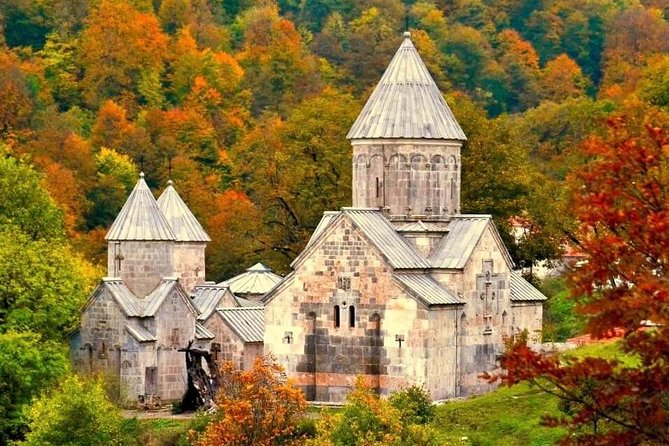
The road then continues toward Dilijan, called Armenian Switzerland in the tour description. The area is associated with wooded hills and a cooler, greener setting than the capital. Haghartsin Monastery sits about 13 kilometers northeast of Dilijan, in a secluded spot surrounded by the region’s forested scenery.
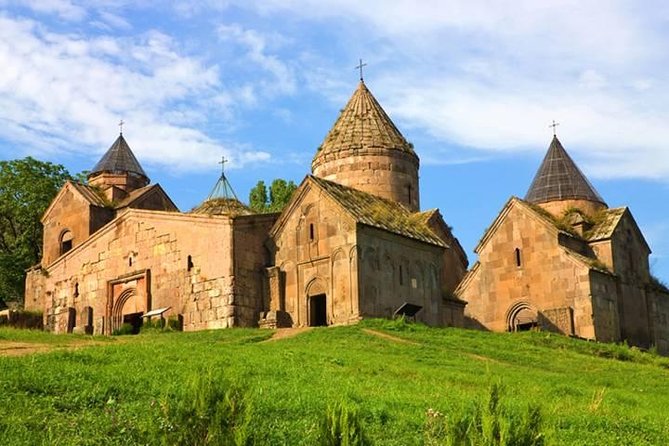
Haghartsin means Dance of the Eagles. The complex was built between the 10th and 13th centuries and includes three churches. You get about an hour to see it, which gives you time to notice the different buildings and the setting without turning the stop into a rushed photo break.
Goshavank comes next, with about 40 minutes on site. Built from 1188 through the late 13th century, it became one of medieval Armenia’s important religious and scholarly centers. This shorter visit is best treated as a focused look at the monastery rather than a full stop for wandering.
The first day ends in Tbilisi, where you spend the night. The schedule labels this as a 12-hour overnight stop, but that does not mean you receive a hotel room. Accommodation is specifically excluded, so you need to arrange and pay for it yourself. The same applies to meals and drinks.
This is an important planning point. The tour includes pickup and drop-off, along with air-conditioned transport suited to the size of your group, but it does not bundle the overnight stays. Ask the provider to confirm the exact meeting and drop-off details, hotel location, and border crossing plan before you go.
Day two: Mtskheta gives the route its historical center
Mtskheta is a strong choice for the second morning. The city was founded in the fifth century BC at the meeting point of the Mtkvari and Aragvi rivers. It served as an important center of early Georgian Christianity, and its old city, Svetitskhoveli Cathedral, and Jvari Monastery are all part of a UNESCO World Heritage site.
You have about two hours for Mtskheta. That is more generous than the 40-minute Goshavank stop and lets you give the town and its monuments proper attention. Svetitskhoveli Cathedral dates from the 11th century, while Jvari Monastery dates from the sixth century. Together, they show different stages of Georgian Christian architecture and the importance of the area to the country’s religious past.
I like this part of the plan because it adds a clear Georgian chapter instead of using Tbilisi as the only stop across the border. Mtskheta also provides historical context for Tbilisi, making the later city visit feel less like a quick checklist.
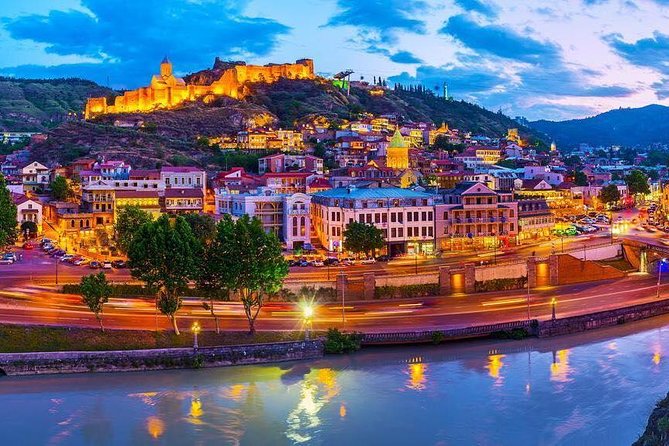
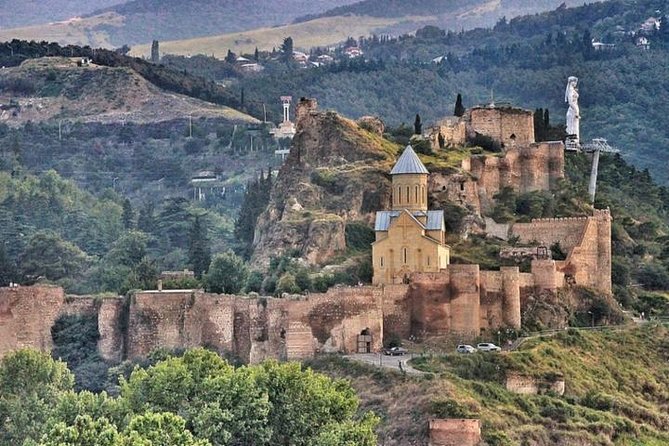
After Mtskheta, you get around three hours for an observing city tour of Tbilisi and its main attractions. The plan does not name every sight included, so you should ask in advance which places the driver or guide intends to cover. Three hours can give you a useful first look at the capital, but it will not cover every neighborhood or museum.
The private format matters most here. If your booking includes a guide, you can ask for more explanation at the sights that interest you. If it is arranged mainly with a driver, expect a more flexible transport service and less formal commentary. One booking was made without a guide, and the drivers, Arthur and Alek, provided punctual service, conversation, music, safety, and recommendations. Another booking specifically praised Zaven for kindness, patience, and helpful service over three days.
Those details suggest you should clarify the guide arrangement rather than assume the same format for every booking. The advertised experience includes a private guide and vehicle, while the supplied accounts show that some departures may involve drivers without a separate guide.
You spend the second night in Alaverdi, Armenia. Again, the overnight accommodation is not included. Alaverdi is useful as a base for the northern Armenian monasteries on day three, but you need to organize the room yourself and account for the extra cost.
Day three: Haghpat and Sanahin reward a slower look
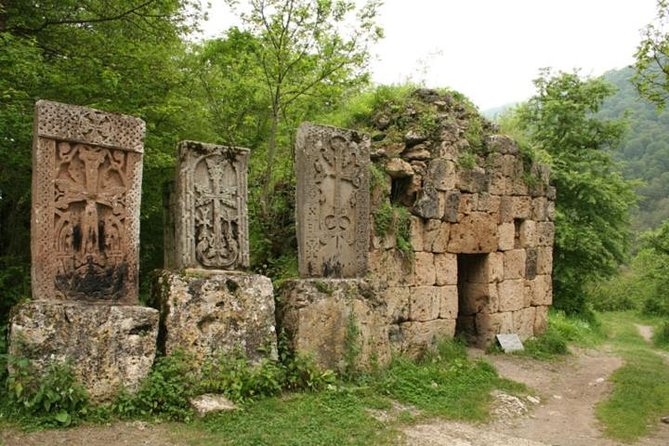
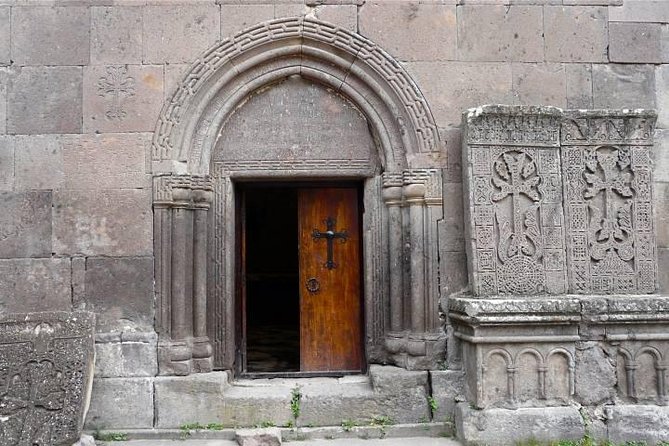
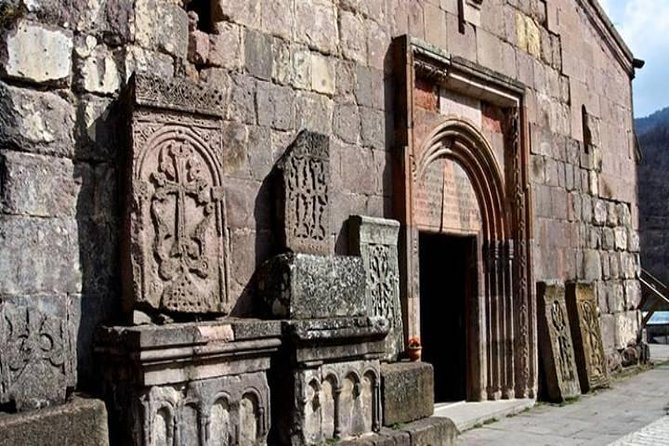
Haghpat Monastery is the first stop on the final day, with about an hour to visit. Queen Khosrovanush founded it in AD 976, during the reign of King Ashot III. The complex includes a narthex, corridor-sepulchers, a refectory, a scriptorium, the Chapel of Hamazasp, a belfry, chapel-tombs, and khachkars, or carved Armenian cross-stones.
That list matters because Haghpat is not simply one church in an isolated setting. It is a working medieval complex with spaces linked to worship, burial, study, and daily community life. If your guide provides commentary, ask about the scriptorium and khachkars. Those details help you read the site as a center of learning and religious life, not just an old stone building.
The next hour belongs to Sanahin Monastery. Sanahin served as an administrative center and family burial place for the Kyurikyan Bagratids in the 10th and 11th centuries. It also served as an episcopal residence until the 11th century.
Haghpat and Sanahin are both on the UNESCO World Heritage List. Visiting them together is one of the strongest features of the itinerary because they let you compare two major medieval Armenian complexes in the same general region. The one-hour schedule at each site should work for a guided overview, though anyone interested in architecture, inscriptions, or photography may wish for more time.
The itinerary does not list admission charges for these monasteries, and the tour information marks the visits as free of admission. Food and drinks remain your responsibility, so plan around the road time rather than assuming lunch is supplied.
A few more Yerevan days to weigh up
- 3 day private tours in Armenia from Yerevan
★ 5.0 · 19 reviews
Stepanavan adds trees to a stone-heavy itinerary
After the monasteries, the route changes character at Stepanavan Sochut Dendropark. The botanical garden was established in 1933 by Polish engineer-forester Edmon Leonovich and contains more than 500 plants.
You get about an hour here. That makes the garden a useful break after several religious and architectural sites, especially if you want a change from stone buildings and church interiors. The admission ticket is not included, so budget separately for entry.
The stop may appeal most to people who enjoy gardens and cultivated plant collections. If your priority is medieval architecture, this is the easiest place to shorten or treat as a lighter visit, though the tour may follow a fixed route. The information provided does not specify the ticket price, seasonal opening details, or which plants will be in view on your date.
The Armenian Alphabet Monument closes the journey with a national symbol
The final stop is the Armenian Alphabet Monument, lasting about 30 minutes. It honors the alphabet created by Mesrop Mashtots in 405 to make the Bible accessible to Armenians and support the spread of Christianity.
Half an hour is enough for a brief visit and photographs. The stop also gives the journey a cultural closing point. After days spent seeing churches, monasteries, and old centers of worship, you finish with the writing system that helped preserve Armenian religious and cultural life.
The monument is listed as free of admission. Since the tour ends after this stop, confirm the exact drop-off location and estimated arrival time before setting plans for the rest of your day.
What the $827 group price really covers
At $827 for a private group of up to three people, the value depends heavily on your group size. Three people sharing the price receive pickup, drop-off, and air-conditioned transport across a difficult route that includes Armenia and Georgia. The private setup also means you are not sharing the vehicle with strangers.
For two people, the cost is about $413.50 each. For one person, it becomes an expensive way to cover the same route. You also need to add two nights of accommodation, lunches, other food and drinks, and the Dendropark admission.
I see this as a transport-and-sightseeing package rather than an all-inclusive holiday. The price makes the most sense when you value convenience, want a private vehicle, and have two or three people sharing the cost. It makes less sense if you are comfortable arranging buses, hotels, and individual visits yourself.
The tour has a five-star rating from seven submitted ratings, with especially strong praise for punctuality, communication, safety, patience, and friendly service. Those are practical strengths on a route with border travel and long road segments. Still, the small number of ratings means I would treat the score as encouraging rather than a complete guarantee of every departure.
Pace, physical effort, and what to pack
The tour requires a moderate level of physical fitness. You should be comfortable walking around monastery compounds, standing during explanations, and getting in and out of a vehicle several times each day.
Wear smart casual clothing. For monastery visits, modest clothing is the safest choice. Comfortable shoes matter more than stylish ones because the route includes several historic complexes rather than only paved city streets.
I would pack:
- A valid passport
- A light layer for Lake Sevan and changing conditions
- Comfortable walking shoes
- Water and snacks, since food and drinks are not included
- Any hotel confirmation details for Tbilisi and Alaverdi
- A phone with the tour ticket available, since mobile tickets are accepted
A current valid passport is required on the day of travel. At booking, you must provide each participant’s passport name, number, expiry date, and country. That is not a minor formality on a cross-border trip, so check every entry carefully.
Confirmation is provided at booking, and free cancellation is available if you cancel at least 24 hours before the start time. Cancellations or changes inside that window are not accepted for a refund.
Who should choose this private Armenia and Tbilisi tour?
I would choose it if you have three days, start in Yerevan, and want a broad first look at northern Armenia and Tbilisi without managing the transport yourself. It suits couples, friends, or a small family group that values a private car and can share the price.
You should also like monasteries. The trip includes Sevanavank, Haghartsin, Goshavank, Haghpat, and Sanahin, with Mtskheta adding more religious architecture in Georgia. Tbilisi and the Dendropark provide variety, but the main theme is medieval church architecture and the culture around it.
I would hesitate if you need a relaxed schedule, dislike long drives, or expect hotels and meals to be part of the quoted price. I would also confirm whether your booking includes a separate guide. The service can include a private guide and vehicle, but the documented arrangements also include driver-only departures with Arthur, Alek, or similar local drivers.
Should you book it?
Book this tour if efficient coverage matters more to you than slow travel. It gives you Lake Sevan, Dilijan, Tbilisi, Mtskheta, Alaverdi, Haghpat, Sanahin, Stepanavan, and the Armenian Alphabet Monument in three days, with private transport and pickup included.
Before paying, confirm the hotel arrangements, guide or driver format, border timing, meal plan, and final drop-off. If you are a group of three and want a practical way to connect Armenia’s major northern monasteries with Georgia’s capital, the price can be fair. If you are alone or want deep time at each site, build a longer trip instead.
FAQ
How long is the tour?
The experience lasts approximately three days and includes two overnight stays.
Where does the tour begin?
The tour begins in Yerevan, Armenia, with hotel pickup offered.
How many people can join the private tour?
The price covers one private group of up to three people.
Is transportation included?
Yes. Hotel pickup and drop-off are included, along with air-conditioned transport based on the number of participants.
Are hotel accommodations included?
No. Hotel accommodation is not included, including the overnight stays in Tbilisi and Alaverdi.
Are meals included?
No. Food, drinks, and lunch are not included.
Which places are visited on the first day?
The first day includes Sevanavank Monastery, Haghartsin Monastery, Goshavank Monastery, and an overnight stay in Tbilisi.
Which UNESCO-listed places are included?
Mtskheta, Svetitskhoveli Cathedral, and Jvari Monastery are part of the UNESCO-listed Mtskheta site. Haghpat and Sanahin monasteries are also on the UNESCO World Heritage List.
Do I need a passport?
Yes. A current valid passport is required on the day of travel. Passport name, number, expiry, and country details are required for all participants when booking.
What is the cancellation policy?
You can cancel at least 24 hours before the local start time for a full refund. Cancellations or changes made less than 24 hours before the start time are not accepted.
Just added around Yerevan
- Private tour to Khor Virap, Areni winery, Noravank, Selim pass, Hayravank★ 5.0 · 3 reviews
- Private tour to Gyumri, Dzitoghtsyan Museum, Black Fortress★ 5.0 · 3 reviews
- Private Tour: Tsaghkadzor, Ropeway, Kecharis Monastery, Sevan Lake, Sevanavank★ 5.0 · 3 reviews
- Private tour to Garni, Geghard, Sevan (Sevanavank), Dilijan (Haghartsin)★ 5.0 · 3 reviews
- Private Tour: Lake Sevan, Sevanavank★ 4.5 · 3 reviews
- Tsitsernakaber-Hripsime-Echmiatsin-Noy brandy factory★ 4.5 · 3 reviews
- Secret Spots Of Armenia Day Private Tour★ 5.0 · 3 reviews
- Day Trip to Tatev Monastery★ 4.5 · 3 reviews
Day Trips from Tbilisi, compared.
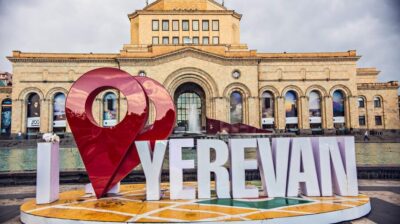
Armenia. Akhpat, Dilijan, Sevan, cascad Yerevan from Tbilisi
Read our review →
Full Day Guided Tour from Yerevan to Tbilisi with Homemade Lunch
Read our review →
Tbilisi transfer with stops in Haghpat, Sanahin to or from Yerevan
Read our review →Browse the lists this tour appears in