
Reviewed · YEREVAN TOURS
Tsitsernakaber-Hripsime-Echmiatsin-Noy brandy factory
Armenia’s religious heart and its brandy-making tradition come together on this compact trip from Yerevan. You’ll visit Tsitsernakaberd, three important Vagharshapat churches, and Noy Factory, where the final tasting includes 1941 port wine and two Armenian brandies.
I like the strong mix of subjects: genocide remembrance, early Christian architecture, sacred relics, and local spirits. I also like the small-group format, capped at 15 people, and the personal touch reported from guide Nvard, who speaks English well and helped a solo visitor with photographs. The main consideration is that Etchmiadzin Cathedral is under restoration, so you see it from outside and visit its museum instead.
Key points to know before booking
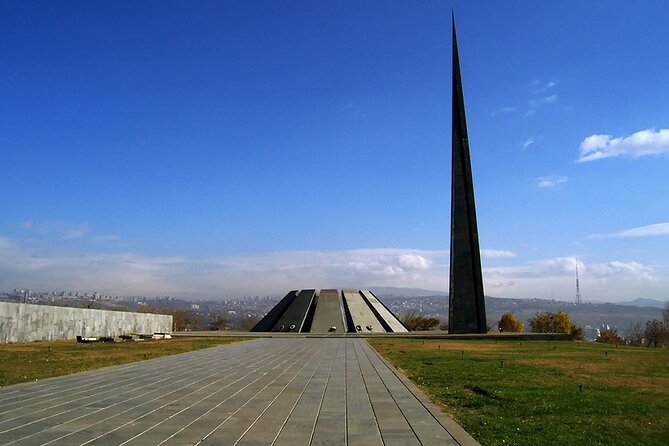
- Tsitsernakaberd sets a serious tone: Spend about 45 minutes at Yerevan’s Armenian Genocide memorial, including its granite stele, eternal flame, and surrounding slabs.
- Three UNESCO-linked churches anchor the visit: Saint Hripsime, Saint Gayane, and Etchmiadzin connect Armenia’s religious past with its modern identity.
- Etchmiadzin’s museum fills in for the closed cathedral interior: You can see sacred objects described as including a piece of Noah’s Ark and the Holy Lance.
- Noy Factory ends the day with a tasting: The included selection features port wine from 1941 and two types of brandy.
- The group stays manageable: A maximum of 15 people makes guided visits easier than on a large coach excursion.
- The schedule is short but full: The advertised duration varies between four and five hours, with transport time between Yerevan and Vagharshapat included.
From genocide remembrance to Armenian brandy
This tour works because it follows a clear cultural thread. You begin with a painful chapter in Armenian history, continue to the country’s major Christian center, and finish with a product that has become one of Armenia’s best-known exports.
The start time is 9:30 am, with pickup offered. You ride in an air-conditioned vehicle, and a local guide leads the visits. The group limit is 15 people, a useful middle ground: small enough for questions, but not necessarily private or quiet at every stop.
The price is $100 per person. That is not a budget outing, but the fee includes transport, a guide, museum admission, all listed activities, and the alcoholic tastings. Lunch is not included, though a $15 per person lunch is available if required. For a half-day tour with several historic sites and a factory tasting, the value depends on how much you want explained along the way. If you only need a driver and quick photo stops, it may feel expensive. If you want the religious sites put into context, the price is easier to justify.
The timing needs a little care. The general tour description says four hours, while the summary gives approximately five hours. The listed stop times add up to about three hours and 15 minutes before driving time, so the longer estimate likely allows for transfers. I would keep the rest of your day flexible.
A few more Yerevan days to weigh up
- Group Tour: Garni, Symphony of Stones, Geghard, Lavash Baking
★ 5.0 · 1,042 reviews - Group Tour: Lake Sevan (Sevanavank), Dilijan (Goshavank, Haghartsin)
★ 5.0 · 1,036 reviews - Group tour: Khor Virap, Noravank, Areni Winery and Cave
★ 5.0 · 651 reviews
Tsitsernakaberd: beginning with memory
Your first stop is Tsitsernakaberd, the memorial complex dedicated to the victims of the Armenian Genocide. This is not a light sightseeing stop, and it gives the day emotional weight before you reach the churches.
The centerpiece is a tall granite stele surrounded by 12 slabs. These represent the 12 provinces of historic Western Armenia connected with the genocide. At the base, an eternal flame honors those who died.
You have about 45 minutes here, with no admission charge. That is enough time to walk through the memorial area and pause at the flame without turning the visit into a rushed photo stop. A museum at the complex presents the history and atrocities of the genocide, though the supplied tour details do not clearly state that museum admission is part of this particular stop.
I like the fact that Tsitsernakaberd comes first. It gives you essential context for Armenia before the tour moves into religion and national tradition. Still, you should know what kind of morning you are choosing. If you prefer to begin a day with lighter sightseeing, this memorial can feel solemn and intense.
Wear practical shoes and allow yourself time to listen. The value here is not in collecting another monument, but in understanding why remembrance is so important in Armenian public life.
Saint Hripsime Church and the early Christian story
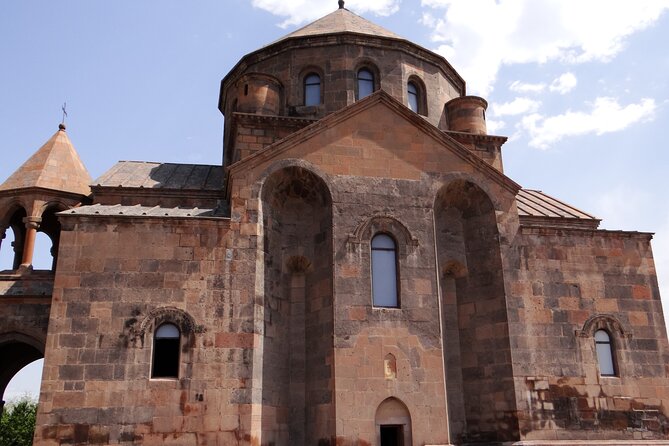
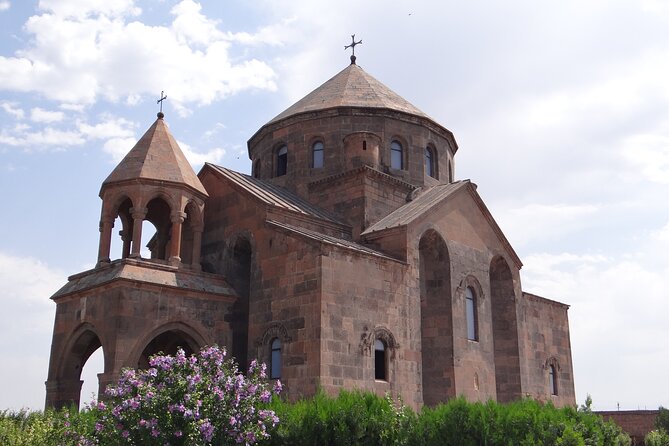
The next stop is Saint Hripsime Church, a seventh-century church and a UNESCO-listed site. You have about 30 minutes, and admission is free.
Saint Hripsime is linked with the early Christian story of Armenia and with Catholicos Komitas, who is identified in the tour material as the builder connected with the church. Your guide explains the life of Komitas and the place of the church in Armenian religious tradition.
Thirty minutes is enough for a focused visit, but not for a long architectural study. I would listen closely to the guide rather than trying to absorb every detail from the building alone. The point of this stop is the combination of age, worship, and national identity.
The church is also useful preparation for Etchmiadzin. You begin to see how Armenian religious buildings developed as expressions of a faith that became central to the country. The tour does not treat the churches as isolated monuments. It links them through the story of Armenia’s conversion and the work of its church leaders.
Saint Gayane and the Vagharshapat church group
Saint Gayane Church is named as one of the three UNESCO-listed Vagharshapat landmarks included in the tour. It is also part of the religious story surrounding Armenia’s conversion to Catholicism, according to the tour description.
There is an important scheduling detail here. The stop-by-stop information gives a 30-minute visit for Saint Hripsime and a one-hour visit for Etchmiadzin, but it does not provide a separate duration for Saint Gayane. Ask your guide at the start how Saint Gayane fits into the day’s route.
That missing timing does not make the visit unworkable, but it matters if you are planning later appointments in Yerevan. The day is promoted as about four to five hours, and Saint Gayane is included in the wider description even though it is not listed as its own numbered stop.
For you, the benefit is seeing the churches as a group rather than visiting Etchmiadzin alone. Saint Gayane adds another layer to the Vagharshapat story and helps show how the religious center developed across several important buildings.
Same country, a completely different kind of day out:
- Yerevan: Garni, Geghard, Symphony of Stones & Lavash Baking
★ 5.0 · 589 reviews - Group Tour: Tsaghkadzor (Kecharis, Ropeway), Lake Sevan, Trout barbecue treat
★ 5.0 · 511 reviews - Group Tour: Khor Virap, Noravank, Tatev monasteries (wayback on Ropeway)
★ 5.0 · 506 reviews - From Yerevan:Sevan, Dilijan, Haghartsin, Goshavank, Lake Parz
★ 4.5 · 454 reviews
Etchmiadzin Cathedral and its museum treasures
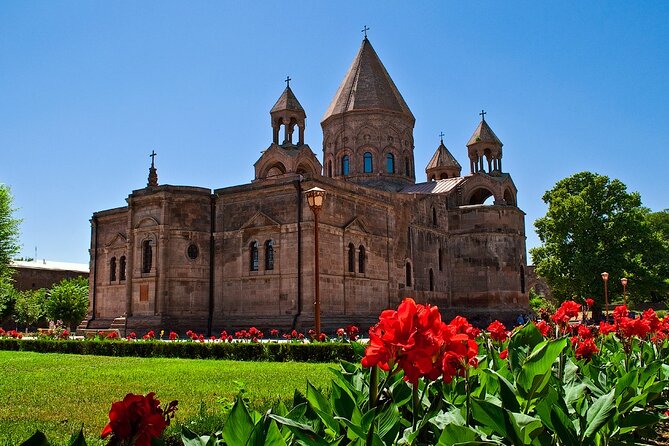
Etchmiadzin, also written as Echmiatsin, is the main destination. The name is explained as Holy Sea, and the cathedral is presented as the base of the Armenian Apostolic Church and the most ancient Christian cathedral in the world.
The cathedral itself is under restoration. You can see it from outside, but the interior visit is replaced by a visit to the Etchmiadzin museum. Admission to the museum is included.
This change is the biggest practical point in the tour. If your main reason for booking is to walk through the cathedral interior, you may be disappointed. If you are interested in sacred objects and Armenian Apostolic tradition, the museum still gives the visit real substance.
Among the relics, the tour identifies a piece of Noah’s Ark and the Holy Lance. These are the sort of objects that make a guide especially useful. Without explanation, they can be quick glimpses in a display case. With context, they connect Armenia’s religious tradition to stories familiar far beyond the country.
Plan on about an hour here. That allows time for the museum and an exterior look at the cathedral. The guide also explains traditional Armenian religious beliefs and the role of Etchmiadzin as the center of the Armenian Apostolic Church.
I would treat this stop as a historical and religious visit first, and a grand architectural visit second. Restoration changes what you can see, but it does not remove the importance of the place.
Noy Factory: a spirited finish in Yerevan
After the churches, the tour shifts from sacred history to Armenian production at Noy Yerevan Ararat Brandy-Wine-Vodka Factory.
Noy was established in 1877 and is known for Armenian brandy made from local grapes and aged in oak barrels. The factory uses traditional distillation methods, and its products are exported to more than 30 countries. The tour presents the factory as a place to learn how Armenian brandy is made, not just a shop with a tasting counter.
The included degustation features port wine from 1941 and two types of brandy. You have about an hour here, and alcoholic beverages are included in the tour price.
The tasting gives the day a pleasant change of pace, but remember that it follows a memorial and several religious sites. You may want to eat breakfast before pickup. Lunch is optional at $15 per person, but it is not part of the standard price.
I like this ending because it shows another side of Armenian identity. You move from the endurance of churches and memorials to a craft product shaped by grapes, oak, and long aging. It also gives you a chance to compare two brandies rather than tasting only one.
The available information does not specify how much brandy is poured or whether purchases are included, so do not assume the tasting comes with a bottle or a meal. The key inclusion is the tasting itself.
The guide can make the difference
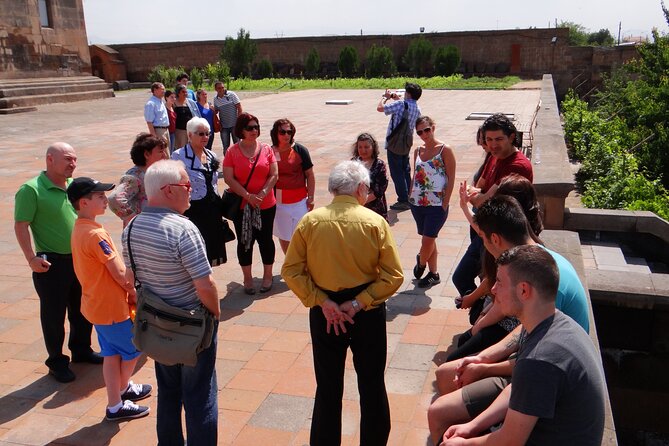
The sites are important, but the guide is central to how much you get from them. The tour is built around explanations of Armenian religious beliefs, Catholicos Komitas, the country’s conversion to Catholicism, the genocide memorial, and brandy production.
Nvard is the named guide associated with the experience. She speaks English well and has been described as both friendly and well informed about the sites and their history. One especially useful detail for solo visitors is her willingness to take photographs.
That personal help may not be guaranteed on every departure, but it suggests the sort of service to value in a small group. If you have questions about the relics, the church traditions, or the difference between the brandies, ask them during the visits rather than waiting until the end.
The group size can reach 15 people. That is still a group tour, so you should not expect the pace or flexibility of a private guide. Pickup, an air-conditioned vehicle, and a mobile ticket make the logistics simple, and the tour is near public transportation. Most people can participate, and service animals are allowed.
Who will get the most from this tour?
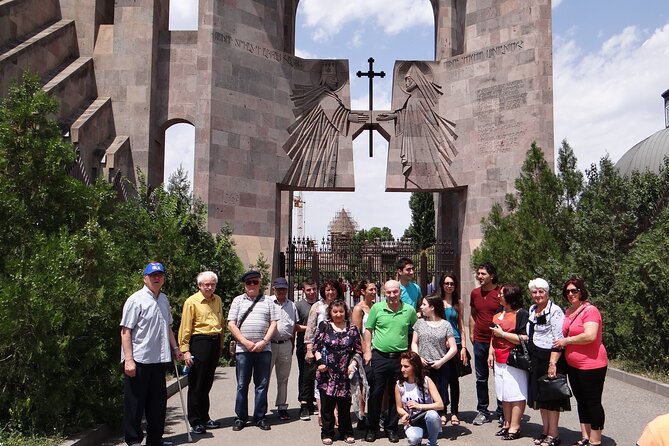
I would recommend this experience to you if you want a first look at Armenia’s religious center without arranging several separate visits. It suits visitors who value a guide’s explanation as much as the buildings themselves.
It is also a good match if you want variety in a short outing. In one morning and early afternoon, you cover genocide remembrance, early Christian churches, sacred relics, and Armenian spirits.
Solo visitors may appreciate the small group and the chance to have help with photographs. The tour also suits anyone who wants included admission and transport rather than figuring out the route alone.
I would hesitate if you need a slow, detailed architectural tour. The schedule includes several stops, and Saint Hripsime receives only about 30 minutes. I would also hesitate if the inside of Etchmiadzin Cathedral is essential to your plans, since restoration means the visit is exterior only.
The alcohol tasting is another consideration. The tour includes port wine and brandy, so it is not the best choice if you do not drink or prefer a day centered only on churches. The itinerary also does not provide a separate time for Saint Gayane, so ask for the exact plan before departure.
Should you book the Tsitsernakaberd and Noy tour?
Book it if you want an efficient, guided introduction to Yerevan’s most important memorial and the churches of Vagharshapat, followed by a classic Armenian brandy tasting. The included transport, museum ticket, guide, and drinks make the $100 price reasonable for a compact cultural outing.
Do not book it expecting a full interior visit to Etchmiadzin Cathedral or an unhurried study of every church. The restoration, short church visits, variable four to five-hour duration, and non-refundable booking policy call for realistic expectations.
For many people, this will be a strong choice for a first full day in Yerevan. It gives you the national story, the religious center, and a taste of Armenian craftsmanship in one well-packed route.
FAQ
How long does the tour last?
The tour is described as lasting about four hours in the main description and approximately five hours in the summary. Driving time between Yerevan, Vagharshapat, and the factory is included in the overall outing.
What time does the tour start?
The scheduled start time is 9:30 am.
Is pickup available?
Yes. Pickup is offered, and the tour uses an air-conditioned vehicle.
Is Etchmiadzin Cathedral open for an interior visit?
No. The cathedral is under restoration, so the visit includes viewing it from outside and visiting the Etchmiadzin museum instead.
What can I see at the Etchmiadzin museum?
The museum includes religious relics, including a piece from Noah’s Ark and the Holy Lance, according to the tour details.
What is included in the Noy Factory tasting?
The tasting includes port wine from 1941 and two types of brandy. Alcoholic beverages and the museum tickets are included in the tour price.
Is lunch included?
No. Lunch is not included in the $100 price. An optional lunch is listed at $15 per person if required.
Just added around Yerevan
- Private tour to Khor Virap, Areni winery, Noravank, Selim pass, Hayravank★ 5.0 · 3 reviews
- Private tour to Gyumri, Dzitoghtsyan Museum, Black Fortress★ 5.0 · 3 reviews
- Private Tour: Tsaghkadzor, Ropeway, Kecharis Monastery, Sevan Lake, Sevanavank★ 5.0 · 3 reviews
- Private tour to Garni, Geghard, Sevan (Sevanavank), Dilijan (Haghartsin)★ 5.0 · 3 reviews
- Private Tour: Lake Sevan, Sevanavank★ 4.5 · 3 reviews
- Secret Spots Of Armenia Day Private Tour★ 5.0 · 3 reviews
- Day Trip to Tatev Monastery★ 4.5 · 3 reviews
- Private Tour: Garni-Geghard-Tsaghkadzor-Sevan★ 5.0 · 3 reviews
Yerevan Tours, compared.
Group Tour: Garni, Symphony of Stones, Geghard, Lavash Baking
Read our review →
Group Tour: Lake Sevan (Sevanavank), Dilijan (Goshavank, Haghartsin)
Read our review →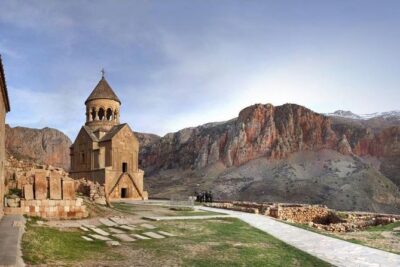
Group tour: Khor Virap, Noravank, Areni Winery and Cave
Read our review →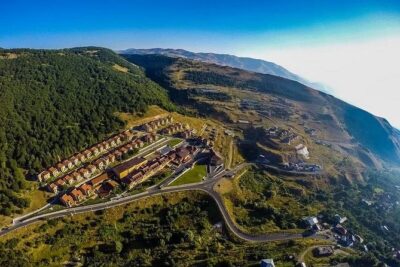
Group Tour: Tsaghkadzor (Kecharis, Ropeway), Lake Sevan, Trout barbecue treat
Read our review →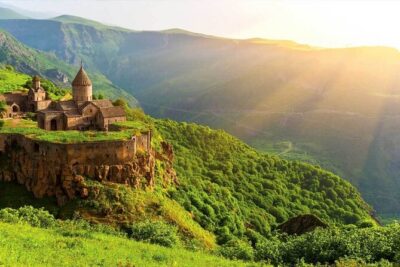
Group Tour: Khor Virap, Noravank, Tatev monasteries (wayback on Ropeway)
Read our review →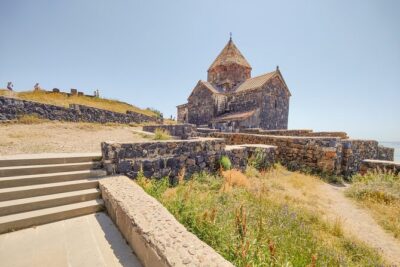
Sevan, Dilijan, Haghartsin, Goshavank, Lake Parz
Read our review →
Group Tour: Garni pagan temple, Geghard monastery, Lake Sevan, Sevanavank
Read our review →
Browse the lists this tour appears in