
Reviewed · GARNI TEMPLE & GEGHARD MONASTERY TOURS
Yerevan: Garni, Geghard, Symphony of Stones & Lavash Baking
The most memorable part of this Yerevan day trip is the way it links ancient Armenia with dramatic nature. You look toward Mount Ararat from Charents Arch, enter a monastery carved into rock, walk beside basalt columns in Azat Canyon, and finish with Armenia’s famous flatbread.
I like the low $23 price and the range of sights packed into roughly six hours. I also like the strong guide-led storytelling, especially from guides such as Yegor, Hasmik, Igor and Mery, who bring Armenian culture to life in clear English. The main drawback is that the group can be large, and some departures combine English and Armenian speakers, which may slow the day.
Key points to know before booking
- Mount Ararat viewpoint: Charents Arch gives you a quick, memorable look toward Armenia’s national symbol, although clear weather is essential.
- Two major cultural stops: Geghard Monastery and Garni Temple offer very different views of Armenian faith and the pre-Christian past.
- Best nature stop: The Symphony of Stones is a striking basalt formation in Azat Canyon, with an entrance fee of 300 AMD.
- Food is part of the appeal: The lavash demonstration shows how Armenia’s thin bread is baked, though the format may be more demonstration than hands-on class.
- Strong value for the price: Transport, a guide and the lavash activity are included, while Garni and the Symphony of Stones require small extra fees.
- Watch the timing: Restaurant stops can be longer than expected, and weather can force changes to the route.
Why this half-day route works from Yerevan
This is a smart first excursion from Yerevan because the sights are close enough to combine without turning the day into a punishing road trip. In about six hours, you get a mountain viewpoint, a UNESCO-listed monastery, a canyon, a pagan temple and a food tradition.
The route also gives you several ways to understand Armenia. At Geghard, the focus is Christian faith and medieval architecture. At Garni, you see the country’s pre-Christian past. At the canyon, geology takes over. Lavash then brings the experience back to everyday Armenian life.
The tour starts at 9:00 am beside the Komitas Yerevan State Conservatory at 1a Sayat-Nova Avenue. It returns to the same meeting point, which is useful if you have an afternoon plan in the city. Transport is provided in a group vehicle, usually described in positive terms as clean, comfortable and air conditioned, though comfort can vary by departure.
The maximum group size is 20 people. That is not a private tour, so expect a social outing rather than a quiet custom itinerary. Solo visitors can find this format particularly easy, since the shared minibus creates natural chances to meet people from different countries.
More Garni and Geghard trips:
- Group Tour: Garni, Symphony of Stones, Geghard, Lavash Baking
★ 5.0 · 1,042 reviews - Group Tour: Garni pagan temple, Geghard monastery, Lake Sevan, Sevanavank
★ 5.0 · 430 reviews - Group Tour: Khor Virap, Garni temple, Geghard, Lavash baking
★ 5.0 · 333 reviews
Charents Arch and the first view of Mount Ararat
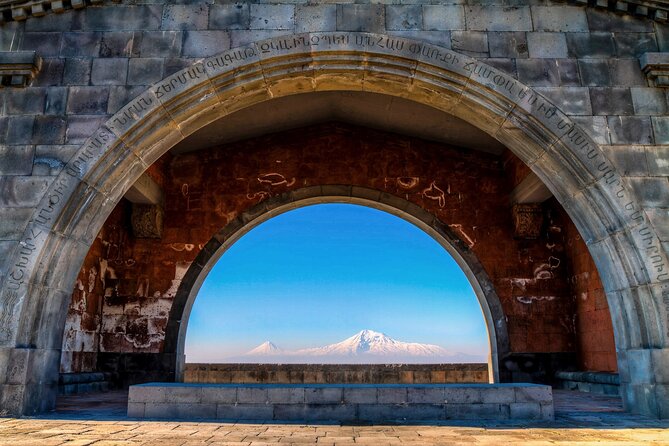
The first stop is Charents Arch, also called the Mount Ararat Temple. It was designed by Armenian architect Rafael Israelyan in 1957 near the village of Voghjaberd, at a point chosen for its view toward Mount Ararat.
The arch is simple, but its setting gives it weight. From the nearby hill, you look toward Ararat, the mountain that has become one of the strongest symbols of Armenian identity. The structure carries a line from poet Yeghishe Charents praising his beloved Masis, the Armenian name commonly associated with Ararat.
This is a viewpoint stop rather than a major monument visit. You are given about an hour, which allows time for photographs and an introduction from the guide. On a clear morning, it can be the visual high point of the trip. On hazy or cloudy days, the mountain may be hidden, so keep your expectations tied to the weather rather than the promise of a guaranteed view.
The stop is free, and it helps set the tone for the rest of the day. You are not simply looking at scenery. You are seeing a place that carries strong national meaning.
Geghard Monastery, where stone becomes architecture
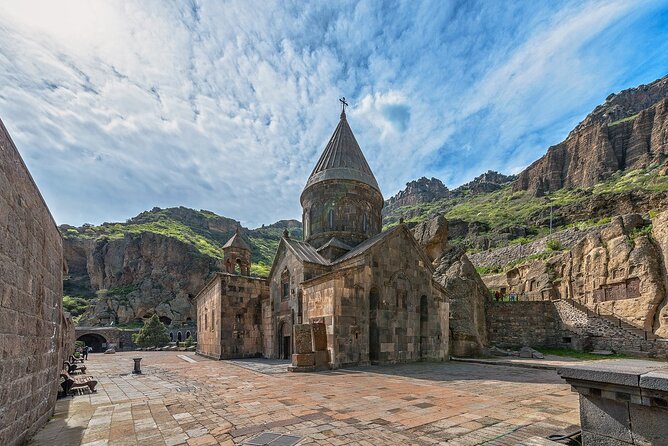
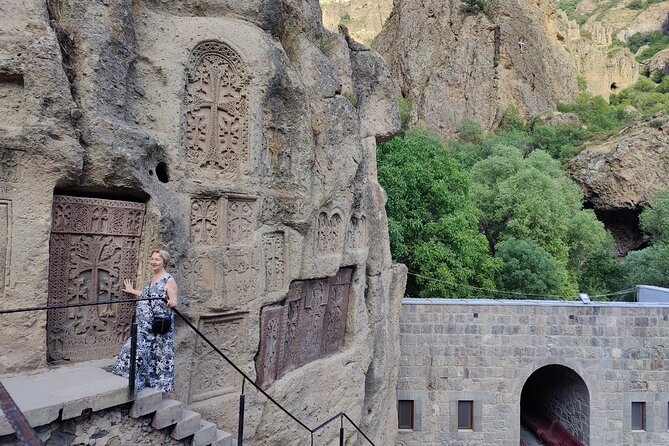
Geghard is the most atmospheric stop on the route. This medieval monastery sits among steep cliffs, with parts of the complex carved directly into the surrounding rock. The setting feels enclosed and powerful, especially when you step from the open valley into the darker stone chambers.
The name Geghardavank means Monastery of the Spear. According to Armenian tradition, the spear that wounded Jesus at the Crucifixion was brought to Armenia by the Apostle Jude, known locally as Thaddeus. The relic is now kept in the treasury at Echmiadzin, but the story remains central to the monastery’s identity.
Geghard has UNESCO World Heritage status with enhanced protection. That designation makes sense once you see how the buildings and caves work together. This is not a freestanding church dropped into a field. The mountain itself forms part of the religious complex.
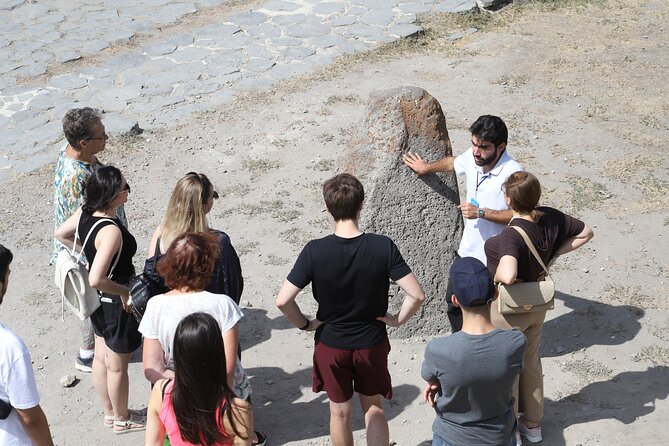
Your guide should explain the main symbols, religious stories and architectural details before giving you time to look around. Guides including Yegor, Igor, Hasmik and Mery have received especially warm praise for their clear explanations and storytelling. Some departures have included spiritual singing inside the monastery, which can make the visit especially moving, though this should not be treated as a guaranteed part of every outing.
Wear shoes with a decent grip. The visit includes uneven outdoor surfaces and stone interiors, and winter weather can make the approach slippery. One departure had to change its plan because of snow, so flexibility matters in colder months.
The Symphony of Stones in Azat Canyon
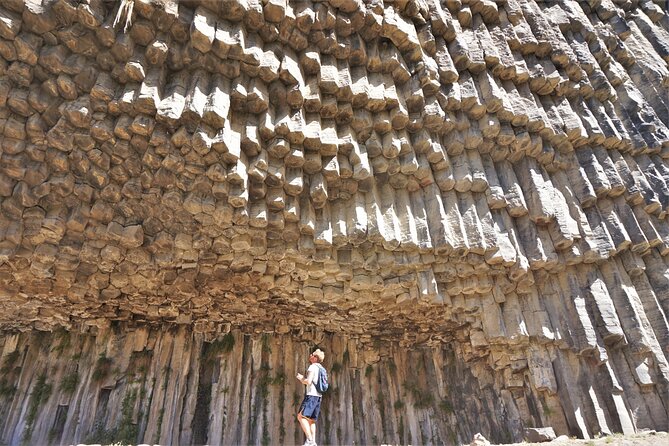
The Symphony of Stones is the route’s most unusual natural feature. Along the canyon, tall basalt columns form a pattern of repeating hexagons. Their regular shapes resemble the pipes of a giant organ, which explains the poetic name.
This stop is short enough to fit easily into the day, but it deserves more than a hurried photograph. Look closely at the columns and you will see how naturally formed rock can appear almost engineered. The contrast between the dark basalt and the canyon walls gives the site a strong visual character.
The entrance fee is 300 AMD and is not included. That is a small cost, but bring Armenian dram so you are ready to pay without searching for a cash machine.
The guide commentary here can vary. Some guides explain the formation well, while other departures have offered little information before allowing free time. If your guide gives a brief introduction, take a moment to ask how the columns formed and why the shapes repeat so evenly. That small question can turn a quick stop into a more useful one.
Weather can also affect this part of the route. Snow and ice have prevented some groups from reaching the site, and poor weather may lead to a changed itinerary or cancellation. The canyon is one of the places where practical shoes and a sensible forecast check really matter.
More cooking and lavash classes:
- Garni, Geghard & Symphony Small-Group Day Trip with Lavash Baking
★ 5.0 · 263 reviews
Garni Temple and Armenia’s pre-Christian past
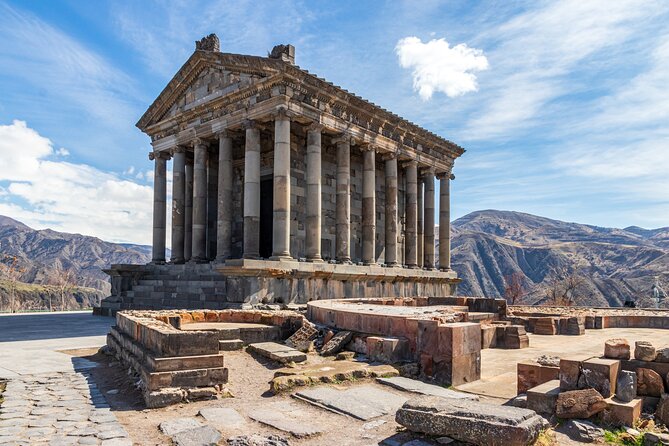
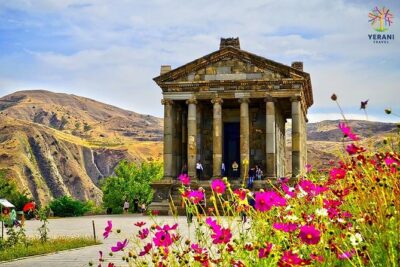
Garni Temple is the architectural centerpiece of the outing. Built in the first century, it is dedicated to Mithra, the sun god, and is the only preserved pagan temple in Armenia and in the territory of the former Soviet Union.
That fact gives Garni a different feel from Geghard. Geghard introduces medieval Christianity and rock-cut worship. Garni points to an earlier Armenia, when pagan beliefs shaped public and royal life. Seeing both on the same morning makes the country’s religious story easier to understand.
The temple was destroyed by a major earthquake in 1679 and later restored between 1968 and 1975. What you see today is therefore both an ancient monument and a careful modern reconstruction. Your guide can help explain which parts reflect the original structure and why the temple matters beyond its striking columns.
The Garni entrance fee is 1,500 AMD and is not included in the tour price. Add this to the 300 AMD canyon fee when working out your budget.
You receive about an hour at Garni. That is enough for the temple and photographs, but not for a slow, extended visit to every part of the surrounding area. The best use of your time is to listen to the guide’s introduction first, then explore on your own. Several guides, including Hasmik and Yegor, have been praised for giving useful background before allowing independent time at the monuments.
Lavash baking and the food side of Armenia
The final scheduled activity is a lavash baking demonstration in Garni, lasting about 40 minutes. Lavash is Armenia’s famous thin bread, and watching it made adds something that a standard monument tour cannot provide.
The appeal is in the process. You see the bread prepared and baked, then usually get a chance to taste it. Some versions of the stop take place at a family-run restaurant, where the courtyard and surrounding fruit trees add to the atmosphere. Guests have enjoyed the bread, the setting and the chance to see a daily food tradition rather than another formal sight.
Be clear about the wording, though. This may not be a hands-on class in the usual sense. Some departures have involved watching the baking for only a few minutes, with little explanation, followed by tasting. If you are hoping to shape and bake your own bread, ask the guide what participation is planned that day.
Lunch may also be connected with this part of the route. Some outings include a restaurant stop in Garni, and the meal has been praised by some visitors as tasty and well chosen. Others found the food overpriced or had to wait a long time, with reports of restaurant stops lasting around an hour and a half.
That makes lunch the biggest variable in the schedule. You may enjoy a picturesque meal, but you should not assume it is included in the $23 price. It is also worth asking at the start how long the stop will be and whether you can skip the meal if you prefer to keep the sightseeing moving.
The guide can make or break the day
The strongest feature of this tour is the guide. Names that appear repeatedly in the experience include Yegor, Hasmik, Igor, Mery, Anna, Ani, Gania, Zhenya and Taku. Individual assignments vary, but the best guides do more than repeat dates. They explain why Ararat matters, connect Garni and Geghard to different periods, answer questions about religious symbols and keep the group moving.
Yegor has been praised for combining serious Armenian history with humor and for playing modern and traditional Armenian music during the drive. Hasmik has been described as warm, enthusiastic and a strong storyteller. Igor is noted for passion and clear explanations, while Taku has been appreciated for his friendly, local approach.
The weaknesses are mainly about coordination. On a full departure, an English and Armenian group may be combined. That can mean repeated explanations, slower movement and less time for English commentary. One poorly coordinated departure also left sections of the group waiting or separated at stops.
This is not a reason to reject the tour outright, given the high overall rating of 4.8 from 589 ratings and the 96 percent recommendation rate. It is a reason to understand what you are buying: an affordable group outing whose quality depends partly on the guide and the day’s organization.
Transport, timing and practical costs
The advertised duration is approximately six hours, with a 9:00 am departure and a return to the original meeting point. The listed sightseeing time adds up to several hours, while the remaining time covers driving, group movement and any meal stop.
The vehicle is generally described as a comfortable minibus, and several guides have been praised for keeping the route well timed. Still, vehicle conditions are not perfectly consistent. Some people have reported trouble with air conditioning, especially when the driver did not adjust it after requests. If you are sensitive to heat or cold, dress in layers and mention your preference early.
At the base price of $23, the tour offers excellent sightseeing value. You receive transport, guide service and the lavash activity. Add 1,500 AMD for Garni and 300 AMD for the Symphony of Stones, plus any meal or personal spending. The low price is one reason the tour works well for a first look at Armenia, but it also means you should not expect a private guide, flexible pacing or a fully customized meal plan.
The tour is near public transportation, confirmation is provided at booking, and most people can take part. It requires good weather, and if conditions are poor, the operator may offer another date or a full refund. Cancellation is free up to 24 hours before the start time. Changes or cancellations inside that window are not refunded.
Who should book this Armenia day trip
I would choose this tour if you want a broad first taste of Armenia outside Yerevan without arranging separate transport. It suits first-time visitors, solo visitors, budget-conscious sightseers and anyone who wants a guide to explain the country’s cultural background.
It is also a good fit if you care about variety. In one outing, you move from a national mountain viewpoint to a medieval monastery, a geological formation, a pagan temple and a traditional food experience.
I would hesitate if you want long, quiet visits at each site or complete control over meals. A private tour would offer more flexibility. I would also think twice if a hands-on lavash lesson is your main reason for booking, since the activity can be more of a demonstration.
Should you book the Garni and Geghard tour?
Yes, if you can accept the limits of a budget group tour. The route covers the essential nearby sights, the price is unusually low, and a strong guide can add real meaning to the monuments. Geghard, Garni and the Symphony of Stones are the clear reasons to go.
Before departure, confirm the language arrangement, ask about the restaurant timing and bring cash for the two entrance fees. Choose a clear-weather day if Mount Ararat and the canyon are priorities. With those expectations in place, this is a practical and rewarding introduction to Armenia beyond Yerevan.
FAQ
How long does the tour last?
The tour lasts approximately six hours.
What time does the tour start?
It starts at 9:00 am.
Where does the tour begin?
The meeting point is Komitas Yerevan State Conservatory, 1a Sayat-Nova Avenue, Yerevan 0001, Armenia.
Where does the tour finish?
The activity ends back at the same meeting point.
Is the tour offered in English?
Yes. English is one of the offered languages.
What is included in the price?
The price includes guide service, transport service and a lavash baking master class.
Are entrance fees included?
No. Garni costs 1,500 AMD, and the Symphony of Stones costs 300 AMD.
How many people can join the tour?
The maximum group size is 20 people.
What happens if the weather is poor?
The tour requires good weather. If it is canceled because of weather, you will be offered another date or a full refund.
Just added around Yerevan
- Private tour to Khor Virap, Areni winery, Noravank, Selim pass, Hayravank★ 5.0 · 3 reviews
- Private tour to Gyumri, Dzitoghtsyan Museum, Black Fortress★ 5.0 · 3 reviews
- Private Tour: Tsaghkadzor, Ropeway, Kecharis Monastery, Sevan Lake, Sevanavank★ 5.0 · 3 reviews
- Private tour to Garni, Geghard, Sevan (Sevanavank), Dilijan (Haghartsin)★ 5.0 · 3 reviews
- Private Tour: Lake Sevan, Sevanavank★ 4.5 · 3 reviews
- Tsitsernakaber-Hripsime-Echmiatsin-Noy brandy factory★ 4.5 · 3 reviews
- Secret Spots Of Armenia Day Private Tour★ 5.0 · 3 reviews
- Day Trip to Tatev Monastery★ 4.5 · 3 reviews
Garni Temple & Geghard Monastery Tours, compared.
Group Tour: Garni pagan temple, Geghard monastery, Lake Sevan, Sevanavank
Read our review →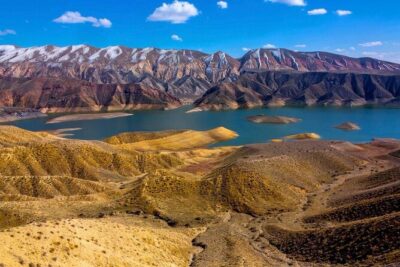
Group Tour: Khor Virap, Garni temple, Geghard, Lavash baking
Read our review →
Private 7-8-hour Khor Virap, Garni temple & Geghard monastery trip from Yerevan
Read our review →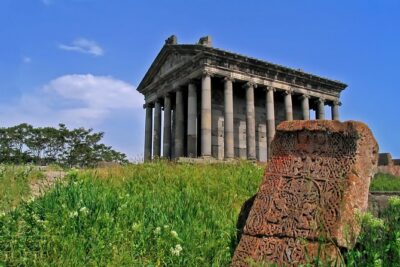
Garni, Geghard & Symphony Small-Group Day Trip with Lavash Baking
Read our review →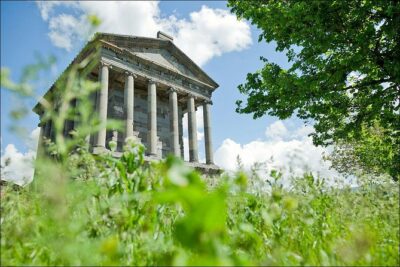
Private Half-Day Garni Temple and Geghard Monastery Tour from Yerevan
Read our review →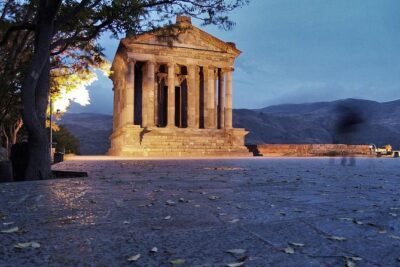
Private 7-8 hour Trip to Garni – Geghard – Lake Sevan – Sevanavank from Yerevan
Read our review →
Private tour to Echmiadzin (st Cathedral), Zvartnots, Khor Virap, Garni, Geghard
Read our review →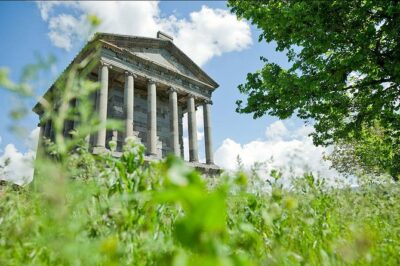
Private 8-9-hour Echmiadzin, Zvartnots, Garni and Geghard trip from Yerevan
Read our review →Browse the lists this tour appears in