
Reviewed · YEREVAN TOURS
7 Day Tour through Armenia
Armenia packs an extraordinary amount into a small country, and this seven-day tour from Yerevan takes you from ancient pagan temples and cliffside monasteries to brandy cellars, mountain lakes, museums, and handmade crafts. The route gives you a broad first look at Armenian culture rather than keeping you in the capital.
I like the way the tour mixes famous sights such as Garni, Geghard, and Lake Sevan with quieter stops in Gyumri, Ashtarak, Oshakan, and Marmashen. I also like that admission is included at most attractions and that English-language touring, pickup, and a maximum group size of 30 make the trip fairly easy to arrange.
The main concern is the pace. Day 6 includes eight stops, and most listed visits are about an hour, so you should expect long driving days and brisk sightseeing rather than slow, unhurried exploration.
Key points to know before booking
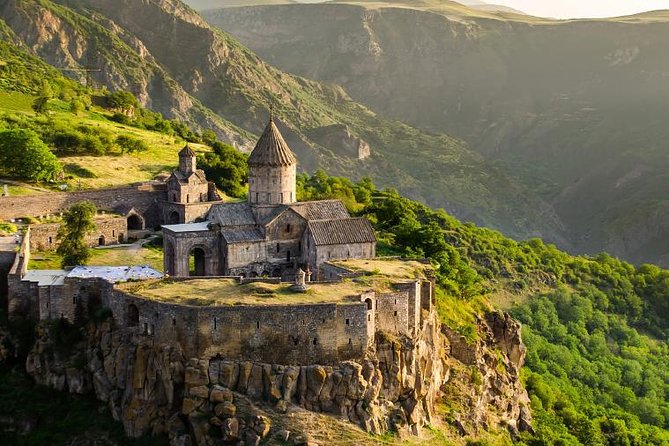
- Garni and Geghard anchor the cultural heart of the trip: One is Armenia’s surviving pagan temple, the other a remarkable monastery cut into rock.
- Day 3 brings Armenia’s best scenery: Lake Sevan, Dilijan, Haghartsin, and Goshavank combine water, forest, and medieval architecture.
- Gyumri adds a different side of the country: Its old stone buildings and cultural character contrast with Yerevan’s grand avenues.
- Day 6 is packed with small churches and major ruins: It suits history-minded visitors who do not mind a full day on the road.
- The price is $885.13 per person: Included admissions add value, but accommodation, meals, and any other extras are not specified.
- The tour is practical for families and mixed-age groups: The available feedback specifically describes children staying interested throughout the sightseeing.
Why this route gives you a useful first look at Armenia
A good first trip to Armenia needs more than a quick circuit of churches. Armenia’s identity comes from several layers: pre-Christian worship, the early Armenian Apostolic Church, medieval scholarship, Soviet-era urban life, modern art, and a strong tradition of handmade work.
This tour covers all of those pieces. You begin in Yerevan, then move through the country’s central and northern regions before returning to the capital. The result is not a relaxed holiday based in one hotel. It is a survey of Armenia’s major cultural sights, with enough smaller places to give the journey a sense of variety.
The route also gives you a useful contrast between built and natural settings. Lake Sevan and the forests around Dilijan provide open air and mountain views, while monasteries such as Geghard and Saghmosavank bring you into enclosed stone spaces where sound, light, and carved detail matter.
A few more Yerevan days to weigh up
- The Great Beauty of Armenia: 7-Day Culture and Cuisine Tour
★ 5.0 · 35 reviews - Family package for 7 days
★ 5.0 · 10 reviews - 7 Days Armenia Package with Accommodation, Tours and Transfers
★ 5.0 · 5 reviews
Day 1: Yerevan views, Armenian brandy, and city streets
The opening day stays in Yerevan and begins at the Cascade Complex, a broad stairway facing the Opera House. Seven elevators run inside the structure, so you do not have to climb every step to reach the upper levels.
The reason to visit is the view. From the highest point, you can look across Yerevan and, depending on conditions, take in the surrounding setting beyond the city. The Cascade also helps you understand the capital’s layout. Start here, and the rest of your city walking has a useful visual frame.
The next stop is the ARARAT Museum, where you taste Armenian cognacs of different ages. The brandy tradition is an important part of the country’s modern identity, and this visit gives you something more tangible than another church tour. The tasting is listed as included, so you should not need to budget a separate admission fee.
Keep in mind that this is an alcohol-based visit. If you do not drink, the museum may be less important to you, though it still provides cultural context. It is also wise to pace yourself, since the tasting comes early in the week.
The day ends with a walk along Mesrop Mashtots Avenue and through central Yerevan. This is where you see the city’s architecture at street level rather than from a monument or museum. The hour is short, but it is a useful introduction to the capital before the tour turns toward the countryside.
Day 2: Religious history at Holy Archangels Church and Zvartnots
Day 2 focuses on Armenia’s religious heritage. Holy Archangels Church is presented as a major religious and administrative center of the Armenian Apostolic Church, with a history connected to the site of a pagan temple and to early Christian Armenia.
The supplied description also refers to St. Hripsime monastery, built in 618. That detail points to the long timeline you encounter across the country: Armenian Christian buildings often occupy places with older religious importance, and later structures were added, rebuilt, or adapted across many centuries.
Zvartnots Temple is the day’s other major stop. Construction began in the seventh century under Catholicos Nerses III and continued intermittently for about 20 years. The site is connected with the ancient city of Dvin, and both are recognized on the UNESCO World Heritage List.
Zvartnots is especially useful for understanding Armenia’s architectural ambition in the early medieval period. It is not simply a church you enter, but a major historic site where the remains and setting help you imagine the scale of the original complex.
This day is lighter in the number of stops than several later days. That gives you more room to pay attention to the setting and the religious story instead of racing from one building to the next.
Day 3: Lake Sevan, Dilijan forests, and medieval scholarship
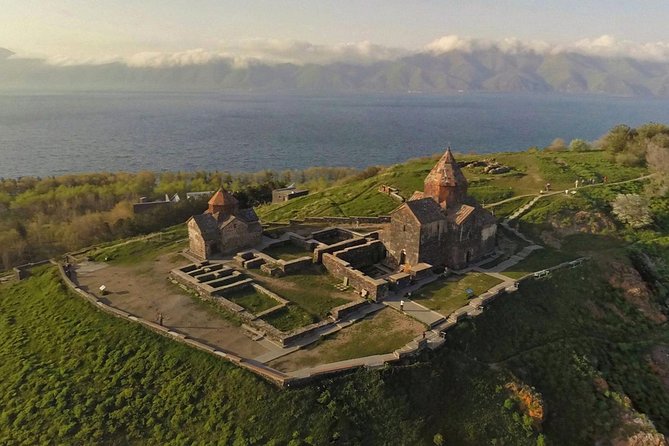
The third day moves north toward Lake Sevan, often called Armenia’s pearl. The lake is known for its high elevation and sweet, strikingly blue water. At Sevanavank Monastery, you get the classic pairing of dark stone churches and wide water views.
The hour at Sevanavank is likely to be one of the most scenic stops on the tour. Bring a layer of clothing, since high-elevation weather can feel different from Yerevan. The lake is not just a photo stop, either. It shows how Armenia’s historic sites are often tied closely to dramatic natural settings.
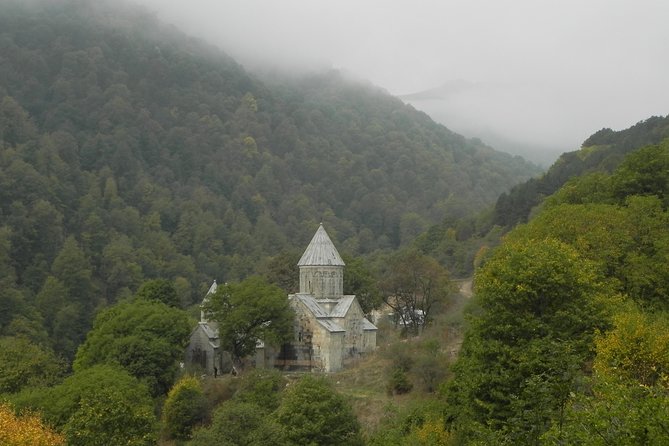
From Sevan, the route continues toward Dilijan and Haghartsin Monastery. Haghartsin was a religious and educational center from the 10th through 13th centuries, and it is surrounded by the wooded setting for which the Dilijan area is known.
I like this part of the itinerary because the scenery changes sharply. After the open views at Sevan, the route brings you into a more enclosed forest setting. The monastery feels connected to its surroundings rather than placed apart from them.
Goshavank adds another scholarly chapter. During the 12th and 13th centuries, it became one of medieval Armenia’s leading religious and educational centers under Mkhitar Gosh, a noted scholar, legal expert, and scientist.
If you want a day that combines scenery with serious historical content, this is one of the strongest sections. The drawback is travel time. Three substantial sites in one day means you will see the highlights, but you may wish for extra time at each monastery.
Same country, a completely different kind of day out:
- Group Tour: Garni, Symphony of Stones, Geghard, Lavash Baking
★ 5.0 · 1,042 reviews - Group Tour: Lake Sevan (Sevanavank), Dilijan (Goshavank, Haghartsin)
★ 5.0 · 1,036 reviews - Group tour: Khor Virap, Noravank, Areni Winery and Cave
★ 5.0 · 651 reviews - Yerevan: Garni, Geghard, Symphony of Stones & Lavash Baking
★ 5.0 · 589 reviews
Day 4: Gyumri’s old stone streets and northern monasteries
Gyumri gives you a welcome change from Armenia’s sacred sites. The old city is known for its stone houses, decorative bas-reliefs, and colorful building materials. Some historic buildings survived the devastating 1988 earthquake, and the city remains an important center of cultural life.
The walking portion through Gyumri is valuable because it lets you see how people shaped a city around local materials and craftsmanship. The architecture is not just a backdrop. It tells you about regional identity, building traditions, and the city’s ability to preserve its character through hardship.
Marmashen Monastery lies on the left bank of the Akhurian River. Built between 988 and 1029, it includes five churches and is described as one of the best surviving examples of the Ani school of medieval Armenian architecture.
The river setting adds another layer to the visit. You are not simply moving from one enclosed church to another. The monastery’s placement near the water gives you a chance to step back and see how medieval builders used the land around them.
Harichavank is set on the western slope of Mount Aragats, on a rocky cape. The complex began in the seventh century, while its main church dates from the 13th century. In the 19th century, it became a summer residence for Catholicoses.
One of its most unusual features is a small chapel perched on a piece of rock that split from the cape during an earthquake. The chapel now towers above the canyon. This is the sort of detail that gives a place personality and makes it easier to remember after a week of monumental churches.
Day 4 is a strong choice for anyone who wants to see Armenian architecture outside Yerevan. It also asks for patience, since the route combines a city walk with two monastery visits and countryside driving.
Day 5: Charents Arch, Garni, and the rock-cut rooms of Geghard
Day 5 contains two of Armenia’s best-known sights. On the way to Garni, the tour makes a short stop at Charents Arch, where you get a view over the Ararat Valley and toward Mount Ararat.
The view is weather-dependent, so do not treat it as guaranteed. Still, the stop makes sense as an introduction to Garni because it places the temple within the wider setting of Armenia’s central highlands.
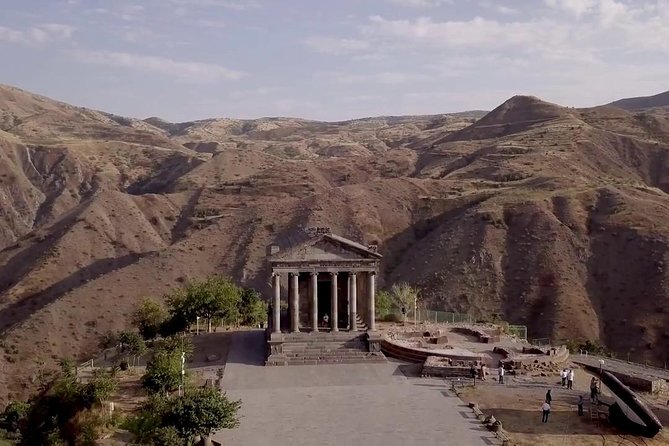
Garni is the only surviving temple in Armenia from the country’s pagan and Hellenistic era. It was dedicated to Mithra, the pagan sun god, and dates to 76 B.C. The temple later served as a summer residence for Armenian kings for more than four centuries.
Garni helps explain why Armenia cannot be understood only through Christian monuments. Its classical columns and pagan origins offer a sharp contrast to the medieval churches elsewhere on the route. You also get a clear sense of how political power and religion changed over time.
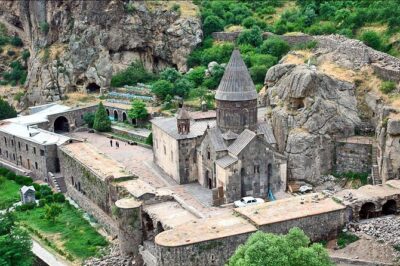
Geghard Monastery is the day’s other major sight and one of the tour’s highlights. Its present buildings date from the 10th through 13th centuries, with the main church built in 1215. The name Geghard means lance in Armenian and refers to the biblical spear once kept at the monastery before being moved to the museum at Echmiadzin Cathedral.
The most memorable part is the rock-cut architecture. Avazan Church, built in 1283, is carved into solid rock and leads through a portico to another church farther inside. Caves, medieval dwellings, and hundreds of khachkars surround the complex.
Geghard has endured repeated assaults over roughly seven centuries and served as a spiritual and cultural center. Allow yourself a quiet moment inside the carved spaces. The stone, shadow, and acoustics are as important as the formal history.
Day 6: Eight stops around Ashtarak, Aragats, and Oshakan
Day 6 is the tour’s most demanding day. You visit eight places, with most stops listed at about an hour. That makes for a broad range of sights, but it also means you should expect a tightly managed schedule.
The first three stops are churches near Ashtarak:
- Tsiranavor Church means apricot-colored church. It is a partly ruined fifth-century Armenian church at the edge of a gorge.
- Karmravor Church means red-colored church. It is a seventh-century Armenian Apostolic church.
- Spitakavor Church of Ashtarak means white-colored church. It is a partly ruined 13th-century church also located by a gorge.
Together, these churches show how Armenian names often describe color and place. The partly ruined condition is part of the experience. You are seeing old buildings with visible age, not polished monuments designed only for easy viewing.
Ashtarak Bridge, built in 1664, crosses the Kasagh River with three arches of unequal size. The area beneath and around it is used for picnics, so this stop offers a more ordinary public setting after the church visits.
Saint Gevorg Church follows, with 17th-century religious frescoes inside. The church was built to house remains associated with Saint George, known as the Slayer of Dragons. The frescoes give the visit an artistic focus beyond the building’s exterior.
Saghmosavank Monastery dates from the 13th century and is known for its acoustics. Its name refers to a spiritual song sung by Armenian clergy. If the church is quiet, listen carefully to the way sound behaves inside. This is a case where the building’s design affects how you experience it.
At Oshakan, Saint Mesrop Mashtots Cathedral honors the creator of the Armenian alphabet and serves as his burial place. This is one of the most meaningful cultural stops because the alphabet is closely tied to Armenian identity, literature, worship, and education.
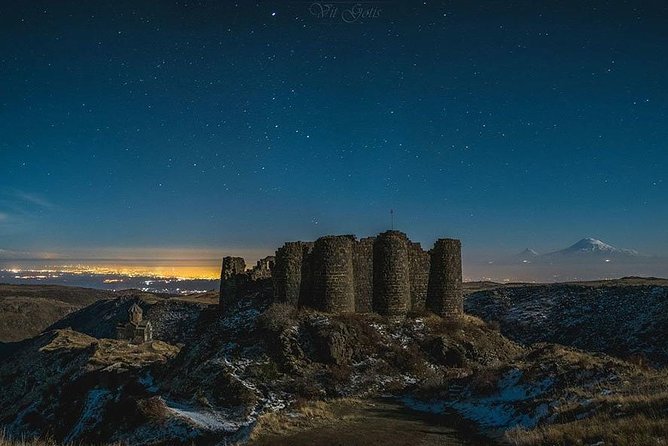
The final stop is Amberd Fortress, located about 2,300 meters above sea level on the slopes of Mount Aragats. Built in the 10th century at the meeting point of the Arkashen and Amberd rivers, it served as a refuge for Armenian kings during wartime.
Amberd brings the day to a dramatic close, but check the energy you have left. Eight stops can feel rewarding for a dedicated history fan and tiring for anyone who prefers long café breaks or extended time at one site.
Day 7: Parajanov, the birth of Yerevan, and handmade goods
The final day returns to the capital’s museums and markets. The Parajanov Museum is dedicated to Armenia’s greatest filmmaker and contains assemblages, flat and three-dimensional collages, drawings, dolls, and film sketches.
This is not a standard history museum. It introduces you to a highly personal artistic world built from unusual combinations of objects and images. If the churches begin to blur together by the end of the week, Parajanov provides a welcome change of mood.
Erebuni Museum explains the foundation of Yerevan. It sits at the foot of Arin Berd hill, where the Urartian fortress of Erebouni was built. This stop connects the modern capital to its ancient origins and gives the city a much longer timeline than its present-day streets might suggest.
The last stop is Vernissage Market, an open-air market where local makers sell handmade work. You can browse crafts and souvenirs in an informal setting, and it is a sensible place to leave shopping until the final day. Prices, quality, and style can vary, so take time to compare before buying.
Ending at Vernissage works well. After a week of monumental buildings and ancient sites, you get a direct look at contemporary craft and local commerce.
What $885.13 per person appears to cover
At $885.13 per person, this is not a budget day tour. The value depends on how much you want handled for you and how many of the listed admissions you would otherwise pay separately.
Admission is included at the museums, churches, monasteries, temples, and other paid sites listed in the schedule. Pickup is offered, the tour is conducted in English, and confirmation is provided at booking. Those details remove some of the planning work, especially for a first visit to Armenia.
Accommodation and meals are not stated as included. You should check those points before paying, along with the exact pickup arrangements and the vehicle plan for the longer days. The maximum group size is 30, which is manageable but not intimate. A smaller group would usually allow more flexibility at each stop, while a group of this size can help keep the price below a private-tour rate.
The strongest value here is breadth. In one week, you cover Yerevan, Lake Sevan, Dilijan, Gyumri, Ashtarak, Oshakan, Mount Aragats, Garni, Geghard, and a long list of religious sites. If you prefer to settle into one town and explore at your own pace, the price may feel less worthwhile.
Who will enjoy this seven-day tour most
I would choose this trip if you want a structured introduction to Armenia and care about history, architecture, religion, art, and mountain scenery. It also suits families who like variety. The available feedback specifically describes children remaining interested, which makes sense given the mix of fortresses, caves, markets, lakes, and unusual buildings.
The tour can also work well for visitors returning to Armenia after many years. It reaches beyond the most obvious capital sights and includes smaller churches and towns that help fill out the picture.
You should think twice if you dislike early starts, long road days, repeated church visits, or fixed schedules. Day 6 is especially full, and the one-hour format at each stop leaves little room to linger.
Ari Tour’s feedback also points to strong organization, helpful staff, and a welcoming approach. The practical benefit is simple: you can focus on the sites instead of arranging every transfer and admission yourself.
Booking details worth checking
Most visitors can participate, and the tour operates near public transportation. Pickup is offered, but the exact pickup area and time should be confirmed before departure.
Free cancellation is available if you cancel at least 24 hours before the local start time. Cancellations or changes made inside that 24-hour window are not accepted for a refund.
Should you book it?
Book this tour if you want to see a large portion of Armenia in one organized week and are happy with a busy schedule. The best parts are the contrasts: pagan Garni beside Christian Geghard, open Lake Sevan beside forested Dilijan, urban Yerevan beside old Gyumri, and famous monasteries beside small, weathered churches.
I would not book it for a slow, deeply personal stay. The route is designed to show you a lot, not to let you linger. For a first visit, though, the combination of included admissions, English-language touring, pickup, and strong attention to Armenia’s cultural sites makes it a practical way to get your bearings.
FAQ
How long is the Armenia tour?
The tour lasts approximately seven days.
Where does the tour begin?
The tour is based in Yerevan, Armenia. Pickup is offered.
Is the tour conducted in English?
Yes. The experience is offered in English.
What is the maximum group size?
The group can include a maximum of 30 people.
Are admission tickets included?
Admission is included for the listed museums, churches, monasteries, temples, and other paid attractions. Cascade Complex, Mesrop Mashtots Avenue, and Vernissage Market are listed as free.
What is the cancellation policy?
You can cancel for a full refund if you do so at least 24 hours before the experience’s start time. Cancellations or changes made less than 24 hours before the start time are not accepted for a refund.
Just added around Yerevan
- Private tour to Khor Virap, Areni winery, Noravank, Selim pass, Hayravank★ 5.0 · 3 reviews
- Private tour to Gyumri, Dzitoghtsyan Museum, Black Fortress★ 5.0 · 3 reviews
- Private Tour: Tsaghkadzor, Ropeway, Kecharis Monastery, Sevan Lake, Sevanavank★ 5.0 · 3 reviews
- Private tour to Garni, Geghard, Sevan (Sevanavank), Dilijan (Haghartsin)★ 5.0 · 3 reviews
- Private Tour: Lake Sevan, Sevanavank★ 4.5 · 3 reviews
- Tsitsernakaber-Hripsime-Echmiatsin-Noy brandy factory★ 4.5 · 3 reviews
- Secret Spots Of Armenia Day Private Tour★ 5.0 · 3 reviews
- Day Trip to Tatev Monastery★ 4.5 · 3 reviews
Yerevan Tours, compared.
Group Tour: Garni, Symphony of Stones, Geghard, Lavash Baking
Read our review →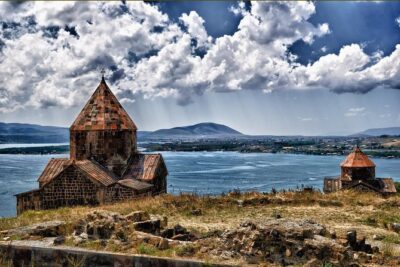
Group Tour: Lake Sevan (Sevanavank), Dilijan (Goshavank, Haghartsin)
Read our review →
Group tour: Khor Virap, Noravank, Areni Winery and Cave
Read our review →
Group Tour: Tsaghkadzor (Kecharis, Ropeway), Lake Sevan, Trout barbecue treat
Read our review →
Group Tour: Khor Virap, Noravank, Tatev monasteries (wayback on Ropeway)
Read our review →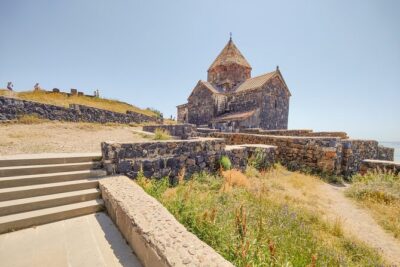
Sevan, Dilijan, Haghartsin, Goshavank, Lake Parz
Read our review →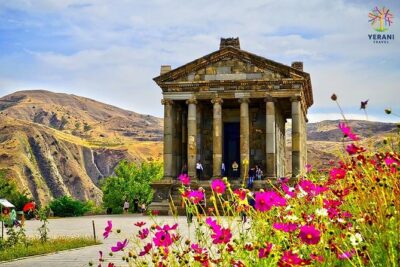
Group Tour: Garni pagan temple, Geghard monastery, Lake Sevan, Sevanavank
Read our review →
Browse the lists this tour appears in