
Reviewed · MUSEUMS
Museum of Illusions Tour
Gyumri’s Museum of Illusions turns a short museum visit into a hands-on puzzle. Mirrors make you look twice, perspective changes size and shape, and everyday ideas about light and movement stop behaving normally. You do not just look at displays here. You test them, pose with them, and try to work out the trick before the guide explains it.
I like two things in particular: the guide-led explanations make the fun feel useful, and the staff help you find clever ways to take photos instead of leaving you to guess where to stand. At $12 per person, it is also an easy addition to a day in central Gyumri. The main consideration is time. Some people finish in 40 to 50 minutes, while a slower visit can last up to 90 minutes, so the value depends on how much you experiment and photograph.
Key points to know before you go
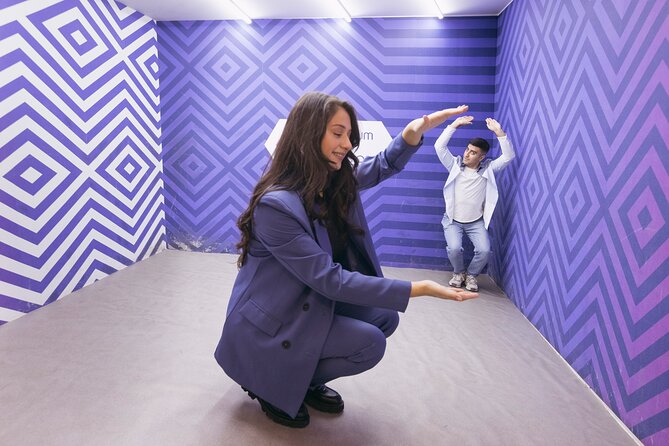
- More than 60 exhibits: Expect illusions based on light, shadow, color, movement, size, shape, mirrors, and perspective.
- A guided visit: A local staff member explains the science and answers questions as you move through the museum.
- Strong photo appeal: Staff can suggest poses and camera positions for unusual and funny pictures.
- Good for mixed ages: Children, parents, couples, groups, and solo visitors can all take part.
- Short walk from the main square: The museum is near public transportation and easy to add to a central Gyumri outing.
- Simple booking terms: Admission is included, mobile tickets are accepted, and free cancellation is available up to 24 hours ahead.
Why these illusions work better with a guide
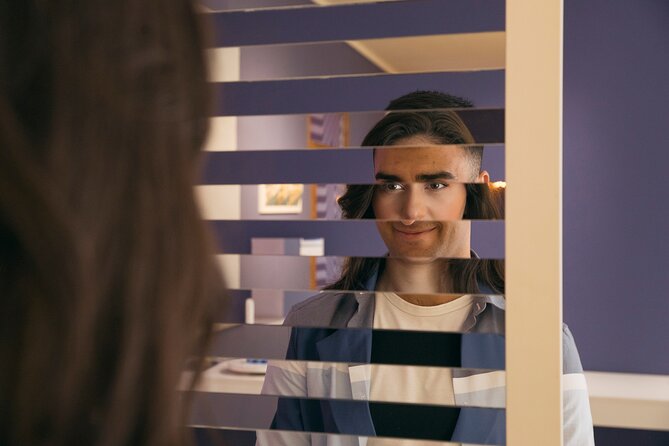
The central idea is simple: your eyes collect information, but your brain decides what that information means. The museum plays with that gap. A line can look longer because of the shapes around it. A mirror can make a room feel different from its real size. A familiar object may seem to float, shrink, stretch, or move when the light and viewpoint change.
You get time to test each exhibit before hearing the answer. That small pause matters. If somebody explains the trick at once, you may understand it but miss the pleasure of catching your own senses making a mistake.
The guide then connects the display to a basic scientific idea. The explanations are meant to be clear rather than academic, which makes the visit useful for children and adults together. You can ask questions as you go, and the staff are there to help you understand the setup rather than simply point you toward the next room.
The team includes Emily, Anushik, Ruzanna, Seda, and Samvel. Individual guide assignments can vary, but the staff’s role is more active than a standard attendant’s. They explain the exhibits, offer photo suggestions, and help you see how the illusion works.
A few more Armenia days to weigh up
- Group Tour: Gyumri (Urban Life museum, Black fortress, old town), Harichavank
★ 5.0 · 280 reviews - Yerevan Card Including Free 30+ Museums, 5+ Tours & Discounts
★ 5.0 · 91 reviews - Group Tour: Sightseeing in Yerevan, Erebuni Museum and Fortress
★ 5.0 · 42 reviews
What happens inside the 60-plus exhibits
The visit takes place at the Museum of Illusions Gyumri, with more than 60 displays arranged around visual tricks and interactive effects. The exact order of the visit may vary, but you can expect a progression through different ways your senses can be fooled.
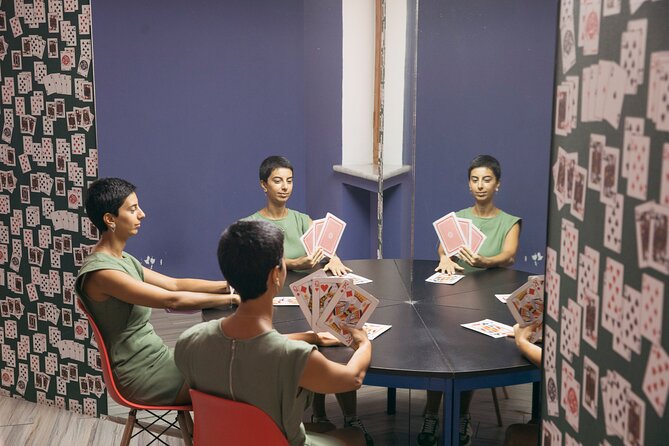
Some exhibits focus on mirrors. These are familiar objects, but the museum uses them to challenge your sense of distance, symmetry, and presence. A mirror may seem to create another person or another section of a room. You will likely spend more time checking the edges and looking behind the effect than you expect.
Other displays use light and shadows. Your brain often treats a shadow as a reliable outline of an object, but changes in angle or illumination can make that assumption fail. These exhibits work well when you take your time and compare what you see from more than one position.
Color and movement also play a role. A still image can appear active, or a pattern can seem to shift when your eyes move across it. The point is not only to produce a strange picture. It is to show how the brain handles changing visual information.
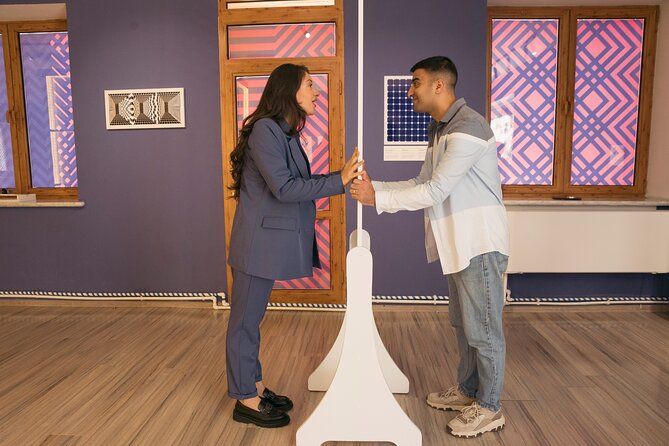
Size and shape illusions are especially effective for group photos. A person can appear much larger or smaller depending on where they stand, while a room or object can seem distorted from one particular viewpoint. You may need to follow the guide’s instructions about where to stand and how to frame the camera.
The museum also includes exhibits involving levitating objects and other effects that make ordinary physical rules look suspended. You can try to identify the hidden support or visual trick, then compare your guess with the explanation.
Why the photo opportunities are part of the visit
Photography is not an extra feature here. It is built into the way many of the exhibits work. Your phone helps record the strange result, but it also gives you a reason to try the illusion from different angles.
The guide can suggest how to pose, where to place your hands, and when another person should take the picture. That support is useful because optical exhibits often work best from one particular viewpoint. A photo taken from the wrong position may show only a normal room.
For families, this gives children something active to do. They can become part of the illusion instead of standing beside a display while an adult reads a panel. For couples and friends, the exhibits provide ready-made situations for playful pictures without needing elaborate planning.
Solo visitors can also take part, though taking the best photos may require help from staff or another person nearby. The information provided does not promise a dedicated photographer, so bring your phone and be ready to ask for assistance.
Try not to rush through the photo stops. First work out what the display is doing, then take the picture. That order gives you both the puzzle and the souvenir.
A useful 45-minute to 90-minute stop in Gyumri
The stated duration is about 45 minutes to 1 hour 30 minutes. That wide range reflects the way you choose to visit. A quick tour with a few photos may take less than an hour. A family that tests each display, asks questions, and retakes photos can stay much longer.
This makes the museum easy to fit into a Gyumri day. It is described as a short walk from the main square and near public transportation, so you do not need to build a major transport plan around it. You can use it as a compact indoor stop between other central sights.
The duration also helps on a day when the weather is poor or your group needs a break from walking. You get a contained activity with a clear beginning and end, rather than a large museum that demands several hours.
I would allow at least an hour if possible. That gives you room for explanations and photos without treating every exhibit like a quick checkpoint. If your schedule is tight, the shorter visit is still possible, but you may have to choose between careful experiments and a large collection of pictures.
Same country, a completely different kind of day out:
- Group Tour: Garni, Symphony of Stones, Geghard, Lavash Baking
★ 5.0 · 1,042 reviews - Group Tour: Lake Sevan (Sevanavank), Dilijan (Goshavank, Haghartsin)
★ 5.0 · 1,036 reviews - Group tour: Khor Virap, Noravank, Areni Winery and Cave
★ 5.0 · 651 reviews - Yerevan: Garni, Geghard, Symphony of Stones & Lavash Baking
★ 5.0 · 589 reviews
Is $12 good value?
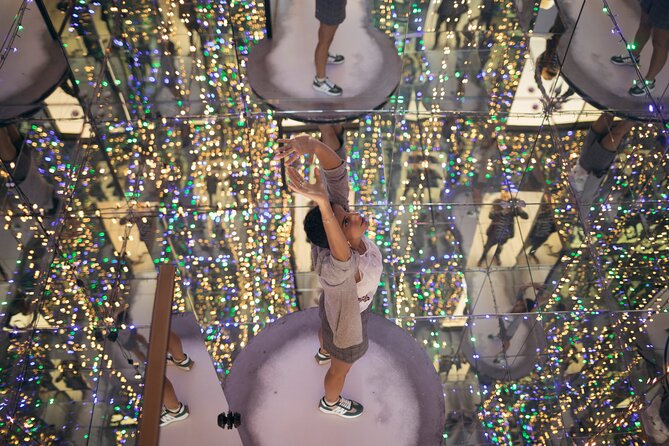
At $12 per person, the price is reasonable for a guided indoor activity lasting up to 90 minutes. Admission is included, and you are paying for more than access to objects behind glass. You receive an interactive visit, explanations of the science, and help with the photo setups.
The value is strongest for families and small groups. One ticket gives each person a different role: one person can pose, another can take the photo, and others can test the illusion or listen to the explanation. A group can also compare what each person sees, which adds another layer to the visit.
For a solo visitor, the calculation is a little different. You may not spend as long at every photo exhibit, but the guide-led explanations still give the museum purpose beyond taking pictures. If you enjoy puzzles, perception, and simple science, the price remains fair.
It is less suited to somebody seeking a traditional art museum or a long cultural tour. The displays are designed for play and participation. You should book it for the interaction, not for quiet galleries or a detailed account of Armenian history.
Who will enjoy the Museum of Illusions most
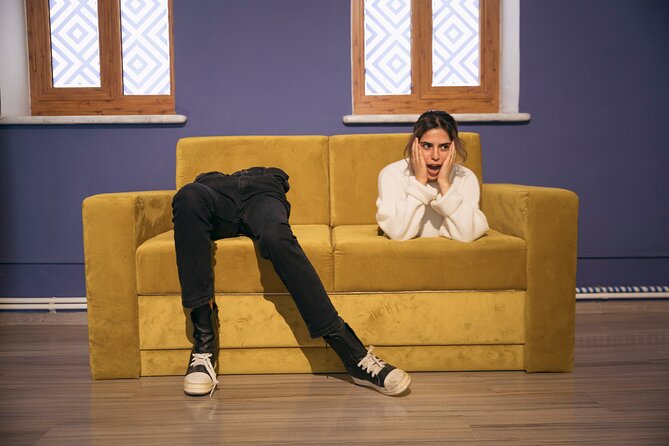
This is an easy choice for families. Children around ages seven and ten have been specifically accommodated happily, and most visitors can participate. The exhibits let younger children move, pose, and make guesses, while adults can focus on the reason the effect works.
It also suits couples and friends who want a light activity with memorable photos. The museum creates conversation quickly because everyone sees the same display from a slightly different angle.
Solo visitors can enjoy it too, especially if they like science, photography, or visual puzzles. The guide gives structure to the visit, and the staff can help with photo ideas. You may not get the same group energy, but you can take your time with the explanations.
The museum is also suitable for mixed-age groups. One person may be interested in the science, another in the pictures, and another in the sheer oddness of seeing a normal room behave incorrectly.
Practical details that make the visit easier

You receive a mobile ticket, which keeps the booking process simple. Confirmation is provided at booking, and the tour is offered in English.
Service animals are allowed, and the museum is near public transportation. Most people can participate, though the supplied details do not describe every exhibit’s physical layout or any specific mobility arrangements. If you need precise access information, contact the Museum Of Illusions Armenia before booking.
Free cancellation is available when you cancel at least 24 hours before the local start time. A cancellation made less than 24 hours before the start time is not refundable, and late changes are not accepted.
The staff names associated with the museum include Emily, Anushik, Ruzanna, Seda, and Samvel. You may meet one of them rather than the entire team. The useful point is that the visit has a personal guide element, so you can ask questions instead of trying to decode every exhibit alone.
A few sensible expectations
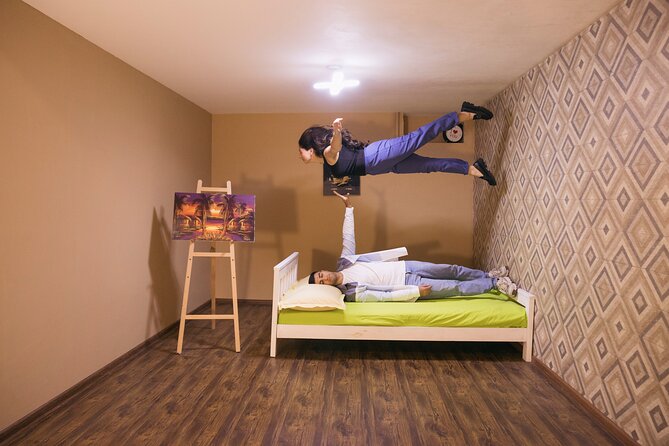
Do not expect every exhibit to produce a perfect photograph on the first attempt. Many optical illusions depend on camera position, body placement, and framing. Let the staff help you, and be willing to try again.
Do not judge the museum only by its size. The visit is relatively short, but the displays are meant to be tested. A fast walk through all 60-plus exhibits will give you less than a slower visit that focuses on the effects that puzzle you most.
The museum is playful, but it is not only for children. The science explanations give adults a reason to stay engaged, while the photo element keeps the visit from feeling like a classroom lesson.
The one real limitation is that the experience depends on your willingness to participate. If you prefer to observe quietly, you may find some displays repetitive. If you enjoy trying, laughing, and asking why, the same displays become much more rewarding.
Should you book this Gyumri experience?
I would book the Museum of Illusions if you want a short, affordable activity with strong family appeal and plenty of photo chances. The guide-led explanations give the visit more substance than a collection of visual tricks, and the staff’s help with poses makes the $12 price easier to justify.
Book it especially if you are near Gyumri’s main square, traveling with children, or looking for an indoor break. Give yourself about an hour, and longer if your group likes to experiment.
Skip it if you are looking for a traditional museum, a major historical site, or a full-day cultural program. For everyone else, this is a cheerful and practical stop that combines simple science, friendly guidance, and a few pictures you will want to keep.
FAQ
Where is the Museum of Illusions located?
The Museum of Illusions is located in Gyumri, Armenia. It is described as a short walk from the main square and near public transportation.
How much does the tour cost?
The price is $12 per person.
How long does the visit last?
The approximate duration is 45 minutes to 1 hour 30 minutes. A faster visit may take around 40 to 50 minutes, while time spent on photos and questions can make it longer.
How many exhibits are included?
The museum has more than 60 exhibitions of illusions.
Is a guide included?
Yes. A local guide leads the visit, explains the science behind the illusions, and answers questions.
Is the experience offered in English?
Yes. The experience is offered in English.
Can I take photos inside the museum?
Yes. Taking photos with the illusions is a central part of the visit, and staff can suggest ideas for fun pictures.
Is the museum suitable for children?
Yes. Most travelers can participate, and the experience is designed for solo visitors, couples, groups, and families. Children aged seven and ten have been specifically accommodated during a family visit.
Can I cancel for a refund?
Yes, if you cancel at least 24 hours before the experience’s start time. Cancellations made less than 24 hours in advance are not refunded, and late changes are not accepted.
Just added around Armenia
- Private tour to Khor Virap, Areni winery, Noravank, Selim pass, Hayravank★ 5.0 · 3 reviews
- Private tour to Gyumri, Dzitoghtsyan Museum, Black Fortress★ 5.0 · 3 reviews
- Private Tour: Tsaghkadzor, Ropeway, Kecharis Monastery, Sevan Lake, Sevanavank★ 5.0 · 3 reviews
- Private tour to Garni, Geghard, Sevan (Sevanavank), Dilijan (Haghartsin)★ 5.0 · 3 reviews
- Private Tour: Lake Sevan, Sevanavank★ 4.5 · 3 reviews
- Tsitsernakaber-Hripsime-Echmiatsin-Noy brandy factory★ 4.5 · 3 reviews
- Secret Spots Of Armenia Day Private Tour★ 5.0 · 3 reviews
- Day Trip to Tatev Monastery★ 4.5 · 3 reviews
Museums, compared.

Group Tour: Gyumri (Urban Life museum, Black fortress, old town), Harichavank
Read our review →
Group Tour: Sightseeing in Yerevan, Erebuni Museum and Fortress
Read our review →
Private Yerevan City Tour: Erebuni, Matenadaran & Tsitsernakaberd Museums
Read our review →

Private tour to Gyumri, Dzitoghtsyan Museum, Black Fortress
Read our review →Browse the lists this tour appears in