
Reviewed · YEREVAN TOURS
Soviet Yerevan: Small-Group City Experience
Yerevan’s Soviet past is easiest to understand when you leave the grand center and follow the city’s working streets. This four-hour tour takes you from former Lenin Square to a metro station, a produce market called Bangladesh, Soviet apartment blocks, and a 1937 children’s railway. The mix of history and ordinary life is the main draw.
I like the carefully ordered route, which gives the afternoon a clear shape, and I like the small group limit of six. The included metro ride, Soviet-style van, market snacks, drinks, and ice cream add real local texture instead of turning the experience into a lecture. The possible drawback is that this is a focused tour, so you should not expect extra stops or a broad survey of every part of Yerevan.
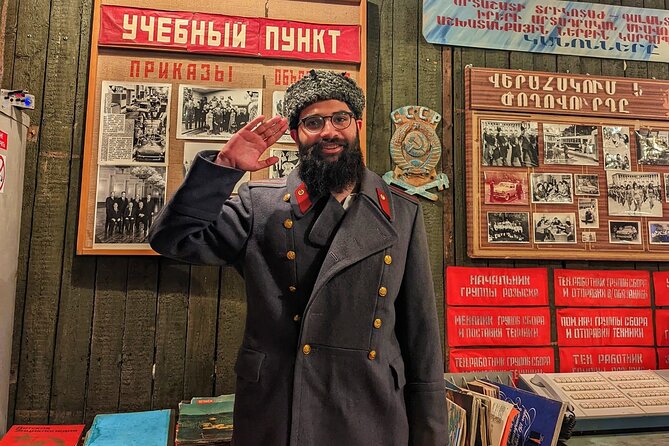
The guide makes a big difference here. Marine, named in one detailed account, is praised for personal stories, Soviet jokes, and an easy way of explaining how people lived during that period. If Soviet history interests you, this is one of the more unusual ways to see the city.
Key points to know before booking
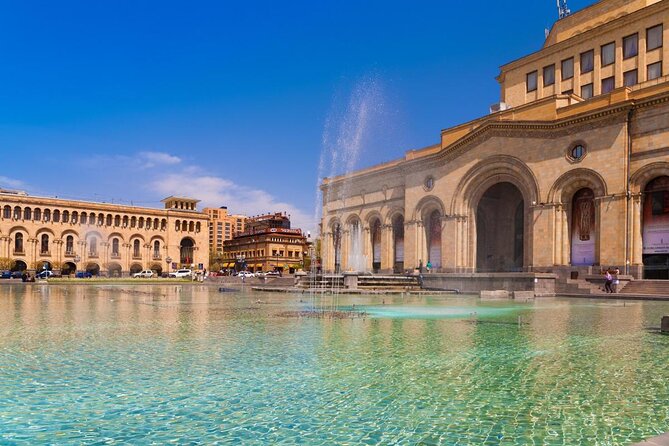
- Former Lenin Square opens the story: Republic Square shows how independent Armenia reshaped a major Soviet civic space.
- The metro ride is part of the lesson: Sasuntsi Davit station links the city’s transport system with railway history and Soviet planning.
- Bangladesh is a real working market: You will browse agricultural goods and sample perashki, ponchik, and a local sweet.
- Soviet housing gets a closer look: Beknazarian Street reveals the apartment blocks built for the working population.
- The Children’s Railway still carries its past: The 1937 station and first locomotive remain at the final stop.
- The group stays tiny: A maximum of six people makes questions and conversation easier.
Why Soviet Yerevan is best seen beyond Republic Square
Many first visits to Yerevan begin at Republic Square, and this tour does too. That is useful, but the important point is what happens next. Instead of staying among the city’s formal monuments, you move into places connected with commuting, shopping, housing, and childhood.
During the Soviet era, Republic Square was called Lenin Square. A statue of Vladimir Lenin occupied the square, and large parades and public celebrations took place there twice a year, after an earlier tradition of three annual events. Following Armenia’s independence, the statue was removed and the square received its current name.
The stop lasts about 15 minutes and costs nothing to enter. You will not spend long here, so this is best treated as an introduction rather than a full architectural visit. Your guide can frame the square as a place where political power was displayed, then show how its meaning changed after independence.
I like that the tour begins with this change in names and symbols. It gives you a simple way to understand the rest of the afternoon: Soviet Yerevan is not presented as a museum piece. It is a city where old buildings, transport systems, habits, and memories continue alongside newer Armenian identity.
The meeting point is outside the Ministry of Foreign Affairs at Government House No. 2 on Republic Square. Since the tour starts at 10 a.m. and ends around 2 p.m., you get a useful half-day without giving up the rest of your day in Yerevan.
A few more Yerevan days to weigh up
- Group Tour: Garni, Symphony of Stones, Geghard, Lavash Baking
★ 5.0 · 1,042 reviews - Group Tour: Lake Sevan (Sevanavank), Dilijan (Goshavank, Haghartsin)
★ 5.0 · 1,036 reviews - Group tour: Khor Virap, Noravank, Areni Winery and Cave
★ 5.0 · 651 reviews
Sasuntsi Davit station and the city beneath the streets
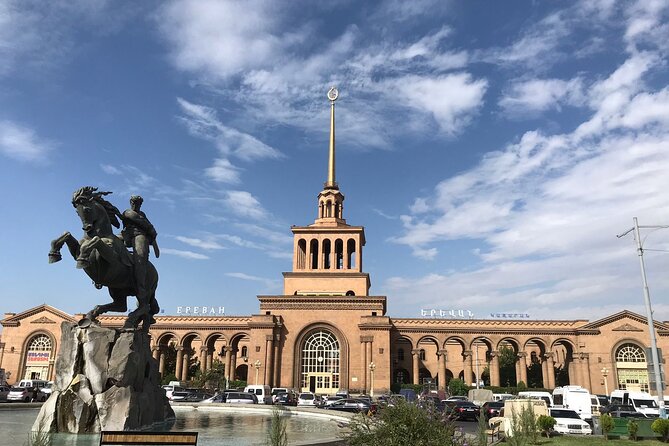
The next major stop is Sasuntsi Davit Street, where the metro station opened to the public on March 7, 1981. It is one of Yerevan’s original metro stations, and it connects with the railway station through a pedestrian tunnel.
The station is named after David of Sassoun, a central Armenian heroic figure. A statue of David stands outside the railway station, creating a link between Armenian cultural memory and Soviet-built public transport.
The metro ride matters because it turns a history lesson into a lived experience. You are not only looking at Soviet design from the pavement. You are using a system created in that era, moving through the same kind of infrastructure that helped connect expanding urban districts with the center.
The stop lasts about 35 minutes. Admission is free, but public transport is included in the tour, so you do not need to arrange this part yourself. The combination of station, tunnel, railway connection, and statue gives the stop more substance than a quick look at a platform.
This is also a good point to ask questions. A group capped at six should make it easier to pause for explanations without holding up a large crowd. The tour is conducted in English, and the guide’s personal memories can help turn dates and buildings into something more human.
Bangladesh market in Malatia-Sebastia
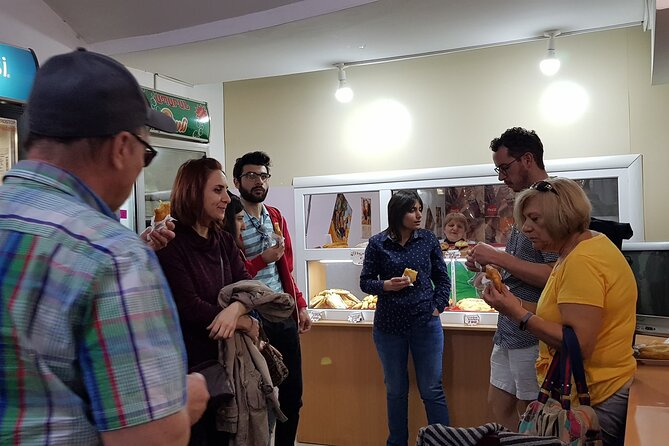
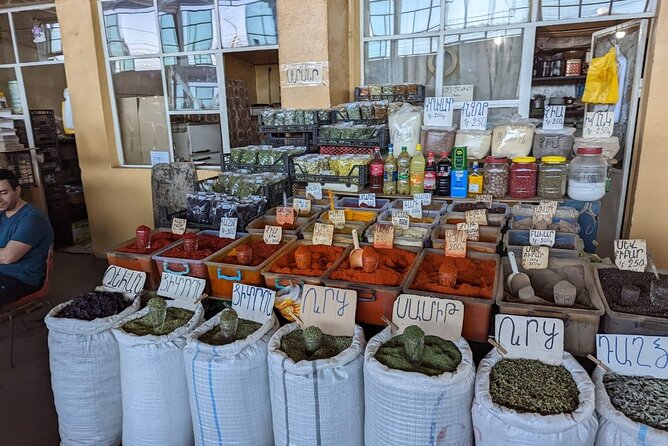
The tour then heads to Malatia-Sebastia, a district known for an area called Bangladesh. The name alone is likely to make you curious, but the market is the real reason to come. This is where agricultural products are sold, and where you can see a more practical side of Yerevan than the polished center provides.
You spend about an hour here, the longest stop on the route. That extra time is important. A market cannot be understood by walking past two stalls with a camera in hand. You have time to look around, see what is being sold, and try the snacks included in the experience.
The food is simple and local. You receive perashki and ponchik, along with a local sweet. The exact selection or serving style is not specified, so you should think of this as a tasting opportunity rather than a full meal. If you have dietary restrictions, ask the provider before booking, since no special arrangements are described.
I like this part of the tour because food gives Soviet-era stories a daily scale. Apartment blocks and political monuments tell you how a city was designed. A market shows you how people shop, meet, and keep older food traditions alive.
The stop is also a practical reason to book the tour instead of trying to recreate the route alone. The guide can explain why the district has its unusual name and help you make sense of the market. You will not just be pointed toward a famous sight. You will be brought into an area that many short city tours skip.
Still, keep your expectations sensible. This is a working food market, not a staged cultural show. The appeal is its everyday character, and market conditions can naturally vary.
Beknazarian Street and Soviet apartment life
At Beknazarian Street, the focus shifts from food and transport to housing. You explore what is described as the CCCP, or USSR, district of Yerevan, with apartment buildings designed to house the proletariat.
This part of the tour lasts around 30 minutes. You will look at the buildings, hear about their purpose, and learn the story behind the final structures built during the Soviet period. The value here is not a single famous façade. It is the chance to read the city through its housing.
Soviet apartment blocks were planned around the needs of a growing urban population. Their scale and layout tell you something about the period’s social goals, even when the buildings feel plain or worn. A guide can point out the difference between idealistic planning and the realities of daily life.
The tour also includes Soviet-style ice cream. This is one of the small details that gives the stop personality. One account describes getting ice cream as a matter of luck, so availability may not be guaranteed every time. Treat it as a welcome extra, not the reason to book.
I find this section useful for anyone who wants to understand how ordinary people lived, not just what officials built for ceremonies. The guide’s stories are especially important here. Marine is praised for adding personal memories and Soviet jokes, which can make the buildings easier to picture as lived-in homes rather than anonymous blocks.
There is a trade-off. If you prefer ornate churches, grand museums, or major viewpoints, these apartment buildings may feel modest. If you want a closer look at the city outside the postcard center, this is exactly the point.
Same country, a completely different kind of day out:
- Yerevan: Garni, Geghard, Symphony of Stones & Lavash Baking
★ 5.0 · 589 reviews - Group Tour: Tsaghkadzor (Kecharis, Ropeway), Lake Sevan, Trout barbecue treat
★ 5.0 · 511 reviews - Group Tour: Khor Virap, Noravank, Tatev monasteries (wayback on Ropeway)
★ 5.0 · 506 reviews - From Yerevan:Sevan, Dilijan, Haghartsin, Goshavank, Lake Parz
★ 4.5 · 454 reviews
The Children’s Railway and a 1937 locomotive
The final stop is the Children’s Railway, located between the Hrazdan River and the Hrazdan water canal. It was built in 1937 as one of the children’s railways created across the Soviet Union.
The idea was educational as well as recreational. Children could come to learn about trains and railway work, and the site continued operating after the Soviet Union broke apart. The original main station building and the first locomotive from 1937 are still intact.
You spend about 40 minutes here, and admission is included. The stop provides a strong ending because it brings together Soviet education, public recreation, engineering, and nostalgia. It is also a change of mood after the market and apartment blocks.
The word children’s can make the attraction sound small or secondary, but the surviving station and locomotive give it historical weight. You are looking at a functioning remnant of a wider Soviet program, not merely a decorative train display.
The location beside the river and canal may also offer a calmer setting for photographs. The provided details do not promise a train ride or a particular operating schedule, so do not book this expecting a guaranteed journey on the railway. The clear promise is access to the site, including the historic station and locomotive.
What the $65 price includes
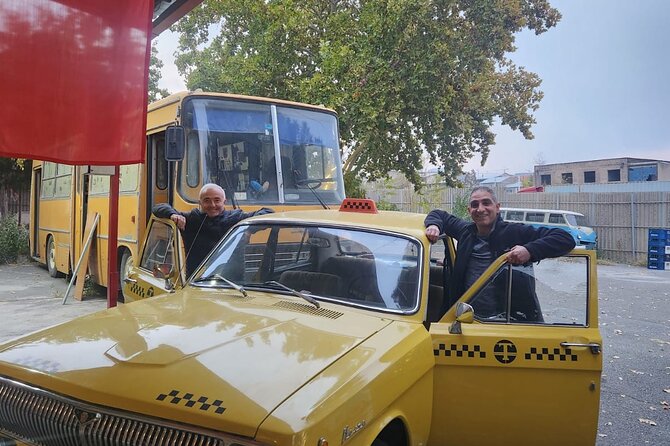
At $65 per person, this is not the cheapest way to spend four hours in Yerevan. The price makes more sense when you count what is bundled into the route: an English-speaking local guide, metro transport, travel in a Soviet-style van, market snacks, a local sweet, and other drinks and treats along the way.
You are also paying for the route design. Republic Square, Sasuntsi Davit, Malatia-Sebastia, Beknazarian Street, and the Children’s Railway are spread across different parts of the city. Moving between them independently would require planning, public transport decisions, and a fair amount of research.
The small group is another part of the value. With no more than six people, the guide can answer questions and adjust explanations more easily than on a large coach tour. You should not expect a private tour, but the format is close enough to allow conversation.
The price is strongest for a visitor who would otherwise spend the day in central Yerevan and miss these districts. It is less compelling if you mainly want major monuments, a broad overview of the city, or a food tour with many tastings.
The experience is offered in English and uses a mobile ticket. It is scheduled on Mondays from 10 a.m. to 2 p.m. for the stated operating period. The published information says most people can participate, but it does not give detailed accessibility notes. If stairs, walking, tunnels, or vehicle access are a concern, ask the provider before paying.
How to prepare for the four-hour route
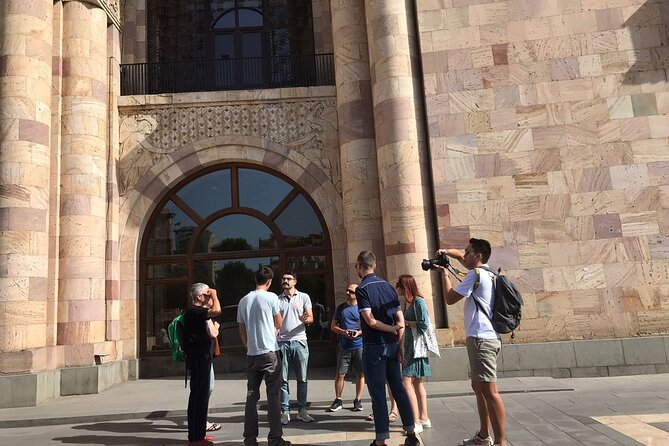
Wear shoes you can use comfortably for several stops and a market visit. The tour includes walking through public areas, a pedestrian tunnel, a metro station, and urban districts, although a precise walking distance is not provided.
Bring a little flexibility. The ice cream is described as something you might get if available, while the listed snacks are part of the package. Market conditions and transport timing can affect the rhythm of the afternoon, even though the route itself is carefully planned.
The experience starts at the Ministry of Foreign Affairs, Government House No. 2, on Republic Square. It finishes at Diana Abgar Park on Arami Street, rather than returning to the starting point. That is helpful if you want to continue exploring central Yerevan, but plan your next meeting from the end point.
The tour is often booked well ahead, with an average booking lead time of 48 days. That does not mean you must book exactly that far ahead, but it is a sensible warning for anyone visiting on fixed dates. Confirmation is normally sent at booking, unless you book within two days of departure. In that case, confirmation can take up to 48 hours and depends on availability.
Free cancellation is available if you cancel at least 24 hours before the start time. Changes or cancellations inside that window are not accepted for a refund. The experience also requires a minimum number of participants, so an insufficient number can lead to a different date, another experience, or a full refund.
Who will get the most from Soviet Yerevan?
I would choose this tour if you are interested in Soviet urban planning, public transport, everyday food, or the way Armenia changed after independence. It is also a smart pick if you have already seen the central sights and want to understand how the wider city works.
You do not need to be a serious Soviet-history fan. The market, snacks, ice cream, and children’s railway give the afternoon enough variety for a general visitor. The guide’s humor can keep the subject from becoming too dry.
I would hesitate if your priority is a traditional sightseeing checklist. The tour does not focus on churches, museums, major art collections, or panoramic views. It also does not promise extra stops, so the four-hour plan is best for someone who appreciates a clear, fixed route.
The tour’s strongest praised qualities are its organization, personal storytelling, unusual locations, and balance of history with small treats. Those features matter because the subject could easily become a string of dates and Soviet labels. Here, the route gives you places to look at, foods to try, and transport to use.
Should you book Soviet Yerevan?
Book it if you want the side of Yerevan found in metro tunnels, markets, apartment courtyards, railway links, and old public projects. At $65, the cost is fair for a four-hour small-group outing with transport, food samples, and a local guide, especially when you value access to districts that are awkward to connect on your own.
Skip it if you want a flexible private itinerary or a classic monument tour. The plan is deliberately methodical, and that is both its strength and its limit. For the right visitor, it offers an unusual, grounded look at how Soviet Yerevan was built and how parts of it still function today.
FAQ
How long does the Soviet Yerevan tour last?
The experience lasts approximately four hours, from 10 a.m. to 2 p.m. on the stated Monday operating schedule.
How many people can join the tour?
The group has a maximum of six participants.
What language is the tour offered in?
The tour is offered in English.
What food and drinks are included?
The experience includes perashki, ponchik, a local sweet from the market, and drinks and treats along the route. Soviet-style ice cream may also be available, but it is not guaranteed.
Does the tour include public transportation?
Yes. The price includes a metro ride and transport in a Soviet-style van.
Where does the tour start and finish?
It starts at the Ministry of Foreign Affairs, Government House No. 2, on Republic Square in Yerevan. It ends at Diana Abgar Park on Arami Street.
Just added around Yerevan
- Private tour to Khor Virap, Areni winery, Noravank, Selim pass, Hayravank★ 5.0 · 3 reviews
- Private tour to Gyumri, Dzitoghtsyan Museum, Black Fortress★ 5.0 · 3 reviews
- Private Tour: Tsaghkadzor, Ropeway, Kecharis Monastery, Sevan Lake, Sevanavank★ 5.0 · 3 reviews
- Private tour to Garni, Geghard, Sevan (Sevanavank), Dilijan (Haghartsin)★ 5.0 · 3 reviews
- Private Tour: Lake Sevan, Sevanavank★ 4.5 · 3 reviews
- Tsitsernakaber-Hripsime-Echmiatsin-Noy brandy factory★ 4.5 · 3 reviews
- Secret Spots Of Armenia Day Private Tour★ 5.0 · 3 reviews
- Day Trip to Tatev Monastery★ 4.5 · 3 reviews
Yerevan Tours, compared.
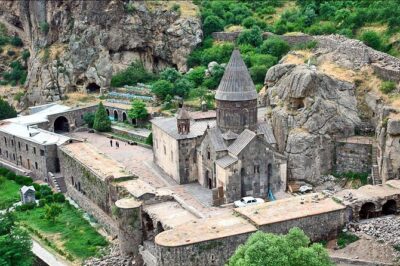
Group Tour: Garni, Symphony of Stones, Geghard, Lavash Baking
Read our review →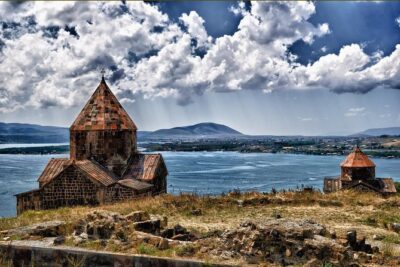
Group Tour: Lake Sevan (Sevanavank), Dilijan (Goshavank, Haghartsin)
Read our review →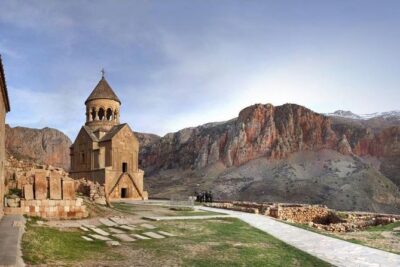
Group tour: Khor Virap, Noravank, Areni Winery and Cave
Read our review →
Group Tour: Tsaghkadzor (Kecharis, Ropeway), Lake Sevan, Trout barbecue treat
Read our review →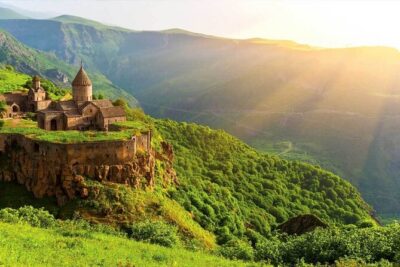
Group Tour: Khor Virap, Noravank, Tatev monasteries (wayback on Ropeway)
Read our review →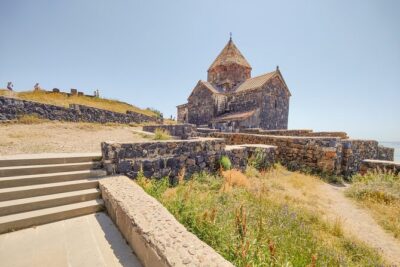
Sevan, Dilijan, Haghartsin, Goshavank, Lake Parz
Read our review →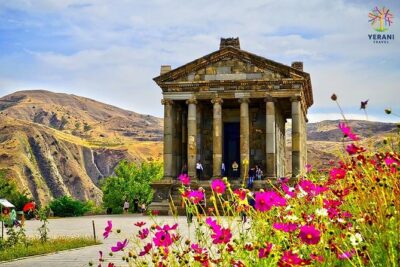
Group Tour: Garni pagan temple, Geghard monastery, Lake Sevan, Sevanavank
Read our review →
Browse the lists this tour appears in