
Reviewed · YEREVAN TOURS
Cultural Walking Tour in Yerevan with Armenian food Tastings
Yerevan reveals itself best on foot, where grand Soviet-era buildings, black tuff stone, quiet courtyards, rug shops, art spaces, and busy squares sit close together. This tour links those pieces with stories about Armenian culture and history, then keeps you going with local food tastings.
I like the clear route from Republic Square to the Cascade, and I like that the tour includes places you might otherwise walk past, such as the Mirzoyan Library and khachkars in Cultural Genocide Park. The main consideration is the pace and length: four hours and about 4 km can feel long if you want only a quick introduction.
Key Points at a Glance
- A strong first-day introduction: The route covers central Yerevan from the Singing Fountains to the Cascade.
- History in manageable portions: Expect stories about Armenian identity, Soviet rule, architecture, geopolitics, and the Armenian cross-stone tradition.
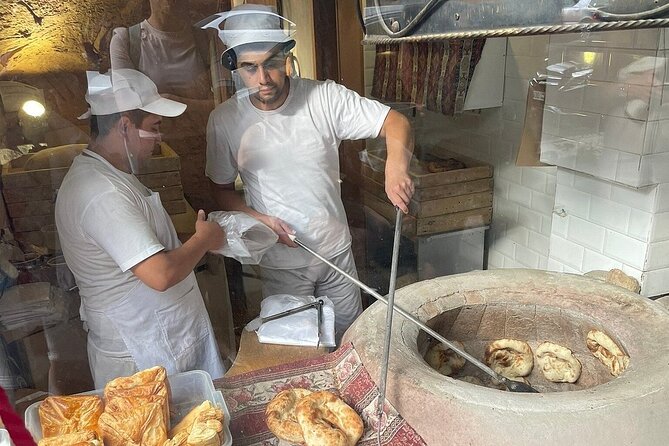
- Food is part of the experience: Tastings include local snacks and sea buckthorn juice, which may be enough for a light lunch.
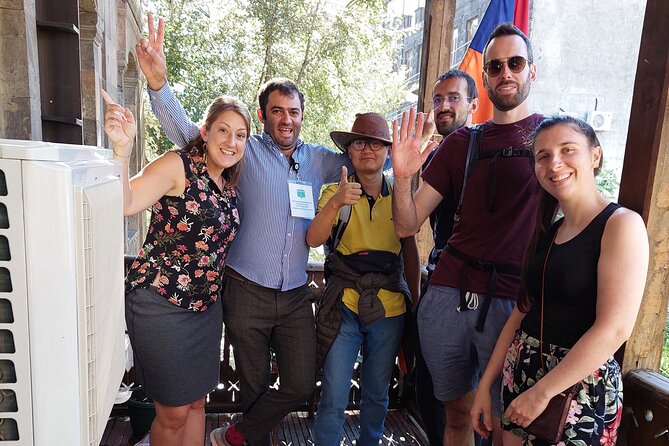
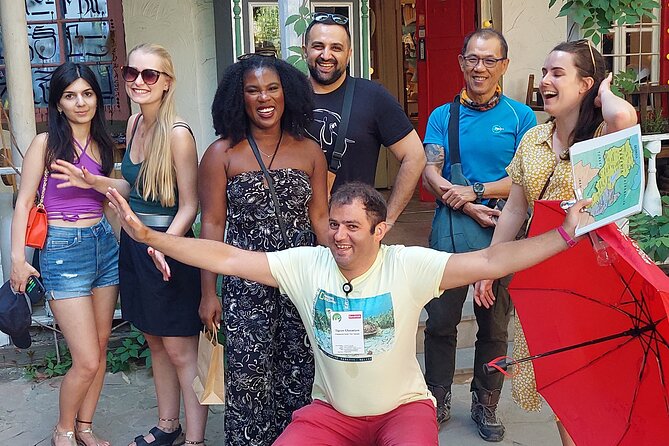
- Guides bring different strengths: Tigran is praised for his energy, history, humor, and clear explanations, while Ioanna is described as warm, flexible, and well informed.
- A walking tour with real distance: Plan for roughly four hours on foot, with some standing and listening in busy areas.
- Good value at $55: The price combines a central city tour, a guide, cultural interpretation, and food and drink tastings.
Starting at Republic Square with Armenia in View
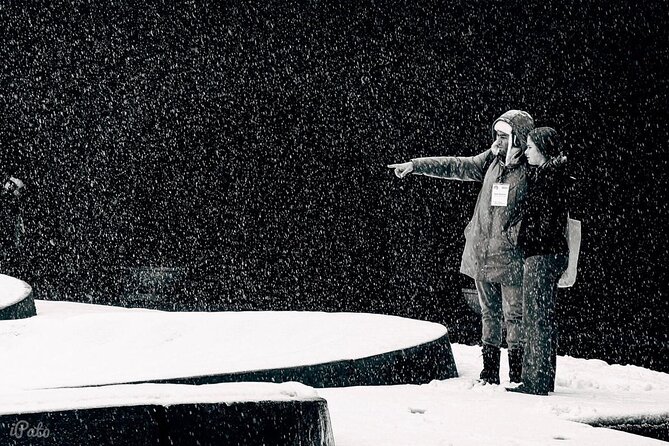
The tour begins at the Singing Fountains in Republic Square, Yerevan’s grand central gathering place. Give yourself a few minutes to find the meeting point, since the square is large and open, with several important buildings around its oval shape.
The square’s stone pattern is designed to resemble a traditional Armenian rug. That detail gives the opening stop a useful purpose: you are not just looking at a public plaza, you are learning how national identity appears in Yerevan’s architecture and design.
The route then moves to the statue of Stepan Shahumyan. It is described as the first monument officially installed in Yerevan, created by sculptor Sergey Merkurov and architect Ivan Zholtovsky. This is a short stop, but it helps explain the political layer of the city and the way Soviet history shaped public spaces.
I like this early section because it gives you orientation before the tour becomes more specialized. You get a central landmark, a monument, and a first look at how Armenian symbols and Soviet-era history share the same streets.
A few more Yerevan days to weigh up
- Khor Virap, Noravank & Birds’ Cave Day Trip with Wine Tasting
★ 5.0 · 320 reviews - Tatev & Shaki Waterfall Guided Group Tour with Wine Tasting
★ 5.0 · 266 reviews - Yerevan Private Walking Food Tour
★ 5.0 · 31 reviews
The Mirzoyan Library and Yerevan’s Creative Side
The Mirzoyan Library offers a change of mood. It contains books and journals connected with design and photography, along with a bar and gallery. The space is presented as peaceful, which makes it a useful pause after the open scale of Republic Square.
This stop is valuable because Yerevan is not only a city of monuments and political stories. The library points toward its creative life, photography, design, and small cultural spaces. You can ask your guide about how these places fit into modern Yerevan, rather than treating the city as a museum of the past.
The scheduled time is about 30 minutes. That is long enough to take in the atmosphere, but the experience may depend on how the guide structures the visit and what is open at the time. The tour description does not promise a formal exhibition or a private activity inside, so think of it as a cultural stop rather than a full museum visit.
Rugs, Craft, and Armenian Design at Tufenkian
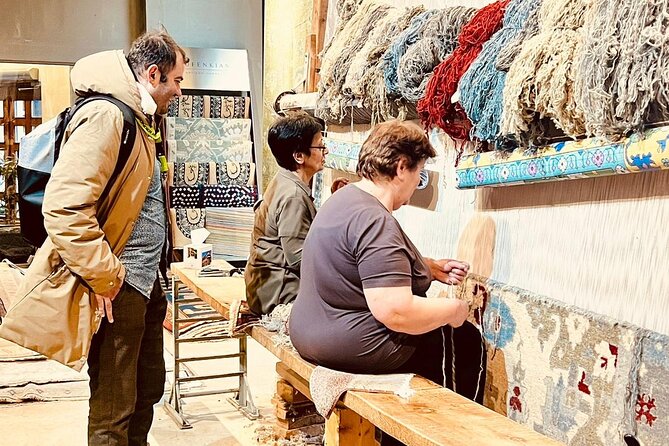
The Tufenkian Heritage Hotels stop introduces Armenian carpets and hand-crafted rugs. The venue is described as a leading source for designer carpets in several styles, so this part of the walk adds a practical look at a craft closely tied to the region.
Rugs are useful cultural objects because they connect art, household life, trade, and regional identity. You can look at patterns and materials while your guide explains the place of carpet-making in Armenian culture. Even if you are not shopping, the stop gives you a better eye for details you may notice later in markets or homes.
The tour lists admission as free at each stop, but it does not include a carpet purchase. Treat this as a viewing and cultural explanation, not a shopping obligation. If you are interested in buying, ask about prices, materials, origin, and shipping before making a decision.
Vernissage, Garegin Nzhdeh, and the Weight of History
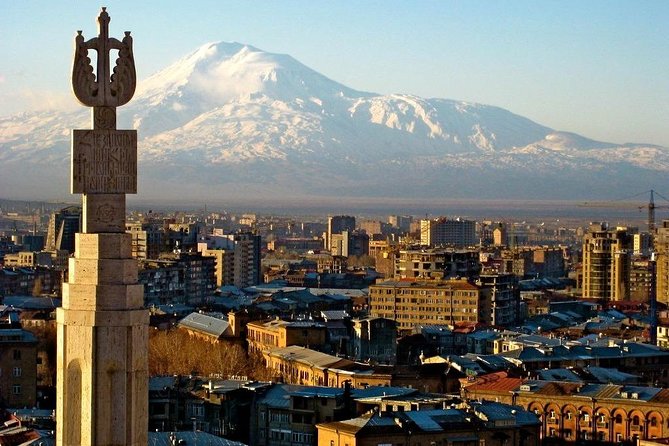
At Vernissage Market, the tour brings together art, public memory, politics, and everyday city life. You will see the statue of Garegin Nzhdeh, an Armenian national hero, and hear about major events connected with Armenia from the 19th century onward.
This is one of the tour’s more serious sections. The discussion includes Armenia’s geopolitical situation and historical facts that shaped the country. That context can make later visits to museums, monuments, and religious sites easier to understand.
The route also includes Cultural Genocide Park and its khachkars, or Armenian cross-stones. These carved memorial stones often feature a cross along with rosettes, interlaced designs, and plant forms. They belong to an early medieval Armenian artistic tradition, and the stop gives you a direct way to see how religious art and remembrance meet in stone.
The Republic Square Metro station is also part of this portion of the walk. The tour uses it to explain the Armenian metro, adding an everyday piece of Yerevan to the larger historical story. I appreciate that balance. You are not being taken only from monument to monument. You also get a glimpse of how the city works for residents.
Vernissage can be a busy, changeable place, and the tour may involve standing near traffic or construction. One piece of practical advice is to stay close enough to hear the guide. The group can include as many as 35 people, so a quiet voice or a distracted crowd could make this section less satisfying.
Same country, a completely different kind of day out:
- Group Tour: Garni, Symphony of Stones, Geghard, Lavash Baking
★ 5.0 · 1,042 reviews - Group Tour: Lake Sevan (Sevanavank), Dilijan (Goshavank, Haghartsin)
★ 5.0 · 1,036 reviews - Group tour: Khor Virap, Noravank, Areni Winery and Cave
★ 5.0 · 651 reviews - Yerevan: Garni, Geghard, Symphony of Stones & Lavash Baking
★ 5.0 · 589 reviews
Charles Aznavour Square and a Taste of Sea Buckthorn
Charles Aznavour Square provides one of the tour’s lighter stops. Here you will see the Grand Hotel Yerevan, described as the city’s oldest hotel, opened in 1926. Its facade uses richly decorated black Armenian tuff stone, a material that gives many Yerevan buildings their distinctive dark, warm color.
The square also introduces a food and drink tasting: sea buckthorn juice. The bright orange fruit has been used over centuries as food and as a traditional treatment in parts of China, Russia, and northern Europe. Its sharp, fruity taste may be unfamiliar, which makes it a good example of the tour’s approach to food. You are not simply being handed a standard drink. You are given a little context for what you are tasting.
The snack portions are described as substantial enough for a light lunch in one account, but you should not assume this replaces a full meal. If you need a large lunch, eat beforehand or plan a meal after the tour. The tasting is best viewed as an added cultural experience and a useful break during a long walk.
Khachkars in Missak Manouchian Park
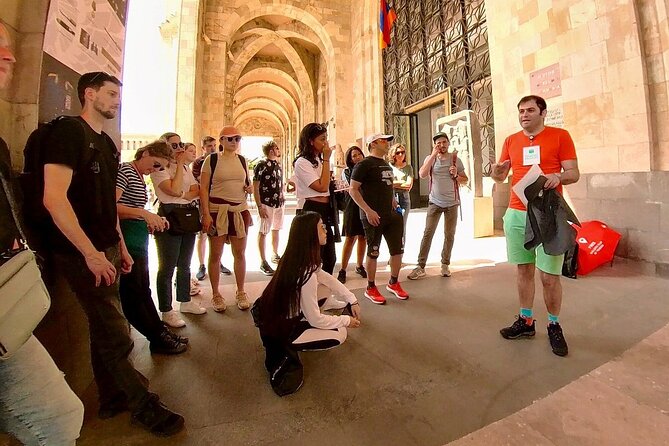
The next stop, Missak Manouchian Park, returns to Armenian art and memory through the khachkar. These cross-stones are carved memorial markers, often decorated with complex patterns around the central cross.
This is a stop where a good guide makes a real difference. Without explanation, a khachkar can look like a decorative stone. With context, you can notice the repeated forms, the carved surface, and the way the monument carries both spiritual and historical meaning.
The stop lasts about 15 minutes, so it is focused rather than slow. If you enjoy photography, this may be one of the better moments to pay attention to texture and detail. The tour does not list an entry fee, and the park is part of the walking route.
Opera House and the Soviet Shape of Yerevan
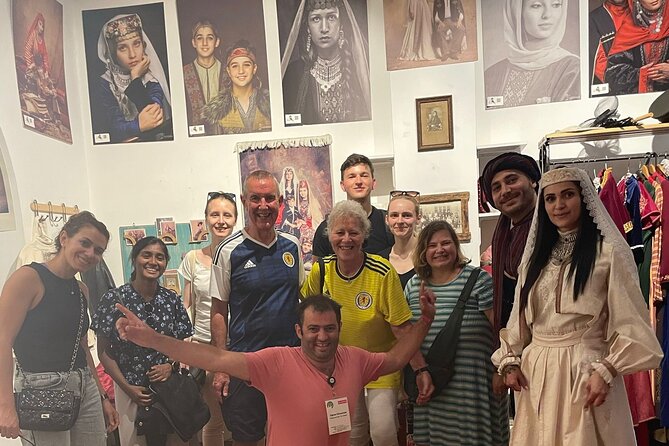
The Armenian National Academic Theater of Opera and Ballet, named after Alexander Spendiaryan, offers another important view of the city’s Soviet period. Groundbreaking took place on November 28, 1930, during celebrations marking the 10th anniversary of Soviet Armenia, and the building officially opened on January 20, 1933.
The 30-minute stop lets the guide connect architecture with political history. Yerevan’s public buildings were not designed in isolation. Their scale, materials, and placement reflect the city’s changing role during the Soviet era.
This is also a useful point for comparing different periods of construction. Earlier Armenian buildings, Soviet projects, and newer cultural spaces appear along the same broad route. If architecture interests you, listen for the explanation of how building styles changed over time. If you prefer a quick city overview, this may feel like one of the longer talks.
The tour’s one negative account raises a fair point about any walking tour: guide delivery matters as much as the route. In noisy areas, a low speaking voice can make details hard to catch, especially in a larger group. Tigran is praised elsewhere for strong English, energy, humor, and clear historical explanations, while Ioanna is praised for her friendly manner, flexibility, and ability to make the walk enjoyable. Guide assignments can vary, so the exact style you receive is not guaranteed.
Finishing at the Cascade and Cafesjian Center
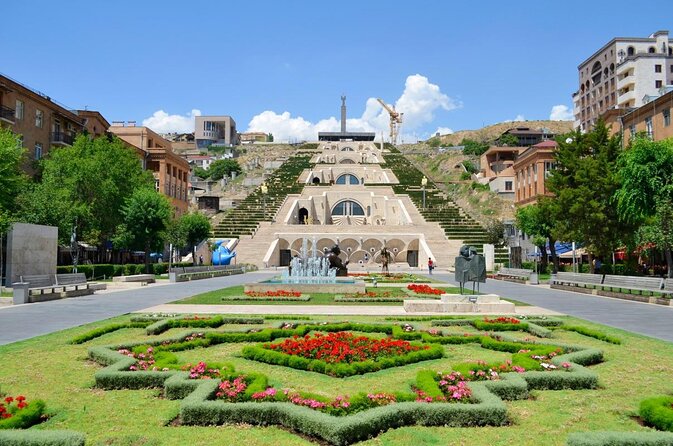
The walk ends at the Yerevan Cascade, near the Alexander Tamanyan statue. This massive stairway complex, with fountains and terraces, is one of the city’s most recognizable public spaces.
The Cafesjian Center for the Arts occupies part of the Cascade complex and focuses on contemporary art in Armenia, as well as Armenian culture presented to an international audience. The tour lists about 15 minutes here, so do not expect a full museum visit or enough time to study every artwork.
The final location is convenient for continuing your day. You finish at Moskovyan Street, next to the Tamanyan statue, rather than returning to Republic Square. That makes the tour easy to combine with an evening walk, a meal, or more time around the Cascade.
The Cascade is also the point where tired legs may become noticeable. The route has already covered several kilometers, and the stairway setting can require additional walking or climbing if you choose to explore beyond the meeting point. Wear shoes you can comfortably use for four hours.
What $55 Buys You
At $55 per person, this is not the cheapest way to walk around Yerevan. You can see many of the exterior landmarks without paying an entry fee, and the route is central enough to follow independently with a map.
The value comes from the interpretation and the structure. In four hours, you move from national symbols to Soviet history, from design and carpets to khachkars, and from public monuments to food traditions. You also avoid the planning work of deciding how to connect these places.
The food tastings improve the value, especially if the portions provide a light lunch. The exact food selection is not fully specified, so you should book for the cultural walk first and consider the tastings an important bonus rather than the main reason to go.
The maximum group size is 35 people. That is large enough to create energy and make the price reasonable, but it can also make it harder to hear or ask questions. If you want a quiet, highly personal architecture walk, a smaller or private tour may suit you better.
Who Will Get the Most from This Walk?
I would choose this tour for a first visit to Yerevan, especially if you have only a short stay and want a strong introduction before exploring alone. The route covers enough ground to show the city’s major themes without requiring separate planning for every stop.
It also suits anyone who likes history delivered through places rather than through a long indoor lecture. You will hear about monuments, architecture, political change, Armenian art, national heroes, and food traditions while standing in the places connected to those subjects.
Food-focused visitors should book with realistic expectations. You get tastings, including sea buckthorn juice and snacks, but this is not a dedicated food tour with a detailed list of restaurants and dishes.
The tour is less suitable if you dislike long walks, standing, large groups, or extended historical explanations. One critical account found four hours too long and wanted a quicker overview of Yerevan’s main sights. That is a useful warning. The tour is designed to explain, not simply point out landmarks and move on.
Practical Details Before You Book
The meeting point is the Singing Fountains in Republic Square, and the endpoint is the Cascade near the Alexander Tamanyan statue. The tour is offered in English and uses a mobile ticket.
Confirmation arrives at booking. Service animals are allowed, and the activity is near public transportation. Most people can participate, but the walking distance and length still matter, particularly if you have mobility concerns.
The experience requires good weather. If poor weather causes cancellation, you are offered another date or a full refund. A minimum number of participants is also required, and if that minimum is not reached, you are offered another option or a full refund.
Free cancellation is available until 24 hours before the start time. Cancellations or changes inside that window are not refunded or accepted, so keep the local cut-off time in mind when arranging your plans.
Should You Book This Yerevan Tour?
Book it if you want history, architecture, local food, and a ready-made route in one half-day. The strongest reasons are the broad range of stops, the thoughtful connection between Armenian and Soviet history, and the guides’ reported ability to make difficult subjects lively and easy to follow.
I would schedule it near the start of your Yerevan stay. You will learn where the main cultural areas are, get a sense of the city’s layout, and finish at the Cascade with ideas for what to explore next.
Skip it if you want a short two-hour orientation, a dedicated restaurant crawl, or a small private group. For everyone else, $55 is a fair price for four hours of walking, guiding, historical context, and tastings, as long as you arrive ready for a real city walk rather than a quick photo stop.
FAQ
How long does the cultural walking tour last?
The tour lasts approximately four hours.
Where does the tour begin?
It begins at the Singing Fountains in Republic Square, Yerevan.
Where does the tour end?
It ends at the Cascade on Moskovyan Street, next to the Alexander Tamanyan statue.
What language is the tour offered in?
The tour is offered in English.
How much does the tour cost?
The listed price is $55 per person.
Are food and drinks included?
Yes. The tour includes food and drink tastings from local eateries, including sea buckthorn juice and snacks.
Is the tasting enough for a full lunch?
The tasting may be enough for a light lunch, but a full meal is not guaranteed.
How large can the group be?
The maximum group size is 35 people.
Is the tour suitable for most people?
Most people can participate. The tour is a walking activity lasting about four hours, so you should be comfortable walking and standing for that length of time.
Can I cancel for a refund?
You can cancel up to 24 hours before the experience for a full refund. Cancellations made less than 24 hours before the start time are not refunded.
More Walking Tours in Yerevan
- Private sightseeing and walking tour in Yerevan
★ 5.0 · 78 reviews - Evening walking tour in Yerevan
★ 5.0 · 19 reviews - Walking Yerevan City Tour with 5 Wine & 10 years-old brandy
★ 5.0 · 17 reviews - Budget walking tour in Yerevan (Yerevan city tour)
★ 5.0 · 4 reviews
Just added around Yerevan
- Private tour to Khor Virap, Areni winery, Noravank, Selim pass, Hayravank★ 5.0 · 3 reviews
- Private tour to Gyumri, Dzitoghtsyan Museum, Black Fortress★ 5.0 · 3 reviews
- Private Tour: Tsaghkadzor, Ropeway, Kecharis Monastery, Sevan Lake, Sevanavank★ 5.0 · 3 reviews
- Private tour to Garni, Geghard, Sevan (Sevanavank), Dilijan (Haghartsin)★ 5.0 · 3 reviews
- Private Tour: Lake Sevan, Sevanavank★ 4.5 · 3 reviews
- Tsitsernakaber-Hripsime-Echmiatsin-Noy brandy factory★ 4.5 · 3 reviews
- Secret Spots Of Armenia Day Private Tour★ 5.0 · 3 reviews
- Day Trip to Tatev Monastery★ 4.5 · 3 reviews
Yerevan Tours, compared.
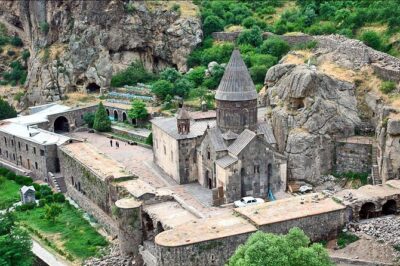
Group Tour: Garni, Symphony of Stones, Geghard, Lavash Baking
Read our review →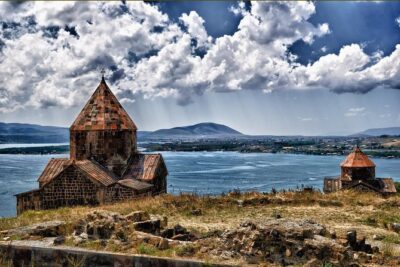
Group Tour: Lake Sevan (Sevanavank), Dilijan (Goshavank, Haghartsin)
Read our review →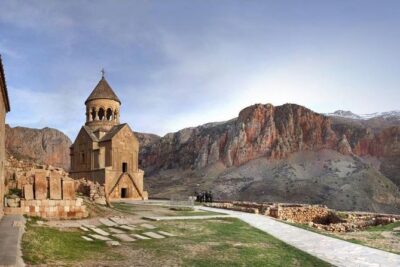
Group tour: Khor Virap, Noravank, Areni Winery and Cave
Read our review →
Group Tour: Tsaghkadzor (Kecharis, Ropeway), Lake Sevan, Trout barbecue treat
Read our review →
Group Tour: Khor Virap, Noravank, Tatev monasteries (wayback on Ropeway)
Read our review →
Sevan, Dilijan, Haghartsin, Goshavank, Lake Parz
Read our review →
Group Tour: Garni pagan temple, Geghard monastery, Lake Sevan, Sevanavank
Read our review →
Browse the lists this tour appears in