
Reviewed · YEREVAN TOURS
Group Tour: Must see of Georgia in 2 days from Yerevan
Georgia’s most rewarding sights are spread far beyond Tbilisi, and reaching them from Yerevan without a car is difficult. This tour links Jvari and Mtskheta with Tbilisi, Rabati Castle, and the remarkable cave town of Vardzia in only two days.
I like the practical package: transport, hotel, meals, and admission tickets are handled for you. I also like the mix of city streets, medieval fortifications, religious monuments, and carved mountain chambers.
The trade-off is a packed schedule with long road stretches and a group that may reach 49 people. You will need to start early, keep moving, and confirm your visa requirements before booking.
Key points at a glance
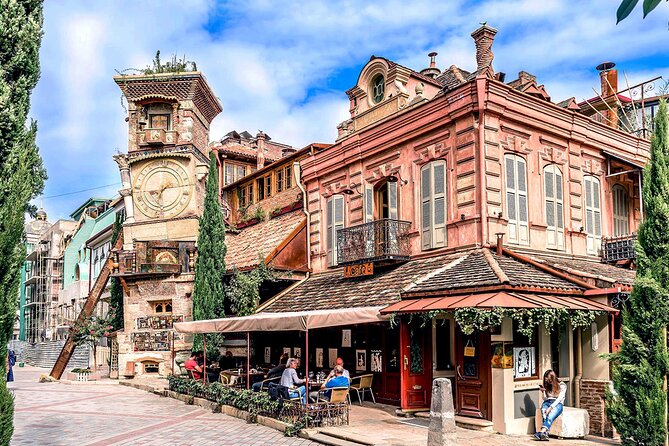
- Five major Georgian sights in two days: See Jvari, Mtskheta, Tbilisi’s Old Town, Rabati Castle, and Vardzia.
- A useful cross-border option: The air-conditioned vehicle removes the need to rent a car or arrange several separate transfers.
- One night in Tbilisi: A four-star hotel and breakfast make the overnight stop easier and more comfortable.
- English and Russian guiding: The guide provides both languages consecutively, so commentary may take longer at each stop.
- Meals and admissions included: Breakfast, two lunches, bottled water, pastries, and listed entrance tickets are part of the price.
- A fast-paced group format: The maximum group size is 49, and seats are not assigned in advance.
Why this route works from Yerevan
At $186 per person, this is not simply a sightseeing ticket. You are paying for international ground transport, one hotel night, a professional guide, breakfast, two lunches, drinks and pastries, and admission tickets. For someone without a car, that combination can offer solid value.
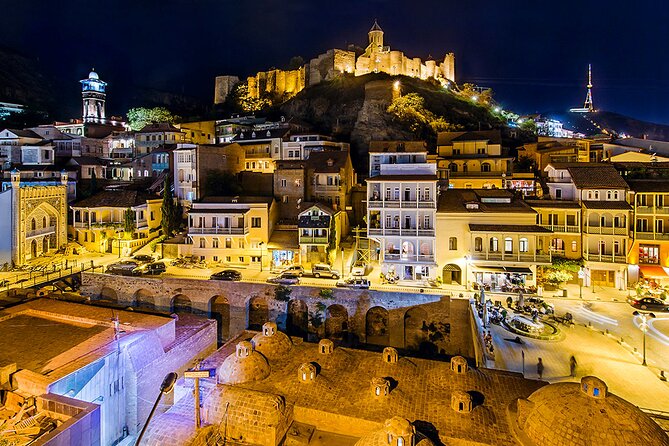
The route also gives you several different views of Georgia in a short time. Mtskheta introduces early Christian Georgia, Tbilisi provides the urban center, and the second day shifts toward fortresses and mountain-carved religious architecture.
You should also understand what this is not. It is not a slow, stay-in-one-city holiday. The schedule covers a lot of ground, and the two-day format leaves little room for wandering, long meals, or unplanned stops.
The tour begins at 8:00 a.m. at Hyur Service, 96 Nalbandyan Street, in Yerevan. Hotel pickup and drop-off in Yerevan are not included, so you need to reach the meeting point yourself and return there at the end.
The vehicle is air-conditioned, which matters during long road sections and in warm weather. Group size can reach 49 people, and seats are not known beforehand, so arrive ready for a shared coach arrangement rather than a small private outing.
A few more Yerevan days to weigh up
Jvari Monastery and the first view of Georgia
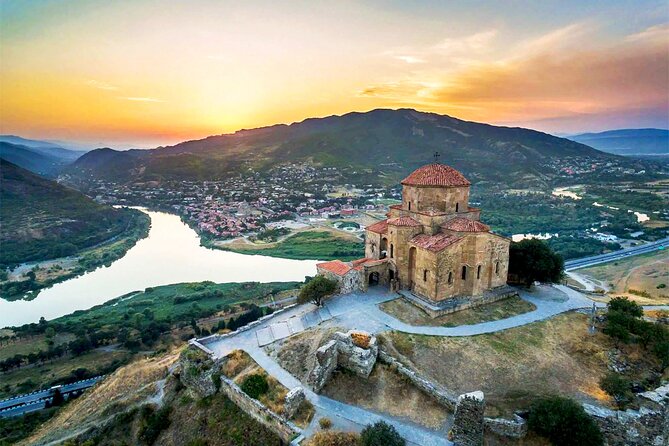
Jvari Church is the first listed stop. The monastery dates from the first half of the seventh century and is linked to Saint Nino, the Christian preacher associated with the cross raised on this site.
Its UNESCO status reflects both its age and its place in Georgian religious history. You get about 40 minutes here, enough for the monument and its setting, but not enough for a slow architectural study.
Jvari is a good early stop because it gives you context before Mtskheta. The tour is not only showing old buildings. It is tracing the development of Christian Georgia through places tied to its early religious identity.
Admission is listed as free. Wear practical shoes and dress for the weather, since the tour operates in all conditions and the stop involves outdoor movement.
Mtskheta, Georgia’s first Christian capital
Mtskheta sits where the Kura and Aragvi rivers meet. It was the first capital of Christian Georgia, and its historic monuments are protected as a UNESCO World Heritage site.
You have about one hour here. That makes Mtskheta more than a quick roadside photo stop, though you should still expect a guided introduction rather than an entire afternoon in town.
I find this part of the route especially useful for first-time visitors because it connects the religious monuments to the country’s early political center. After Jvari, Mtskheta gives you a second piece of the same story at street level.
The tour information lists admission as free. Keep your group’s pace in mind, since the guide is handling a large party and provides commentary in English and Russian consecutively.
Tbilisi Old Town, with one hour on foot
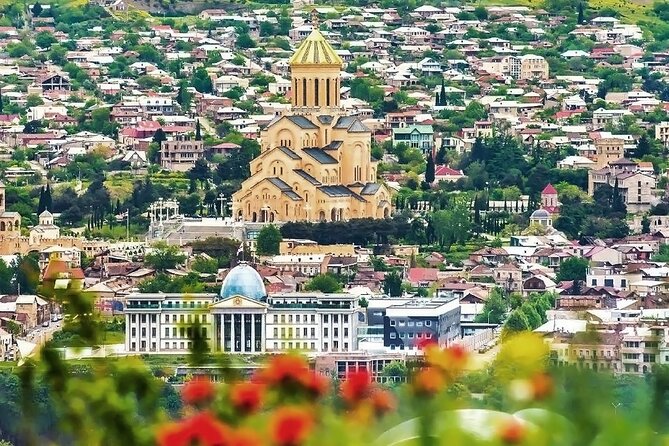
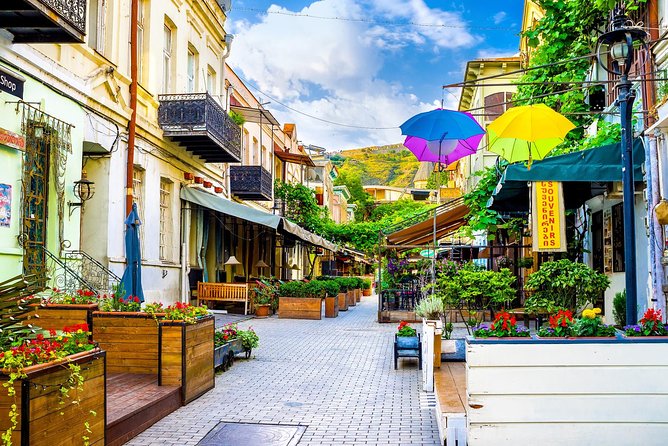
Day one continues to Tbilisi, where the focus is an observing walking tour of the Old Town. You have about one hour to see the historic center and hear about the city’s past from the guide.
That is enough time to get your bearings and see the character of the old streets, but it is not enough for a detailed museum visit or a relaxed exploration of every lane. Think of this as an introduction to Tbilisi rather than a full city tour.
The walking portion is a welcome change after the road journey. Bring comfortable shoes, since the tour description does not promise a flat route or extended free time. You may want to note places you would return to if you have extra time in Tbilisi after the tour.
The overnight hotel is rated four stars, and breakfast is included the following morning. The hotel’s exact name is not provided, so you should not book this expecting a particular neighborhood or room style.
Same country, a completely different kind of day out:
- Group Tour: Garni, Symphony of Stones, Geghard, Lavash Baking
★ 5.0 · 1,042 reviews - Group Tour: Lake Sevan (Sevanavank), Dilijan (Goshavank, Haghartsin)
★ 5.0 · 1,036 reviews - Group tour: Khor Virap, Noravank, Areni Winery and Cave
★ 5.0 · 651 reviews - Yerevan: Garni, Geghard, Symphony of Stones & Lavash Baking
★ 5.0 · 589 reviews
Rabati Castle and the layered past of Akhaltsikhe
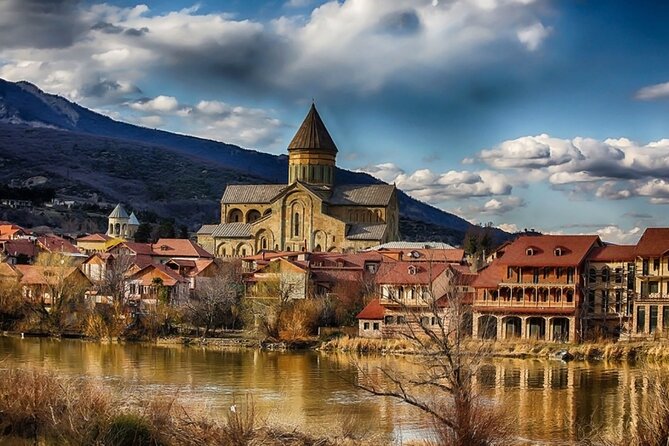
Day two moves to Rabati Castle in Akhaltsikhe, the capital of the Samtskhe-Javakheti region in southern Georgia. The castle sits beside the Potskhovi River and is positioned on high ground, where it could be seen from much of the city.
Rabati dates back to the ninth century, with the town appearing in written records from the twelfth century. Its role was defensive, but the site also reflects the different communities and institutions that shaped the area.
The complex includes a citadel, an Orthodox church, a mosque, and nearby history museum facilities, along with restaurants, cafés, hotels, and a marriage hall. You have one hour, so the main task is to understand the layout and take in the mix of structures rather than inspect every corner.
Large renovations took place in 2011 and 2012. That detail matters because Rabati is not an untouched medieval ruin. Parts of what you see have been restored or rebuilt for presentation, giving the site a polished appearance that some people will appreciate and others may find less atmospheric.
Admission is listed as free. The short visit works well as a contrast with Vardzia, since Rabati is about a fortified urban complex while the next stop is carved directly into the mountain.
Vardzia, a cave town carved into Erusheti Mountain
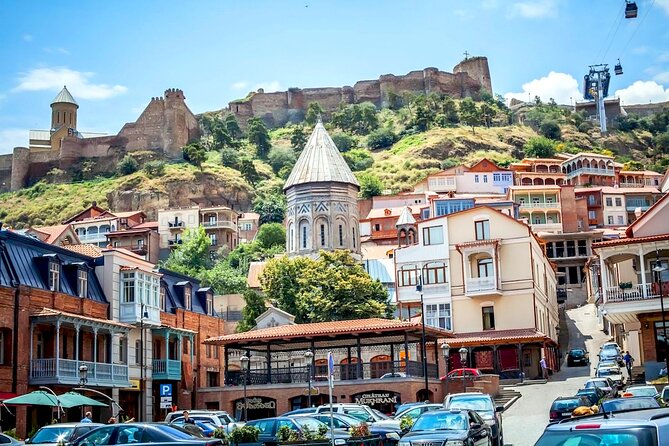
Vardzia is the most unusual stop on this route. Founded in the twelfth century, it was cut into the Erusheti Mountain at roughly 1,300 meters above sea level, with the complex rising about 100 meters from the foothills.
The site once had as many as 13 levels connected by tunnels. Living quarters, refectories, barns, wine-storage rooms, libraries, a water supply, and a sewer system formed part of the settlement.
You have about one hour and 10 minutes here. That is enough to see the main sections and understand how the cave town functioned, but the area can reward a much longer visit if you are interested in architecture, engineering, or medieval monastic life.
Vardzia is part of the Vardzia Historical Architectural Museum Reserve, and admission is included. Expect uneven walking and steps in a historic site carved into rock. The supplied details do not promise that every area is accessible, so anyone with mobility concerns should ask Hyur Service for current conditions before booking.
This is also the stop where practical clothing matters most. The tour operates in all weather, and the site’s elevated position means conditions can differ from those in the city. Wear shoes with a good grip and carry the bottled water provided.
Meals, hotel, and what the $186 covers
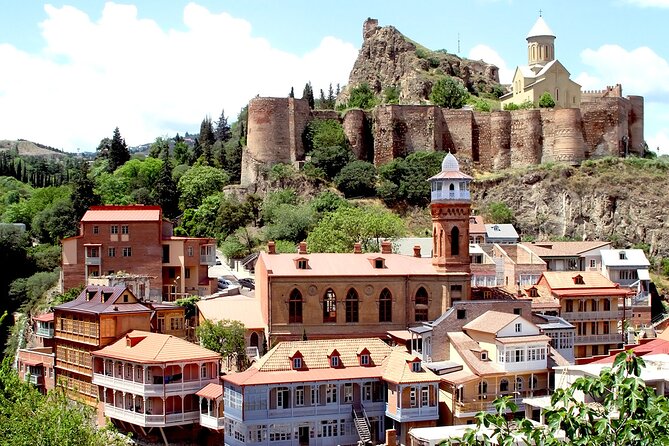
The package includes one night in a four-star hotel, breakfast, and two lunches. It also lists bottled water and pastries, which are useful on a schedule with early departures and long drives.
Dinner is not included. Plan for that cost yourself, and remember that the exact dinner setting is not specified. The included meals make the price easier to judge, but the value depends on how much you would otherwise spend arranging transport, lodging, food, and entrance fees independently.
Admission tickets are included where applicable. Jvari, Mtskheta, and Rabati are listed with free admission, while Vardzia has an included ticket.
The guide is professional and works in English and Russian consecutively. That arrangement is helpful if you need either language, but it can make explanations take longer than on a single-language tour. In a group of up to 49 people, you should also expect less personal attention than on a private trip.
The pace, group size, and border details
Two days is an efficient amount of time for this route, but it is also the central challenge. You will visit five important places across Georgia while crossing an international border from Armenia and returning to the original meeting point.
The schedule gives roughly 40 minutes at Jvari, one hour in Mtskheta, one hour in Tbilisi Old Town, one hour at Rabati, and 70 minutes at Vardzia. Those times are useful for orientation and photography, but they leave limited room for lingering.
Most people can participate, and children must be accompanied by an adult. The tour runs in all weather, so you should pack for changing conditions rather than assume the day will stay warm and dry.
Visa rules need careful attention. Residents of some countries may need a visa in advance for Georgia and may also need another entry visa to return to Armenia. Check with the office before departure, because a border problem can ruin an otherwise well-organized trip.
The meeting point is near public transportation, but hotel pickup and return transport in Yerevan are not provided. Build extra time into your morning so you arrive before the 8:00 a.m. start.
Who will get the most from this tour
I would choose this trip if you are based in Yerevan, want to add Georgia without renting a car, and prefer one organized package to several separate bookings. It suits first-time visitors who want major sights and historical context more than free time.
It is also a good fit if you enjoy variety. In two days, you move from a monastery to an ancient capital, a city old quarter, a renovated fortress, and a cave monastery complex.
I would hesitate if you dislike long coach journeys, large groups, or fixed schedules. The route is too packed for anyone hoping to sit over long meals or explore Tbilisi at an easy pace.
Families can join, provided children are accompanied by an adult, but the full schedule and uneven historic sites may be tiring for younger children. Anyone with mobility concerns should ask about current access at Jvari, Rabati, and especially Vardzia before paying.
Booking decision
Book this tour if your priority is seeing the major Georgian sights from Yerevan without driving. The price includes the expensive practical pieces: cross-border transport, a four-star night, meals, guiding, water, pastries, and admissions.
Skip it if you want a leisurely Tbilisi break or a small-group experience. For the right person, this is an efficient two-day introduction to Georgia, with Vardzia providing the strongest reason to accept the brisk pace.
Free cancellation is available when you cancel at least 24 hours before the start time. Changes or cancellations made inside that period are not accepted for a refund.
FAQ
Where does the tour start and finish?
It starts and ends at Hyur Service, 96 Nalbandyan Street, Yerevan 0010, Armenia. Hotel pickup and drop-off in Yerevan are not included.
What time does the tour begin?
The scheduled start time is 8:00 a.m.
What is included in the tour price?
The price includes breakfast, one night in a four-star hotel, two lunches, bottled water, pastries, a professional English and Russian-speaking guide, an air-conditioned vehicle, and admission tickets.
Is dinner included?
No. Dinner is not included in the tour price.
How large can the group be?
The maximum group size is 49 people. Seats are not known in advance.
Do I need a visa for Georgia and Armenia?
Residents of some countries may need to apply for a visa in advance to enter Georgia or obtain another entry visa to return to Armenia. Check the requirements with the office before booking.
Just added around Yerevan
- Private tour to Khor Virap, Areni winery, Noravank, Selim pass, Hayravank★ 5.0 · 3 reviews
- Private tour to Gyumri, Dzitoghtsyan Museum, Black Fortress★ 5.0 · 3 reviews
- Private Tour: Tsaghkadzor, Ropeway, Kecharis Monastery, Sevan Lake, Sevanavank★ 5.0 · 3 reviews
- Private tour to Garni, Geghard, Sevan (Sevanavank), Dilijan (Haghartsin)★ 5.0 · 3 reviews
- Private Tour: Lake Sevan, Sevanavank★ 4.5 · 3 reviews
- Tsitsernakaber-Hripsime-Echmiatsin-Noy brandy factory★ 4.5 · 3 reviews
- Secret Spots Of Armenia Day Private Tour★ 5.0 · 3 reviews
- Day Trip to Tatev Monastery★ 4.5 · 3 reviews
Yerevan Tours, compared.
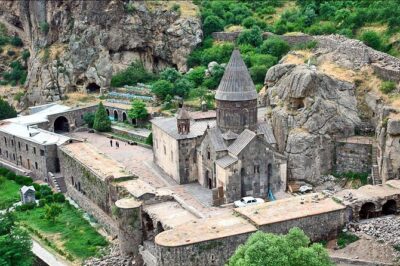
Group Tour: Garni, Symphony of Stones, Geghard, Lavash Baking
Read our review →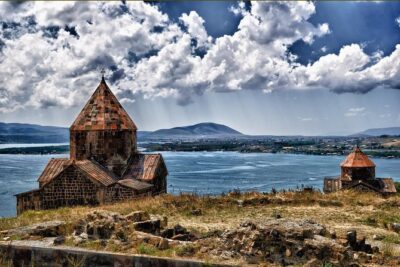
Group Tour: Lake Sevan (Sevanavank), Dilijan (Goshavank, Haghartsin)
Read our review →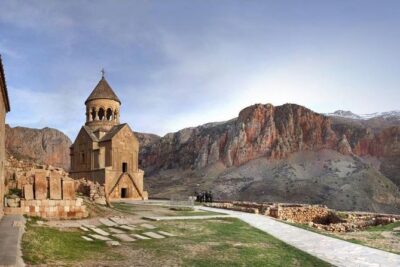
Group tour: Khor Virap, Noravank, Areni Winery and Cave
Read our review →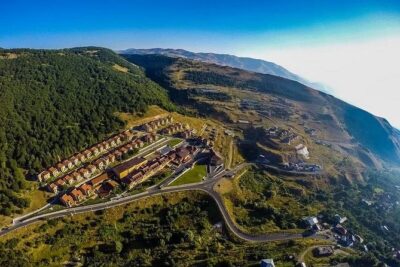
Group Tour: Tsaghkadzor (Kecharis, Ropeway), Lake Sevan, Trout barbecue treat
Read our review →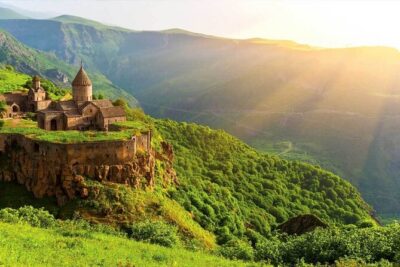
Group Tour: Khor Virap, Noravank, Tatev monasteries (wayback on Ropeway)
Read our review →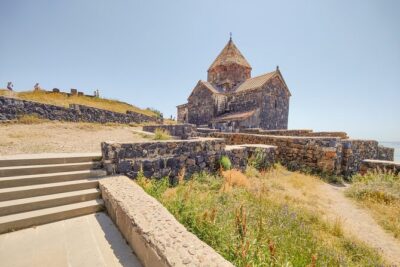
Sevan, Dilijan, Haghartsin, Goshavank, Lake Parz
Read our review →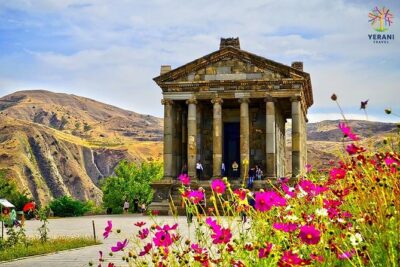
Group Tour: Garni pagan temple, Geghard monastery, Lake Sevan, Sevanavank
Read our review →
Browse the lists this tour appears in