
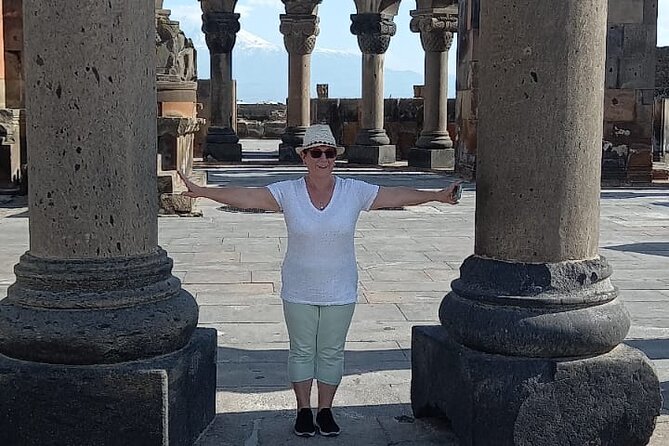
Reviewed · ECHMIADZIN & ZVARTNOTS TOURS
Private Tour to Echmiadzin,St.Hripsime & Gayane Churches, Zvartnots Temple
Etchmiadzin gives you Armenia’s spiritual heart in one well-planned day. You move from the country’s main cathedral to the quieter churches of Saint Hripsime and Saint Gayane, then finish among the broken columns of Zvartnots, one of Armenia’s most striking archaeological sites.
I like the private format, especially for a group of up to three, and I like the practical setup: hotel pickup, private transport, bottled water, WiFi, and an air-conditioned vehicle. The chance to add an English-speaking guide is also useful, since the churches make far more sense with their stories attached.
The main consideration is cost planning. The $70 price covers the whole group, not each person, but the Etchmiadzin Treasury Museum and Zvartnots entrance fee are extra. Guide service is optional, so confirm exactly what you want included before setting off.
Key points to know before booking
- Four important religious and archaeological sites: Visit Etchmiadzin Cathedral, Saint Hripsime Church, Saint Gayane Church, and Zvartnots Temple in about seven hours.
- A strong value for three people: The $70 rate is per private group of up to three, making the arithmetic much better when shared.
- The Treasury Museum costs extra: The cathedral itself is free to enter, but its collection of relics, church objects, crosses, and vestments has a separate admission charge.
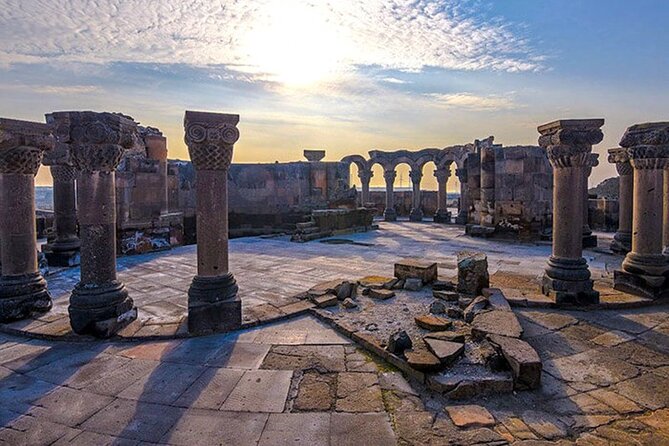
- Zvartnots is a ruins visit: You will see the archaeological reserve, museum, reconstruction models, and sculptural fragments rather than a complete standing church.
- Pickup is arranged at your lodging: Collection and return are offered from a hotel, hostel, or apartment in Yerevan.
- Guide service is optional: Drivers, transport, water, and WiFi are included, but clarify whether you want an English-speaking guide added to the booking.
Why this private Etchmiadzin tour works well from Yerevan
This is a focused introduction to Armenia’s Christian architecture. The four stops are close enough in theme to make a clear story, yet different enough that the day does not feel like a parade of identical stone churches.
Etchmiadzin is the main anchor. It is the seat of the Catholicos of All Armenians and the center of Armenian religious life. Saint Hripsime and Saint Gayane then show you two important early church designs, while Zvartnots changes the mood completely. Its roofless ruins and carved fragments ask you to imagine what once stood there.
You get roughly one hour at Etchmiadzin, thirty minutes at each of the two smaller churches, and one hour at Zvartnots. With hotel pickup and return included, the full outing lasts about seven hours. That leaves enough time for a meaningful look at each place without turning the day into an exhausting marathon.
I would choose the private version if you want to control the pace. You can spend more time at the cathedral and Treasury Museum, or keep the church visits short if architecture is your main interest. A shared group would usually be cheaper per person, but this option gives you your own vehicle and your own schedule.
The tour has a current rating of 5.0 from 17 ratings, with 100 percent recommending it. The praise centers on the historical explanation and the quality of the experience, with guides named Marianna, Arias, and Arak receiving particular appreciation in the written comments. That makes the optional guide worth considering if you want more than a quick look at the buildings.
More Echmiadzin and Zvartnots trips:
- Group Tour: Echmiadzin Cathedral & churches, Zvartnots Temple
★ 5.0 · 352 reviews - Private Half-day Echmiadzin Cathedral, Hripsime & Zvartnots Temple from Yerevan
★ 5.0 · 95 reviews - Private tour to Echmiadzin (st Cathedral), Zvartnots, Khor Virap, Garni, Geghard
★ 5.0 · 67 reviews
Etchmiadzin Cathedral, Armenia’s spiritual center
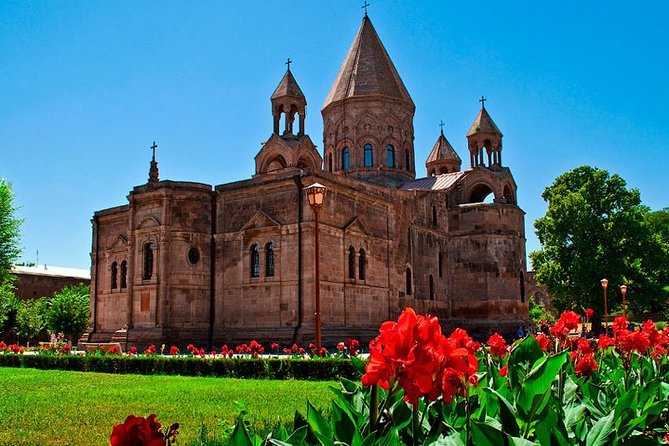
The first stop is Etchmiadzin Monastery, also written as Echmiadzin. The name means place of the descent of the Only Begotten, and the cathedral is tied to the foundation of Armenian Christianity.
The cathedral’s unusual feature is a second altar in the middle of the building. The main altar sits in the eastern part, as you would expect, but the central altar marks the place associated with the descent of Christ. An English-speaking guide can help you understand why this arrangement matters instead of leaving you to guess from the architecture.
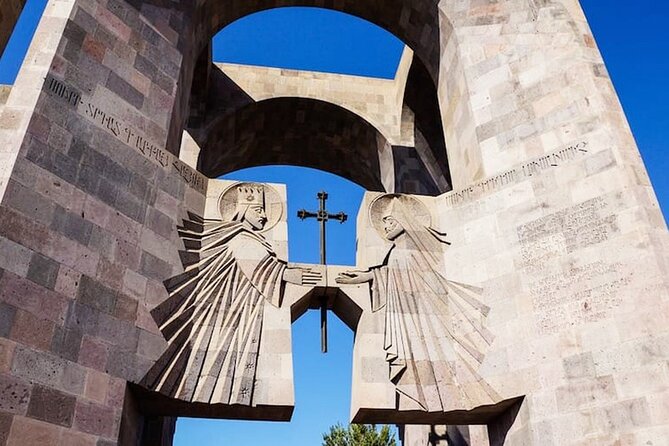
Admission to the cathedral complex is free. You can walk through the grounds, see the residence of the Armenian patriarch, and look at the many cross-stones, known as khachkars. Two details deserve special attention: the Amenaprakich cross-stone from 1279 and the cross-stone dedicated to the victims of the 1915 genocide.
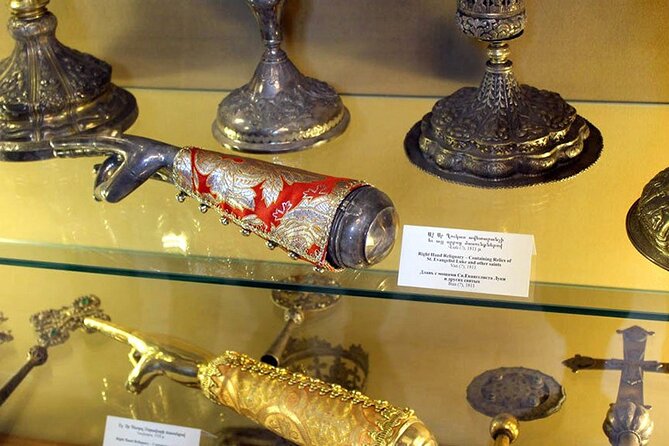
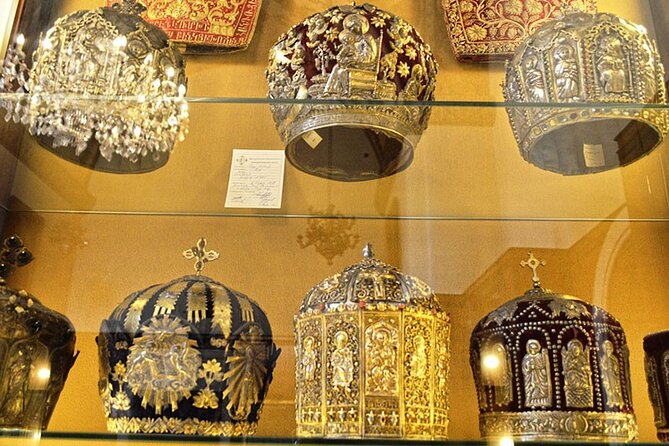
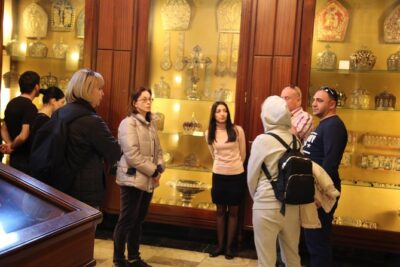
The cathedral’s Treasury Museum is the extra-cost part of the visit. It contains religious relics, gold and pearl-embroidered clothing, staffs and crosses used by the Catholicos, and ritual objects made from gold, silver, and ivory. If you care about church art or Armenian religious traditions, this is likely the most valuable paid addition of the day.
The listed visit lasts one hour, though the timing can feel tight if you want both the cathedral grounds and the museum. Ask the guide or driver how much time is available before paying for entry. If the museum is high on your list, make it clear at the start of the visit.
Etchmiadzin also gives the day a human and institutional dimension. This is not only an old monument. It remains the residence of the Catholicos of All Armenians, so the site connects Armenia’s past with its present religious life.
Saint Hripsime and the severe beauty of early Armenian design
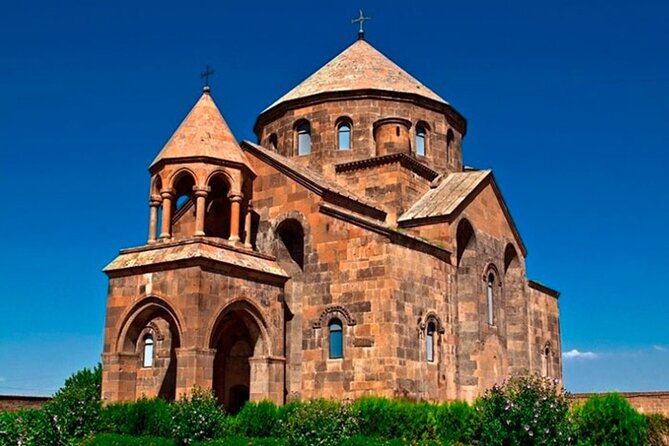
Saint Hripsime Church is a short stop, set at about thirty minutes. The building was founded in the 7th century by Catholicos Komitas I Aghtsetsi over the burial place of Saint Hripsime.
The church has been part of the UNESCO World Heritage listing since 2000. That designation reflects its importance as an early Armenian architectural work, but you do not need to be an architecture specialist to appreciate the visit. The compact form, heavy stonework, and restrained decoration create a very different feeling from the larger Etchmiadzin complex.
Two Armenian Catholicos figures are buried in the church courtyard: Astvatsatur, who served from 1715 to 1725, and Garaped II Oolnetzi, who served from 1725 to 1729. Their graves add another layer to the site, linking the building to the leadership of the Armenian Church.
Thirty minutes is enough for a brief visit and photographs, but it is not generous if you want a long architectural explanation. This is one reason the private format helps. You can ask for a little more time here if the church catches your interest, although any extension will affect the later stops.
I would not treat Saint Hripsime as a filler between the cathedral and Zvartnots. It is one of the clearest examples of the church architecture that makes this part of Armenia so important. The visit is short, but the building deserves your full attention.
Saint Gayane Church and the tradition of matah
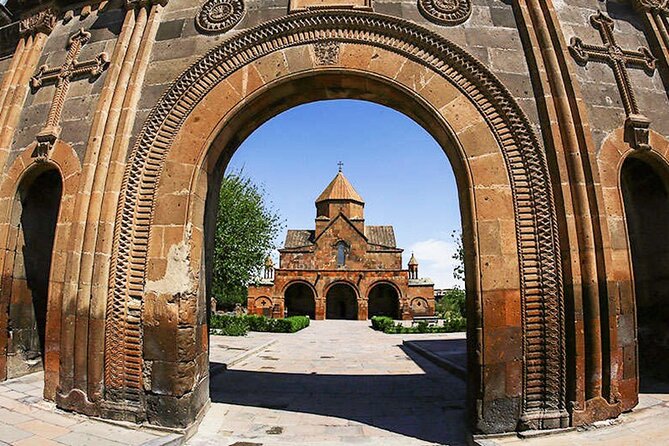
Saint Gayane Church was built in the 7th century on the site of a 4th-century chapel. It honors Saint Gayane, and the relics of the saint are kept in the southern wall near the altar niche.
The building is considered one of the finest monuments of Armenian architecture. Above the western entrance, you can see surviving 17th-century murals showing the birth of Christ. These details give the visit more texture than a simple look at the exterior.
The church is also connected with matah, an Armenian sacrificial rite traditionally performed for occasions such as a wedding or the birth of a child. A special room near Saint Gayane is associated with the preparation of animals for this rite, a practice said to reach back to the time of Saint Gregory the Illuminator.
This is a useful stop for understanding that Armenian religious life includes customs beyond formal church services. The subject may be unfamiliar or difficult for some people, so an optional guide can provide context and explain the tradition respectfully.
Again, the scheduled time is about thirty minutes. You can see the church, the mural, the area associated with Saint Gayane’s relics, and the nearby room, but you may not have time for a slow examination of every feature. If you want the historical background, tell the guide early in the day that you prefer explanation over a quick photo stop.
A few more Yerevan days to weigh up
- Group Tour: Garni, Symphony of Stones, Geghard, Lavash Baking
★ 5.0 · 1,042 reviews - Group Tour: Lake Sevan (Sevanavank), Dilijan (Goshavank, Haghartsin)
★ 5.0 · 1,036 reviews - Group tour: Khor Virap, Noravank, Areni Winery and Cave
★ 5.0 · 651 reviews - Yerevan: Garni, Geghard, Symphony of Stones & Lavash Baking
★ 5.0 · 589 reviews
Zvartnots, where ruins suggest a lost masterpiece
Zvartnots Temple is the grand finale. Its name means Temple of Vigil Forces, and it was built in the 7th century over a period of twenty years.
A powerful earthquake destroyed the church in the 20th century, leaving ruins instead of a complete building. That sounds like a disadvantage until you arrive and see the scale of the surviving columns, carved stones, and sculptural fragments. The remains give you enough evidence to picture the size and ambition of the original temple.
Zvartnots is now an archaeological reserve and museum, founded in 1937. Inside, reconstruction models help explain how the church may have looked, while the grounds contain large architectural fragments. The models matter because the site is otherwise open to interpretation. Without them, you would see impressive stones but have a harder time understanding the original structure.
The ruins are included on the UNESCO World Heritage list. The site is different from the three churches earlier in the day, so the final stop adds variety rather than repeating the same experience.
Admission to Zvartnots is not included. Set aside extra money for the ticket, and remember that the tour price also excludes lunch. The scheduled visit is one hour, which gives you time for the museum, the reconstruction models, and a walk around the remains.
The setting can also make Zvartnots feel more spacious than the city churches. You are looking at an archaeological site rather than entering an active religious building. I would save a little energy for this stop, since it is the place where the entire architectural story comes together.
The $70 group price and what you actually receive
At $70 per group of up to three people, this can be a good deal for a couple or a small family. Split three ways, the transport alone is inexpensive for a seven-hour private outing from Yerevan. The value improves if you would otherwise arrange separate taxis between four sites.
The price includes a professional driver, private transportation, hotel pickup and drop-off, an air-conditioned vehicle, bottled water, and WiFi on board. Those practical features matter in Armenia’s warmer months, when a full day of site visits can become tiring.
Guide service is listed as optional. This is the most important item to clarify before booking. If the driver is not also your guide, you may receive transport without detailed interpretation unless you request the guide service. The positive comments about Marianna, Arias, and Arak suggest that the human explanation is a major part of the experience, particularly for the religious symbolism and historical background.
Lunch is not included. The tour description does not specify a restaurant or meal stop, so ask how lunch fits into the schedule if you need a proper midday meal. You may prefer to arrange your own food before departure rather than lose time during the sightseeing portion.
The cathedral Treasury Museum and Zvartnots also charge separate entrance fees. The tour remains reasonably priced, but the final cost will be higher than the advertised $70 if you visit the museum, enter Zvartnots, and add a guide.
Who should book this seven-hour outing
I would recommend this tour to first-time visitors based in Yerevan who want a clear introduction to Armenia’s religious heritage without arranging transport themselves. It suits couples, families, and small groups of up to three especially well.
It is also a good match for anyone interested in architecture, early Christianity, Armenian church traditions, and archaeology. The combination of active church sites and Zvartnots ruins gives you more variety than a single-monastery visit.
You should think twice if you want a slow, highly specialized architectural tour. The schedule covers four sites in one day, and two stops last only thirty minutes. You can ask for more time at a favorite location because the tour is private, but the seven-hour structure still places limits on lingering.
The tour is offered in English, and confirmation is received at booking. Pickup can be arranged from your hotel, hostel, or apartment. Most people can participate, and the activity is private, so only your own group joins the vehicle.
Free cancellation is available if you cancel at least 24 hours before the start time. Changes or cancellations made inside that window are not accepted for a refund, and the cut-off follows Armenia’s local time.
Should you book the Etchmiadzin and Zvartnots tour?
Book it if you want the easiest way to see four major sites west of Yerevan in one day, especially if you are traveling with two other people and can share the $70 group price. The private vehicle, hotel pickup, and optional English guide remove much of the planning work.
I would add the guide service and budget for both paid admissions if you want the fullest experience. Without the museum and guide, you can still see the main buildings and ruins, but you will miss some of the objects and background that make the churches meaningful.
Choose this tour for breadth, convenience, and strong historical coverage. Choose another arrangement only if you prefer to spend an entire day at one site or want a slower specialist visit. For most first visits to Yerevan, this is a sensible and well-priced day outside the city.
FAQ
How long does the tour last?
The tour lasts approximately seven hours, including the visits and transportation from Yerevan.
How much does the private tour cost?
The price is $70 per private group of up to three people.
Is hotel pickup included?
Yes. Pickup and drop-off can be arranged from your hotel, hostel, or apartment.
Is transportation private?
Yes. The experience includes private transportation in an air-conditioned vehicle.
Is an English-speaking guide included?
Guide service is listed as optional. The tour is offered in English, so confirm the guide arrangement when booking.
Are the church admission fees included?
Admission to Etchmiadzin Monastery, Saint Hripsime Church, and Saint Gayane Church is free. The Etchmiadzin Treasury Museum has a separate entrance fee.
Is the Zvartnots entrance fee included?
No. The entrance fee for Zvartnots Temple is not included in the tour price.
Is lunch included?
No. Lunch is not included.
Can I cancel for a full refund?
Yes, if you cancel at least 24 hours before the experience start time. Cancellations or changes made less than 24 hours in advance are not refunded or accepted.
Just added around Yerevan
- Private tour to Khor Virap, Areni winery, Noravank, Selim pass, Hayravank★ 5.0 · 3 reviews
- Private tour to Gyumri, Dzitoghtsyan Museum, Black Fortress★ 5.0 · 3 reviews
- Private Tour: Tsaghkadzor, Ropeway, Kecharis Monastery, Sevan Lake, Sevanavank★ 5.0 · 3 reviews
- Private tour to Garni, Geghard, Sevan (Sevanavank), Dilijan (Haghartsin)★ 5.0 · 3 reviews
- Private Tour: Lake Sevan, Sevanavank★ 4.5 · 3 reviews
- Tsitsernakaber-Hripsime-Echmiatsin-Noy brandy factory★ 4.5 · 3 reviews
- Secret Spots Of Armenia Day Private Tour★ 5.0 · 3 reviews
- Day Trip to Tatev Monastery★ 4.5 · 3 reviews
Echmiadzin & Zvartnots Tours, compared.
Group Tour: Echmiadzin Cathedral & churches, Zvartnots Temple
Read our review →
Private Half-day Echmiadzin Cathedral, Hripsime & Zvartnots Temple from Yerevan
Read our review →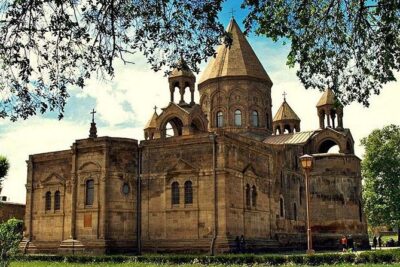
Private tour to Echmiadzin (st Cathedral), Zvartnots, Khor Virap, Garni, Geghard
Read our review →
Private 8-9-hour Echmiadzin, Zvartnots, Garni and Geghard trip from Yerevan
Read our review →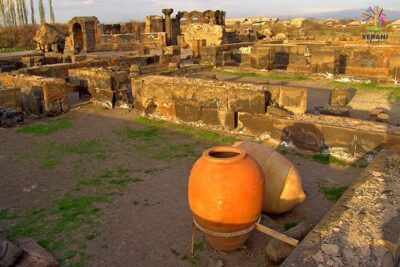
Khor Virap, Echmiadzin & Zvartnots UNESCO Small-Group Guided Tour
Read our review →
Garni, Geghard, Echmiadzin and Zvartnots Private Tour
Read our review →
Private tour to UNESCO heritage Echmiadzin churches, Zvartnots and Sardarapat
Read our review →
6 days in Armenia: Garni, Tatev, Echmiadzin, Sanahin, Haghpat
Read our review →Browse the lists this tour appears in