
Reviewed · ECHMIADZIN & ZVARTNOTS TOURS
Echmiadzin (Hripsime, Gayane, Mother Cathedral) and Zvartnots Temple
Echmiadzin and Zvartnots put Armenia’s Christian story into one tidy half-day outing. You move from working churches and a recently renovated cathedral to the open-air remains of a daring 7th-century building, with Mount Ararat appearing beyond the stonework when conditions allow.
I like the strong mix of active worship and ancient ruins, and I like that the tour includes Saint Hripsime and Saint Gayane rather than rushing straight to the main cathedral. The guide is another plus: past guests specifically praised the clear explanations, and one Sunday visit gained an extra lift from a religious ceremony.
The main thing to consider is the schedule. You have only 30 minutes at each smaller church and about 45 minutes at Zvartnots, so this is a useful introduction rather than a slow, specialist study tour. The operator has also had at least one reported late cancellation, so keep the booking terms in mind.
Key points to know before you book
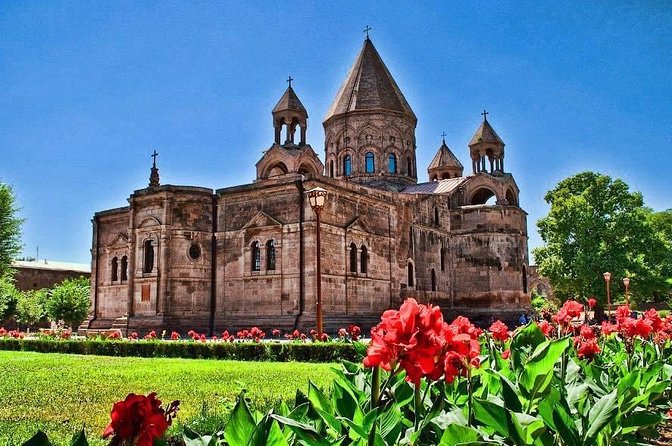
- Four UNESCO-connected Armenian sites are covered in one half-day: Saint Hripsime, Saint Gayane, Echmiadzin Cathedral, and Zvartnots Temple.
- Echmiadzin Cathedral is the spiritual center of Armenia, and its origins reach back to 301 to 303 AD.
- Zvartnots is unlike a standard Armenian church, with a circular, three-tiered design influenced by both Byzantine and Armenian ideas.
- The tour begins and ends at Republic Square in Yerevan at 10:00 am.
- The $20 price includes a local professional guide and bottled water, while lunch is not included.
- Sunday can be especially rewarding, since a religious ceremony may add a living, present-day dimension to the visit.
Why Echmiadzin matters in Armenian history
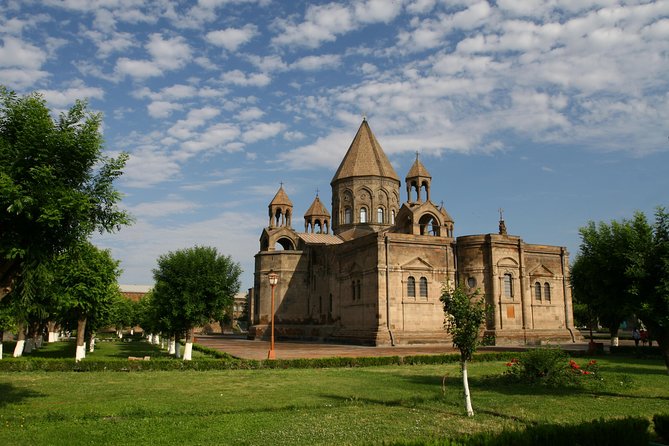
Echmiadzin, also called Vagharshapat, is more than a collection of old churches. It is the religious center of the Armenian Apostolic Church and the home of the Mother See of Holy Etchmiadzin.
Armenia adopted Christianity as its state religion in the early 4th century, traditionally dated to 301. The cathedral was built soon after, between 301 and 303, by Saint Gregory the Illuminator. That makes this visit useful for anyone who wants to understand why Armenian churches feel so central to the country’s identity.
I find the story easier to grasp when the sites are visited together. Saint Hripsime and Saint Gayane show the early Christian tradition in compact, sturdy form. Echmiadzin then gives that story its main religious setting. Zvartnots finishes the day with a bold architectural experiment that now survives as ruins.
You do not need to be religious to enjoy the route. The churches offer art, stone construction, legends, and a clear link between Armenia’s past and present. Still, respectful clothing and quiet behavior are sensible, especially if a service is taking place.
More Echmiadzin and Zvartnots trips:
- Group Tour: Echmiadzin Cathedral & churches, Zvartnots Temple
★ 5.0 · 352 reviews - Private Half-day Echmiadzin Cathedral, Hripsime & Zvartnots Temple from Yerevan
★ 5.0 · 95 reviews - Private tour to Echmiadzin (st Cathedral), Zvartnots, Khor Virap, Garni, Geghard
★ 5.0 · 67 reviews
Saint Hripsime, a church built for strength
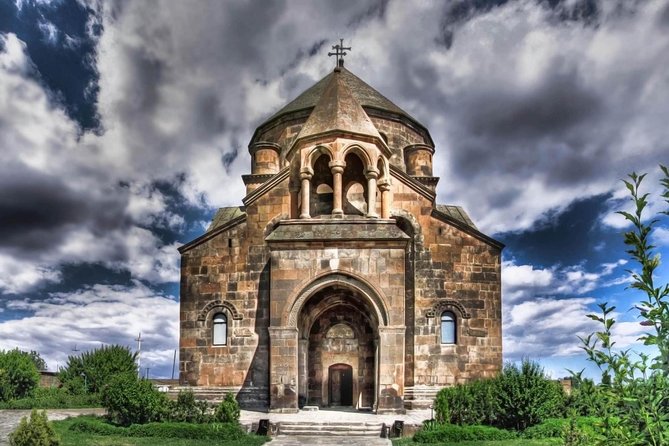
The first church stop is Saint Hripsime, with about 30 minutes to look around. Its design is the classic Armenian cruciform plan, with four arms arranged around a central dome.
The building is known for massive stone walls and a powerful, uncluttered shape. Armenian church architecture often gets its character from a careful balance of weight and height, and Saint Hripsime shows that balance well. From the outside, the church feels firm and almost defensive. Inside, the cross-shaped plan makes the space easier to read than the elaborate interiors of some larger cathedrals.
The name comes from Saint Hripsime, one of the Christian virgins associated with the early spread of Christianity in Armenia. That story links this church to Saint Gayane, the next stop, so the two visits work better together than they would as isolated monuments.
Thirty minutes is enough to hear the main explanation, inspect the stone details, and take photographs. It is not enough for a long architectural study. If you enjoy church design, pay close attention to the dome, the geometry of the cross-shaped plan, and the way the heavy walls shape the interior.
Saint Gayane and the story of the Christian virgins
Saint Gayane Church receives another 30 minutes. It has a rectangular basilica layout, a dome, large stone walls, and carved arches.
Saint Gayane was one of the Christian virgins who fled the Roman Empire with Saint Hripsime. Knowing that connection gives the stop more meaning. You are not simply seeing two old buildings in the same district. You are following a shared religious story expressed through two related but distinct architectural forms.
I like the contrast between the churches. Saint Hripsime presents a more clearly cruciform arrangement, while Saint Gayane uses a basilica form with a longer rectangular body. The carved arches add a little more visual detail, though the overall impression remains restrained and solid.
The time here is again short but workable. Listen to the guide before wandering off with your camera. The historical explanation is what turns the visit from a quick church photo stop into a connected account of Armenia’s early Christian tradition.
Echmiadzin Cathedral, Armenia’s Mother Church
The tour allows about an hour at Echmiadzin Monastery, the heart of the day. The cathedral is one of the oldest in the world and the mother church of the Armenian Apostolic Church.
This is where the earlier stops come together. The site is not only an ancient monument. It remains an important religious center, so the atmosphere can change depending on the day and any service taking place. A Sunday visit may include a religious ceremony, which can make the stop feel more immediate and less like a museum visit.
The interior was recently renovated according to the information available for this tour, and the renewed appearance was singled out as a highlight. You should still expect a historic church rather than a modern attraction. Its value comes from the combination of age, religious purpose, and Armenian design.
An hour gives you enough time to listen, look around, and take in the setting without turning the visit into a sprint. Your guide can explain the cathedral’s connection to Saint Gregory the Illuminator and Armenia’s adoption of Christianity. That context matters here because the building’s importance is not based on age alone.
If you want a quiet photographic visit, a service may limit how freely you move around. If you want to see the cathedral functioning as a place of worship, Sunday could be the better choice. Either way, follow the guide’s instructions and keep your voice low.
A few more Yerevan days to weigh up
- Group Tour: Garni, Symphony of Stones, Geghard, Lavash Baking
★ 5.0 · 1,042 reviews - Group Tour: Lake Sevan (Sevanavank), Dilijan (Goshavank, Haghartsin)
★ 5.0 · 1,036 reviews - Group tour: Khor Virap, Noravank, Areni Winery and Cave
★ 5.0 · 651 reviews - Yerevan: Garni, Geghard, Symphony of Stones & Lavash Baking
★ 5.0 · 589 reviews
Zvartnots Temple and its unusual circular design
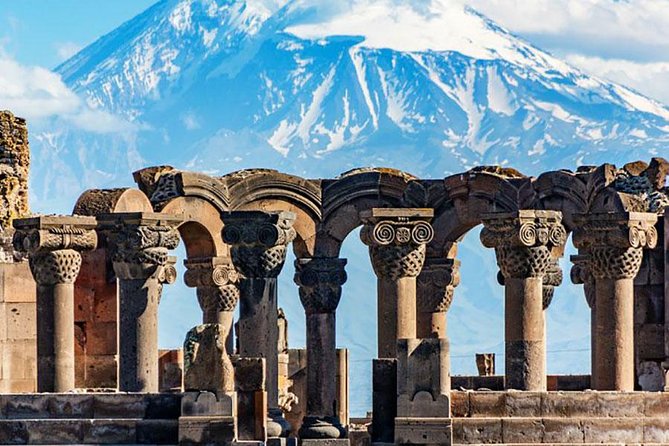
Zvartnots is the final major stop, with about 45 minutes included. The cathedral is now in ruins, but its remains show that it was one of the most ambitious buildings on the route.
Unlike the more familiar cross-shaped churches, Zvartnots had a circular, three-tiered structure. Its design drew from both Byzantine and Armenian traditions. That unusual plan is the key thing to understand before you arrive. You are not looking at a damaged version of a typical Armenian church. You are seeing the foundations and surviving stonework of a very different idea.
The columns, carved pieces, and remaining arches help you picture the original height and movement of the building. The open setting also gives the stop a different mood from the enclosed churches at Echmiadzin. You can study the ruins from several angles, and the views toward Mount Ararat add a memorable backdrop when visibility is good.
Forty-five minutes is enough for the guide’s explanation and a circuit of the main remains. It may feel brief if you enjoy ancient architecture, since the site rewards close inspection. Still, the timing works well in a half-day tour because you have already spent time inside three important churches.
Bring your attention to the stone fragments, the circular arrangement, and the way the surviving structure hints at the original three levels. Zvartnots is the place where the tour shifts from living faith to archaeological evidence.
What the $20 price really covers
At $20 per person, this is inexpensive for a guided half-day visit to four major religious and historical sites. The value comes from the route and the explanations. Reaching Echmiadzin and Zvartnots independently may be possible, but you would need to organize the order, transport, and historical background yourself.
The price includes a local guide, a professional guide, and bottled water. Admission is free at Saint Hripsime, Saint Gayane, and Echmiadzin Monastery. Admission to Zvartnots is included, so you do not need to budget separately for that stop.
Lunch is not included. The tour lasts about four to five hours, so this is not a full-day food outing, but you should plan to eat before or after the excursion. Starting at 10:00 am also gives you time for breakfast before meeting at Republic Square.
The group can have up to 49 people. That is a generous maximum, and the size may affect how personal the guide’s attention feels. The strongest praise has focused on guide quality, clear explanations, and comfortable transport, but a larger group can still mean less time for individual questions.
Meeting at Republic Square and getting back
The starting point is Republic Square in Yerevan, listed at location code 5GH7+33C. The tour begins at 10:00 am and ends back at the same meeting point.
This arrangement is convenient if you are staying in central Yerevan or can reach the square by public transport. The experience is listed as being near public transportation, and a mobile ticket is provided, so you can keep the booking confirmation on your phone.
Transport details are limited, but the available information and direct comments describe a clean, comfortable car for at least some departures. Because the group limit is much higher than a private-car size, the exact vehicle may depend on the departure. If transport style matters greatly to you, confirm it with Tatev Travel Agency before booking.
Most people can participate, and children must be accompanied by an adult. The route includes historic churches and an outdoor ruin, so comfortable shoes are a sensible choice even though no special fitness requirement is listed.
Guide quality and the value of good explanations
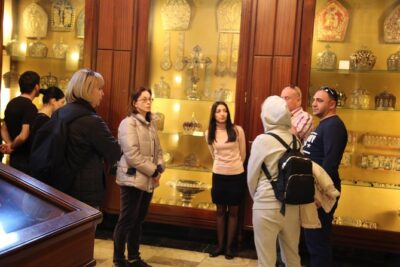
A guide makes a real difference on this particular route. Without context, the churches can look like a sequence of similar stone buildings. With a clear explanation, you can follow the shift from early Christian Armenia to later architectural ambition.
The strongest praise for the experience centers on the guide’s information, friendly manner, and command of the subject. One family also found the tour especially rewarding because a Sunday ceremony added a real religious moment to the visit. Another group praised the guide and the clean, comfortable car.
No guide’s personal name is supplied, so I cannot tell you who will lead your departure. What you can reasonably expect is a local professional guide assigned by Tatev Travel Agency. If you have a particular interest in Armenian architecture, church ritual, or the early Christian period, ask questions early in the tour while there is time to follow up at each site.
There is one important caution. A reported departure was canceled by the agency only 10 hours before the start, and another booking with the same company was also canceled. That appears to be an individual complaint rather than a full picture of the service, but it is worth keeping in mind when planning a tight itinerary.
Practical timing, group size, and cancellation terms
The complete visit takes roughly four to five hours. The listed stop times add up to about three hours, leaving the rest for travel between Republic Square, the churches, and Zvartnots.
You receive confirmation when booking. The mobile ticket is useful for a quick meeting-point check, especially in a busy central square. Arrive with enough time to identify the meeting location rather than trying to find the group at exactly 10:00 am.
Free cancellation is available if you cancel at least 24 hours before the local start time. Cancellations or changes made inside that 24-hour window are not accepted for a refund. This matters if your Yerevan plans are uncertain, since the tour is normally booked about 11 days ahead.
The overall rating supplied for the experience is 4.2 from five reviews. That is a positive but small sample, so I would treat it as a useful signal rather than a guarantee. The praise is consistent around the guide, historical explanations, churches, and vehicle comfort, while the main warning concerns a late cancellation.
Who will get the most from this tour
I would choose this outing if you want Armenia’s major Christian monuments explained in one efficient trip from Yerevan. It suits first-time visitors, history enthusiasts, architecture fans, families with an adult accompanying children, and anyone who wants more than a city walk.
It is especially good for people who enjoy comparing buildings. Saint Hripsime’s cruciform structure, Saint Gayane’s basilica form, Echmiadzin’s religious importance, and Zvartnots’ circular plan create a useful architectural progression.
You may want a different format if you prefer long, unhurried visits or detailed photography. The schedule is orderly and fairly brisk. You also should not book it expecting lunch, a private guide, or a guaranteed small group, since none of those is included in the stated terms.
Should you book the Echmiadzin and Zvartnots tour?
Book it if you want strong historical coverage for $20, a professional local guide, included transport back to Republic Square, and four major Armenian religious sites in four to five hours. The combination of working churches, a recently renovated cathedral, and the unusual Zvartnots ruins gives the route real variety.
I would aim for a Sunday if the chance to see a religious ceremony appeals to you, while remembering that services can change how freely you explore. Ask about the vehicle and departure status if you have a packed schedule, and leave more than 24 hours if you need to cancel.
For a first look at Armenia’s Christian heritage, this is a practical, low-cost choice. For a slow architectural study, it is better used as an introduction, followed by a return visit to the site that interests you most.
FAQ
Where does the tour start?
The tour starts at Republic Square in Yerevan, Armenia, at the listed location of 5GH7+33C.
What time does the tour begin?
The scheduled start time is 10:00 am.
Where does the tour end?
The activity ends back at the meeting point at Republic Square.
How long does the tour last?
The tour lasts approximately four to five hours.
Which sites are visited?
The route includes Saint Hripsime Church, Saint Gayane Church, Echmiadzin Monastery and Cathedral, and Zvartnots Temple.
Is admission included?
Admission is free at Saint Hripsime, Saint Gayane, and Echmiadzin Monastery. Admission to Zvartnots Temple is included in the tour.
Is lunch included?
No. Lunch is not included in the price.
What is included in the tour price?
The price includes bottled water, a local guide, and a professional guide.
Can children join the tour?
Yes. Children can participate, but they must be accompanied by an adult.
What is the cancellation policy?
You can cancel for a full refund up to 24 hours before the experience starts. Cancellations and changes made less than 24 hours before the start time are not accepted for a refund.
Just added around Yerevan
- Private tour to Khor Virap, Areni winery, Noravank, Selim pass, Hayravank★ 5.0 · 3 reviews
- Private tour to Gyumri, Dzitoghtsyan Museum, Black Fortress★ 5.0 · 3 reviews
- Private Tour: Tsaghkadzor, Ropeway, Kecharis Monastery, Sevan Lake, Sevanavank★ 5.0 · 3 reviews
- Private tour to Garni, Geghard, Sevan (Sevanavank), Dilijan (Haghartsin)★ 5.0 · 3 reviews
- Private Tour: Lake Sevan, Sevanavank★ 4.5 · 3 reviews
- Tsitsernakaber-Hripsime-Echmiatsin-Noy brandy factory★ 4.5 · 3 reviews
- Secret Spots Of Armenia Day Private Tour★ 5.0 · 3 reviews
- Day Trip to Tatev Monastery★ 4.5 · 3 reviews
Echmiadzin & Zvartnots Tours, compared.
Group Tour: Echmiadzin Cathedral & churches, Zvartnots Temple
Read our review →
Private Half-day Echmiadzin Cathedral, Hripsime & Zvartnots Temple from Yerevan
Read our review →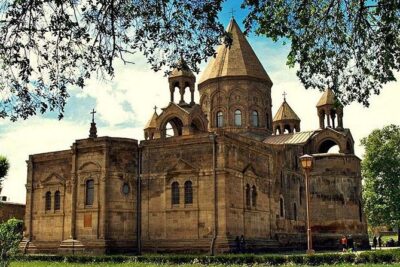
Private tour to Echmiadzin (st Cathedral), Zvartnots, Khor Virap, Garni, Geghard
Read our review →
Private 8-9-hour Echmiadzin, Zvartnots, Garni and Geghard trip from Yerevan
Read our review →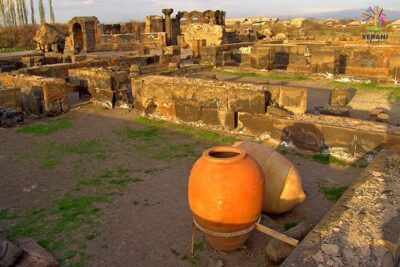
Khor Virap, Echmiadzin & Zvartnots UNESCO Small-Group Guided Tour
Read our review →
Garni, Geghard, Echmiadzin and Zvartnots Private Tour
Read our review →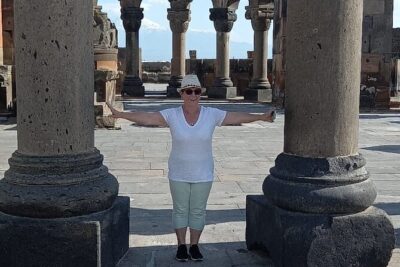
Private Tour to Echmiadzin,St.Hripsime & Gayane Churches, Zvartnots Temple
Read our review →
Private tour to UNESCO heritage Echmiadzin churches, Zvartnots and Sardarapat
Read our review →Browse the lists this tour appears in